

Although in the high school schedule put into public debate religion, a further optional and self -contained subject for all students, it remains with the same number of hours, the first criticisms and controversies have appeared in the public space. This, in the context of the older dissatisfaction of some parents, teachers and non -governmental organizations that accuse the non -observance of the legislation in force. Around this subject they are planning a series of irregularities that Minister David should “repair”. Not the other, but the current context would even give him the opportunity to do so, finally, what the law says, Professor Emil Moise told “Adevărul”.
Religion is optional matter. Archive
Of religion is in the common trunk
To begin with, we must clarify an aspect that can mislead, namely: why is the religion in the common trunk if it is a optional subject? First of all, we have to understand very well what the common trunk means. According to Law 198/2023, in Article 86, paragraph 2, we find the definition: “The common trunk consists of the disciplines/fields of study/mandatory training modules, for all the students in primary, secondary and high school regardless of the chain, profile and specialization/professional qualification, and is established at central level by order of the Minister of Education ”.
Therefore, if only the compulsory subjects are found in the common trunk, what are the religion looking for? Explains the teacher of socio-human sciences Emil Moise, president, at the same time, of the Solidarity Association for Freedom of Consciousness: “The religion was introduced in the common trunk (TC) in 1995. But it was a optional subject, in accordance with the provisions of the Romanian Constitution. Being a contradiction here – in the TC there are only compulsory subjects – several parliamentarians notified the RCC. Based on this notification, the Constitutional Court then decided that religion can remain in the common trunk, but with the following mention: schools are obliged to offer this optional subject to students, but students are not obliged to accept. “
Therefore, in 1995 it was clear that this subject is not mandatory for students. “What the Ministry of Education has then failed to convey very clearly to schools. This is why, in the surveys made over time, teachers, directors, inspectors, over 95% did not know this. ”
Teacher: “Religion is done on request”
Professor Emil Moise said that the decision taken by the RCC in 1995 is generally mandatory and must be respected: “Religion is part of the common trunk but at the same time, it is optional, being the only exception of its kind. However, the problems are others, and their solving, mandatory, falls to education ”, warns the teacher with the hope that, with the debate of the framework plans, these irregularities will be solved.
“The ministry has the obligation to comply with the judgments of law we have obtained in court at the National Council for Combating Discrimination and at the Constitutional Court. What the ministers so far have not done. “
The teacher refers to the fact that the students are subject to discriminatory situations or who violate their fundamental right to freedom of thought, consciousness and religion. “Specifically, in 2015, the RCC established that the time of optional religion cannot be followed by a student unless the parent makes a request in this regard. I beaten a lot to get this. The step that is not respected here is the fact that this request should have been renewed annually, as the Education Commission of the Chamber of Deputies decided. But in the current law this aspect is not found. And it is not okay, because we are talking about an optional, not optional subject. This means that you can give up on it and the next day if you want. ” Professor Moses asks Minister Daniel David to regulate this situation, and the parents of the students or the major students can submit this request annually.
Secreted by the state, about the introduction of several optional subjects: “We think”
Another problem that the teacher raises: students who do not attend religion courses cannot opt for another optional subject. “In 2017 and 2018 I notified this and obtained a two definitive decisions of the National Council for Combating Discrimination. The institution then established that the Ministry of Education, when it gives the children the discipline of religion, discriminates against those who would not like this discipline if they do not offer them, all the optional ”. The teacher asks Minister David to repair what the ministers have made before him and to order that the students have more optional subjects. “Daniel David is a serious man, a pro-European man, who respects the rights of the child and I think he will implement these already established decisions, whose application is mandatory. Basically, you just have to apply them. ”
The teacher believes that if these decisions are respected, we will see very clearly what the students really want: religion or something else. However, the teacher said that there are persons or organizations such as BOR who do not want to find out. “I know why they are worried This proposal because it is very possible for students to go to the other subjects, which are really useful. ”
Andreia Bodea, the director of the National College “Ilcagiale” in Bucharest, explained for “Adevărul” that, in general, at “Caragiale” the religion is placed either at the first hour or at the last hour of the Children’s Program. “In such a way that those who do not want to do religion come an hour later, respectively they leave an hour earlier. If the time of religion happens to be placed in the middle of the day, we have two situations: some students choose to stay in the classroom and work on something else, others, not wishing to leave school because they have hours, I go to the room Reading where they do a theme, do exercises, talk, read a book ”.
However, Emil Moise said that if in a class there is at least one student who did not choose the religion optional subject, the school is obliged to place this subject in the first or last schedule.
I also asked Secretary of State Bogdan Cristescu about this possible measure – the introduction of optional subjects in addition to the one at the moment – and the answer was a positive one. “That’s why we try to take the optionality so wide in high school. In principle, through the framework plans, which will also have a methodology, this can be taken into account. That is why we want to think things early. How long the school programs are being worked on to think of all the administrative aspects. We will take this into account. It would be normal for these children to be able to make another optional discipline and have an average ”.
Religion, noted with qualifications
And, because we are talking about the averages, the National Council for Combating Discrimination has decided that the average obtained in religion should not be taken into account at the general average. What is not respected again, Professor Moses told us. Therefore, we are talking about another form of discrimination against students. “He discriminates against those who have not been available to an alternative discipline. And even if he had an alternative discipline, he discriminates against those who would not choose any of the two ”, explained Emil Moise.
Prof. Andreia Bodea says that “ȘThey expressed the desire to make religion, made a module, two, but for various reasons, either they took a bad note, or, suddenly, they did not like the religion teacher, these children withdrew. Without any consequences. “ The teacher gave us a concrete example: in the 9th grade, from 32 students as they are in a class, at first she refuses religion, five children. “Then, at the end of the school year, you notice that they gave up more than half of them.”
Secretary of State Bogdan Cristescu also commented on the situation: “At the moment, the curriculum at the student’s decision in the school offer contains three, four subjects from which the student can choose. If the students in a class do not choose to do cdoș, you cannot ask the others (who choose) to have no notes. A child who participates in an hour makes an intellectual effort, an effort to participate and assumes the note that can be good or less good ”. However, Emil Moise states that Secretary of State Cristescu refers to optional subjects, or the discussion is related to a optional subject.
High School Director: “We wanted to avoid bureaucracy. From autumn we will comply ”
The Constitutional Court, Professor Emil Moise, told us, decided in 2015 to be taught at the request of the parents, provided they submitted a request to school. In many educational units the law has been respected and respected. In others, however, no. “From 2015 and so far there have been hundreds of thousands of students annually who have chosen not to make religion. Children who would have taken the courses of this subject forcibly if it had not been this decision of the RCC. However, there are many others who, for reasons of abuse from the management of schools, follow the courses of this subject contrary to their wish, although they should not have been ”, explains Emil Moise.
Specifically, there are many situations in which parents are asked to proceed just the opposite of what the law says, namely: to make a request if they do not want students to follow religion. Which is contrary to the 2014 CCR decision.
Director Andreia Bodea comes with explanations in this regard, saying that it wanted to avoid bureaucracy. “Students who do not want to do religion are very few. Therefore, it is more convenient for schools to ask them to submit requests. It is a simplified process for secretariat, for directors, for leading teachers. It is much easier to receive 6,7,8 applications for non -participation than to receive 26 participation. This is a bureaucracy that we want to avoid as much as we can. ” However, Emil Moise said that this abuse is sanctioned as a crime in the Criminal Code.
Andreia Bodea said that, starting with the next school year, she will also obey the CCR decision. “Whoever wants to make religion will apply to the secretariat. We will cover this aspect too. We will implement this in the fall. We will proceed as written in the law. It will be a little more bureaucracy, there will be more sheets to the secretariat, but that’s it. To be like everything like the book, we will invite the respective parents or the major students to ask in writing religion ”.
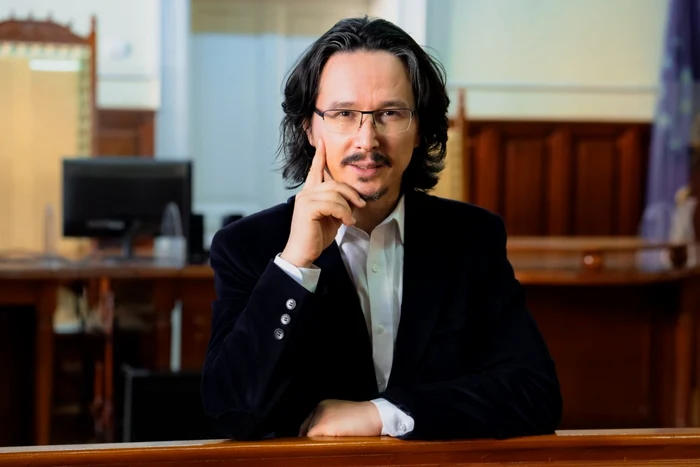
Cristi Danileț, former judge. Archive
Former Judge Cristi Danileț, about how schools that do not comply with the law can be sanctioned
I also asked the former judge Cristi Danileț how he comments on this non-observance of the law by certain schools, and the answer was short to the object: where is the law, he is not a heel. “Following the time of religion is a right. Whoever wants to benefit from this right must apply. It is deposited by the parents of the child who wants this. And not by the parents of the child who does not want it. This is expressly stipulated both in the Law of pre -university education and in the regulation of operation of pre -university education – Rofuip ”.
The former judge said that parents who do not want to give their child to religion, instead they are asked to apply in this regard, they must refuse. “If there are directors or teachers who do not know these trivial things, they risk being sanctioned because the non -observance of the regulation and the law of education is a disciplinary deviation. Let’s not play with these things that are clearly established I think from 2014 or 2015. They have over 10 years of operation. It is absolutely embarrassing that there are teachers or directors who do not know these trivial things. ”
Whoever wants to advertise a school director or a teacher must contact the Board of Directors of the respective school, says Danileț. “A disciplinary commission will be appointed to investigate the teacher.”
Basically, it will be found whether or not the teacher has committed any deviation. If it is found guilty, it risks from a simple warning and lowering the salary to suspension from office or even exclusion from education. “You cannot abuse some norms that are very clear ”, Danileț explains. The former judge also stated that complaints or complaints can also be submitted to the School Inspectorate, even to the Ministry of Education.
