
The resignation of Klaus Iohannis from the position of president of Romania leaves Romania in a perspective of tension, says the political scientist Ioan Stanomir. After more than ten years in the leadership of the country, Klaus Iohannis leaves in a way that could represent a political lesson.
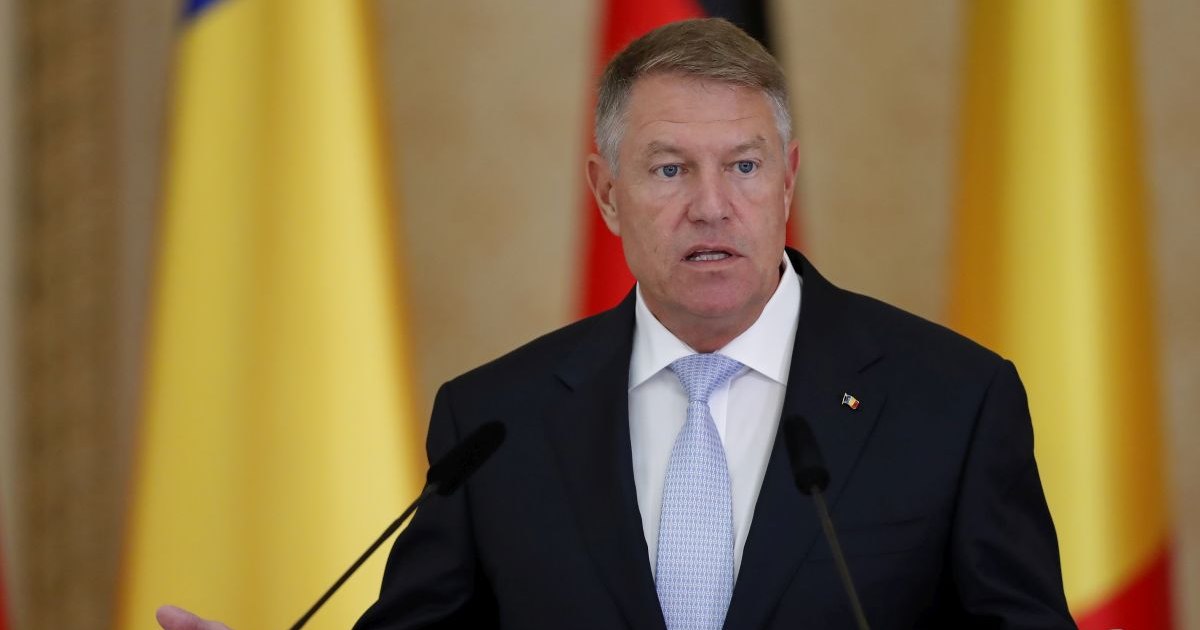
Klaus Iohannis. Photo: EPA
Klaus Iohannis announced on Monday, the decision to resign from the position of President of Romania, after the representatives of the opposition parties submitted, for the third time, the signatures for his suspension initiative from the position of head of state.
“It is a useless approach because anyway a few months I go out of office. An unfounded approach, because I have never violated the Constitution and is a harmful approach. In a few days in Parliament, the suspension will be voted and Romania will enter the crisis, because the referendum of dismissal is triggered. It will have internal effects and, unfortunately, and externally. The company will be divided. We will be of the east of the world. In order to save Romania and the Romanian citizens of this crisis, of this unnecessary and negative evolution, I resign from the position of president of Romania. I will go out of the postponement, on February 12. God bless Romania! ”, said President Klaus Iohannis.
Political analyst Ioan Stanomir declared, for the truth, that the resignation of the President of Romania Klaus Iohannis does not solve the problems that Romania is currently facing.
“Everything that happened after December 2024 was of unprecedented complexity and intensity. His resignation now certainly does not solve things. It transmits a signal regarding the need to accept political lessons, but it leaves Romania in a perspective of tension ”, said the politicalologist Ioan Stanomir.
Mayor of Sibiu for 14 years
Born in 1959, in Sibiu, Klaus Iohannis was for over ten years the President of Romania. In 2014, before being the candidate of the National Liberal Party in the presidential elections, the former physics professor was already a primary mayor of Sibiu.
Some of his close relatives of the student and Sibiu education described the former physics professor at the “Samuel von Brukenthal” Physics in Sibiu, who had been kept reserved, as an open, confident and not at -aisitive nature.
“Klaus Iohannis communicates, through gestures and attitude, stability and safety. That was the case since I know him and so I am convinced that he remained ”a former colleague of his.
Beyond the appreciation with which he was described by former acquaintances, Klaus Iohannis remained constant in the center of controversies related to the six buildings he owned in Sibiu.
Before becoming mayor, Iohannis had been a teacher at Agnita and then in Sibiu, at the college where he had formed as a student, but also a general school inspector in Sibiu, a position he had occupied until 2000, when he won the first term of mayor of the city in the center of the country.
In 2000, Klaus Iohannis would win the first term of mayor of Sibiu, where he ran from the German Democratic Forum in Romania, a formation he has led since 2001. One of the most popular achievements that was assigned was The development of the municipality, which in 2007 was designated the European Cultural Capital.
In 2012, Klaus Iohannis was chosen again mayor, for the fourth term, with almost 80 percent of the votes of the Sibiu participating in the election. A year later he joined PNL, he soon arrived in the leadership of the party, and in 2014, from the position of president of the PNL, he successfully applied for the presidential elections.
Klaus Iohannis, president of 2014
On November 16, 2014, Klaus Iohannis, then mayor of Sibiu and candidate of the National Liberal Party at the 2014 presidential elections, was elected president of Romania, with almost 6.3 million votes.
Klaus Iohannis then obtained a million votes than Victor Ponta, his second round of presidential elections, representative of the Social Democratic Party. The former professor from Sibiu started his first of the two five-year warrants, at the management of Romania, on December 2, 2014.
On November 24, 2019, Klaus Iohannis was elected for the second time president of Romania, with over 6.5 million votes, overcoming the second round of PSD representative, Viorica Dăncilă. The difference in votes between the two finalists of the 2019 presidential elections was more comfortable for the current president of Romania: over 3.2 million votes in his favor.
On December 6, 2024, before two weeks that his mandate expires, Klaus Iohannis announced that he will remain in office until the election of a new president, after the Constitutional Court of Romania decided to annul the first tour of the presidential elections.
“When the new president takes the oath, I will leave here”then declared the head of state, in a press statement held at the Cotroceni Palace. The decision of the President of Romania, confirmed by the RCC, aroused controversy, and several politicians and representatives of the civil society asked for his resignation.
Last good news: Romania’s entry into Schengen area
In the last two months of mandate, Klaus Iohannis had only a few public appearances, one of them being in the context of Romania’s accession to the Schengen area.
“Today I have good news! Romania is in Schengen with full rights! This morning, in Brussels, the decision on the accession of our country was made and with the terrestrial borders at the Schengen area, with application from January 1, 2025, a decision expected too long by us all ”, announced Klaus Iohannis on December 12, 2024
From December 31, 2024 and until the announcement of his resignation, published on his Facebook page, the President of Romania has not published any message on his main social page, Facebook, where he has 1.8 million followers.
Some political analysts explained that although in his two mandates, Klaus Iohannis was far from the opening that his former close and did not arouse emulation, represented an acceptable alternative to the Romanian Presidency.
“He was an alternative to Victor Ponta and Viorica Dăncilă. He was not chosen because he was extraordinary, but because he was considered a better option than the others, simply, ”said the political scientist Cristian Pîrvulescu.
His public appearances were discreet, at least compared to those of two other predecessors in office, Traian Basescu and Ion Iliescu, and the President of Romania was often perceived as distant towards Romanians, the specialists in politics showed.
In the internal level, however, he managed to impose, after extensive debates, the “Educated Romania” program, meant to provide necessary reforms in education, which led to the adoption of the laws of education in 2023. Among the targets of this program were the increase of education, the decrease. The early school departure rate, the reduction of functional illiteracy, the learning of digital skills and the increase of the number of graduates of higher education.
The political scientist Ioan Stanomir showed that in foreign policy, Klaus Iohannis has managed to be a factor of stability and predictability in the ten years of mandate.
