
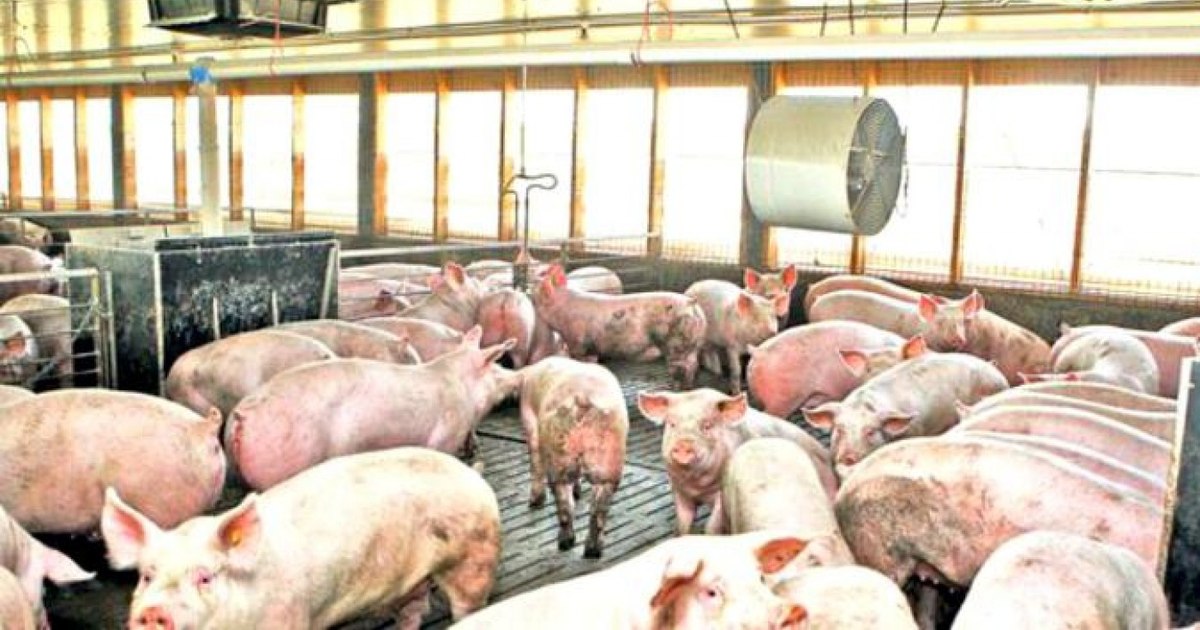
The swine fever re -enters the northern border of Romania. In Botosani County, the authorities talk about an aggressive evolution of the disease that risks producing important economic damages. One of the main factors for spreading the disease is the private breeders.
African swine fever can be a danger to photo holdings archive
The African swine fever (PPA) continues to be a threat in Romania, with potential huge economic losses. At the northern border of the country the sanitary-veterinary authorities have drawn an alarm regarding an aggressive evolution of the disease from the beginning of this year. There are already five outbreaks in the domestic pig in Botosani and dozens of wild boars have been found dead and detected positively on the hunting funds in the county. The heads of the Veterinary Sanitary and Food Safety Directorate (DSVSA) Botosani say that the main factor of transmission of the disease is man. Or, more precisely, the villagers who do not respect any norms of protection of the animals in the household and sometimes behave irresponsible.
The wild boars on the Ukraine-România route
The African swine fever debuted in Romania in 2017. Since then, 2100 outbreaks have been registered with almost 10,000 injured farmers at national level. The evolution of the disease was in waves, with a pandemic peak followed by periods of relaxation. The heads of the Veterinary Sanitary Directorate of Botosani observe with concern the evolution from the beginning of this year. It is a very aggressive evolution especially among the wild boar population. From January 2025 and so far, 38 wild boar pigs have been found on hunting funds, all positively tested at African swine fever. Since the beginning of the year, five outbreaks of African swine fever have been recorded in the domestic pig.
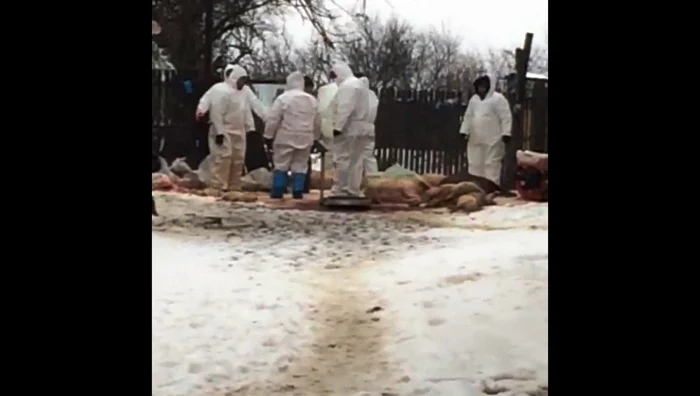
Pigs sacrificed in Romania African swine fever Photo archive
“You can see the first three outbreaks in the southern part of the county, also with Mistreț origin, and the last two in Cristinești and Fundu Herţii, on the northern area where it has evolved and evolves the swine fever at the wilderness. So there is a direct connection between the silvatic and domestic part”says Teodor Harabagiu, director of DSVSA Botosani. Cristinești commune, of which the town of Fundu Herţii is also part, are on the border with Ukraine, in a strongly forested area that extends on both sides of the border. It is suspected that the wild boars pass through the forest area this border territory and carry the disease throughout the western area of the county.
“The one who transmits the easiest is the man”
The heads of the Veterinary Sanitary Directorate of Botosani say that, beyond the circulation of wild boars on the area of forest that connects the north to the south of the county, on its western side, the man is in fact the main vector of transmission of the disease. Especially the locals who grow pigs in the beating. And this for them does not comply with even the minimum biosecurity rules, despite their promotion through all the communes.
“In general, the one who most easily transmits the disease is the man because he has access to the forest, he has access to plant harvesting, transported wood, all and take home the disease, to the houses in the household.says Teodor Harabagiu.
“We must admit that there is also the reverse part when the man dies a pig goes and throws it into the forest. We also have such cases.”adds the head of DSVSA. Local sources say that there were also cases of villagers who took wild boar housings found dead and tried to bring them home to feed the dogs.
Among the measures recommended by the DSVSA specialists, but too little respected, are: disinfection at the entrance to the pigs through a tray with sponge or straw soaked with a biocid recommended by the veterinarian, raising pigs in closed spaces without contact with the forest, the pigs or the domestic animals, or in the water. contact with household pigs for 48 hours after any hunting activity.
DSVSA representatives say that there is no vaccine for this disease and the only preventive method is to comply with biosecurity measures, among which those stated above.
Irresponsibility costs
DSVSA Botoșani chiefs say that non -observance of these measures and acts of irresponsibility such as throwing dead pigs in the woods, slaughtering pigs that show illicit disease and selling them, as well as bringing wild boar huge economic damage.
“Without responsibility, the economic losses are very high and I mean that not all the time damages are given for the animals that have been euthanized. When it is an uncontrolled movement, when they are not identified, the owner does not receive any money.”says Teodor Harabagiu. African swine fever is a feverish hemorrhagic viral disease that affects the domestic pig and boar. It is produced by a virus from the aspharviride family and propagates extremely quickly, being very contagious. When a focal is detected, the animals are euthanized and the carcasses eliminated by a special procedure.
