
The most powerful medieval fortresses in Romania have resisted many sieges and the passage of time and although they have lost their initial role for centuries, they have become landmarks of historical tourism and legendary places for Romanians.
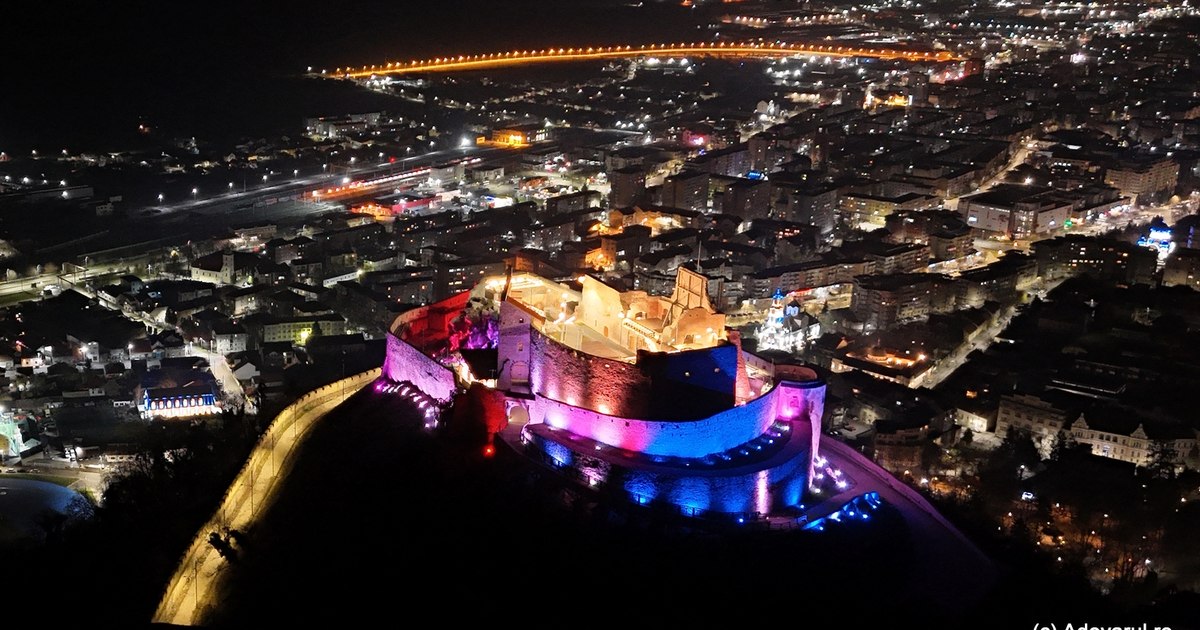
The fortress of Deva, adapted to time. Photo: Daniel Guță. TRUTH
Most medieval fortifications in Romania can be explored in the historical region of Transylvania. The oldest of these date from the 12th century. In the Middle Ages, this region, surrounded by the Carpathian chain, represented a border territory of the Hungarian kingdom, being often tried by the invasions of the Tatars and the Ottomans.
The fortresses spread throughout the land, beautifying the ridges of the hills, cities and rural settlements.
Many of the cities have been raised on the ruins of ancient settlements, previously used by Dacians and Romans. Others appeared in the center of the villages founded by the Saxon colonists, brought by the Hungarian kings from the 12th century and established here with important privileges, in exchange for the defense of the borders.
The hilly and injured relief of Transylvania encouraged the erection of these fortifications, as opposed to the areas of SES in Moldova and the Romanian Country. The walls of many medieval fortresses have resisted the passage of time, even after destruction or abandonment.
Over seven centuries, full of disturbing events, they passed some of them, before being rehabilitated in the 20th century and played tourism.
Many of the old fortresses have been restored recently, being transformed into tourist attractions. Today, they have become emblems of cities developed around them and points of major interest in the region.
Other medieval fortifications, fewer, but equally important as historical landmarks, can be visited in Moldova, Dobrogea and Muntenia.
The truth presents you some of the most emblematic medieval fortresses of Romania.
The fortress of Deva – the hard to conquer the Transylvania
The medieval fortress of Deva (Hunedoara county, video) was erected in the middle of the 13th century, on the peak of a prominent volcanic cone, which is distinguished between the massifs of the Poiana Ruscă mountains, offering a broad visibility on the Mureș Valley and the Apuseni Mountains.
On the hill of the fortress were discovered vestiges attesting the dwelling of the area from ancient times, and a legend claims that the tomb of King Decebal would have been here. The Romans used the strategic position of the place to supervise the large valley of Mures and the Aurifer Land in Apuseni. In the Middle Ages, the fortification has become a key point in the defense of Transylvania.
“The fortress is undefeated, being a master on such an important river, which is close, because in no other way it can be reached on the mountain. It is always supplied with everything needed to support any strong siege for three or more years and has the advantages of the river, of the neighboring forests and of the mountains, to be helped and to be saved,” He wrote in the sixteenth century Giovanandrea Gromo, a counselor of King Sigismund.
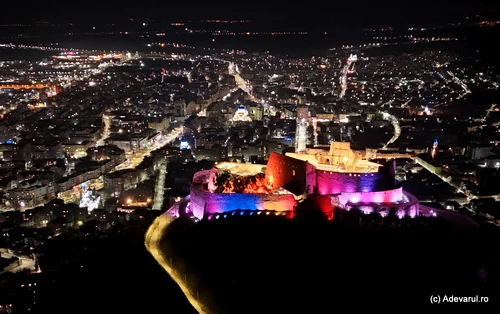
Image 1/22:
Deva Fortress Night Photo Daniel Guță (10) JPG
Evlîya Çelebi, famous chronicler and Ottoman traveler from the seventeenth century, was also impressed by the fortress of Deva:
“A solid fortress, difficult and strong, on a steep rock, which raises its head to the crest of the sky, on the edge of the Mureş river. Because from any part it cannot be prepared for mining, it is not possible to be conquered in any way. Only by siege and hunger, by teaching it can be taken,” This note, after visiting the place during an Ottoman incursion in Transylvania.
The fortress has been besieged several times throughout history, but its major destruction took place in August 1849, following a strong explosion in the ammunition warehouse. A local legend, recorded by the historian Octavian Floca, says that the explosion was caused by a jealous husband, who wanted to avenge his unfaithful wife and his lover, an officer in the garrison.
The fortress of Deva has been completely rehabilitated in the last decade, and from 2024 it has been officially reopened for visitors, entering the tourist circuit of Transylvania again.
Râșnov Fortress, built by Teutoni
Râșnov Fortress in Brașov county is among the best preserved medieval fortifications in Romania. It is believed to have been built at the beginning of the 13th century, on the hill of the fortress, the place of an older settlement. The main purpose of the fortress was to control access to Transylvania through Bran Pass.
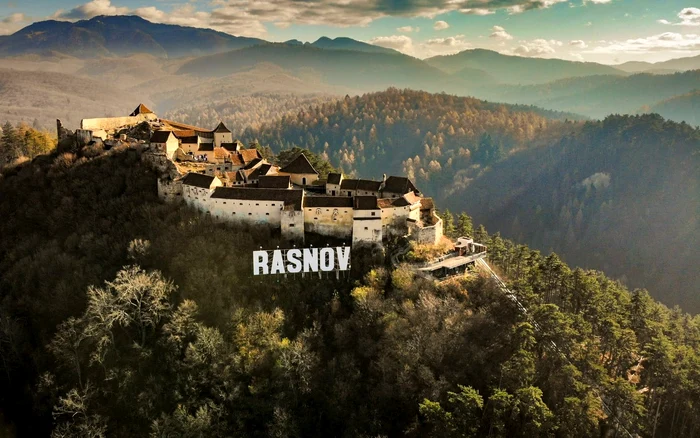
Râșnov Fortress: Source Râșnov Facebook.
“Since ancient times, the fortifications on the rock of the Cetatei Hill in Râșnov protected a settlement. The first medieval fortress in Râșnov was built by the Saxons and the Teutonic Knights between 1211-1225, as long as the crusted rule in Bârsei Country.informs the official website of the fortress, the fortress-Rasnov.ro.
During the Tatar Invasion of 1335, when the Bârsei Country was completely devastated, Râșnov Fortress, “seated on a high mountain”, resisted the siege and saved the lives of the refugee inhabitants between his walls.
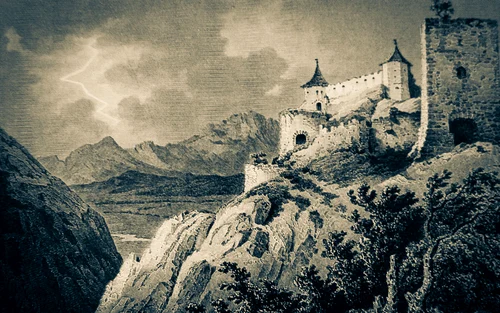
Image 1/5:
Rasnov fortress, engraving by Ludwig Rohbock JPG
“The fortress served as a place of refuge for the community in Râșnov until the eighteenth century. The culminating moment, which left us the current architectural dowry-made up of defense walls, towers and cottages-was the period of the medieval fortified fair, considered the second fireplace of residential.”is shown on the site.
Severin Fortress, the strategic fort on the Danube
Located on the Danube, near the Roman Castră Drobeta and the ruins of the bridge built by Apollodor in Damascus, the medieval fortress of Severin was one of the most important fortifications on the river.
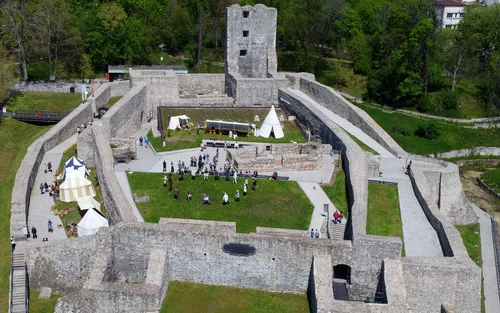
Image 1/4:
Severin Fortress Photo City Hall Drobeta Turnu Severin (3) JPG
According to some historians, it was erected in the middle of the 13th century by the John’s Knights. During its flowering period, the fortress fulfilled a double role: military – in defense against Ottoman – and economical incursions, being located at a crossroads and naval routes.
A city of merchants developed around the city, strengthening the strategic importance of the area.
In 1524, following a devastating attack of the Turks led by Suleyman Magnificul, only a tower remained in the city, which led to the popular name of “Sever’s Tower”. Rehabilitated in recent years, the fortress represents today, along with the ancient ruins in the area, one of the most valuable historical objectives of Oltenia.
The legendary fortress of Moldova
Constructed of stone at the end of the fourteenth century, on the ruins of an older settlement, the Neamț Fortress was part of the strategic fortifications network of Moldova, along with the cities of Suceava, Hotin, Soroca, Orhei, Chilia and the White Fortress.
These fortifications played an essential role in the resistance of Moldova against the Ottoman invasions led by Muhammad II and Soliman Magnificent, in the 15th-XVI centuries.
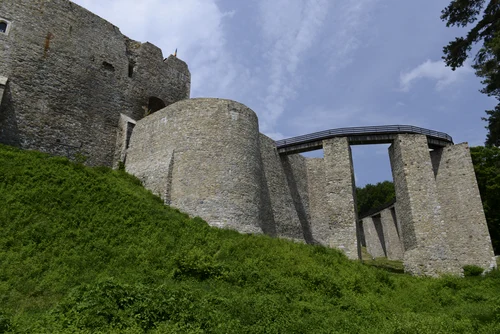
Image 1/4:
Tg Neamt Fortress of Neamt 6452 JPG
Her founder would have been Peter I Muşat (1375-1391), but Stephen the Great is the one who strengthened it and transformed it into one of the most redable fortresses of the time.
The fortress entered the legend through the dramatic story of his siege by the Polish king Ioan Sobieski, a story rendered by Costache Negruzzi in the 19th century. After an incursion of the Polish soldiers in Moldova, in 1691, 19 Moldovans would have barricaded themselves in the abandoned fortress and, although deprived of military support, refused to surrender. Impressed by their courage, Sobieski would have given up the punishment and spared their lives.
The fortress was destroyed in 1718, at the order of the ruler Mihai Racoviță. Restored in the modern era, it remains a symbol of heroism and medieval Moldovan history.
The Enisala fortress, the outpost of the Danube’s mouths
One of the few medieval fortresses in Dobrogea that have been preserved to this day is the Enisala Fortress, built in the second half of the fourteenth century. Its lifting was attributed to the Genoese merchants, who owned the navigation monopoly in the Black Sea. Other historical hypotheses indicate a possible Byzantine or even Bulgarian origin, from the time of Vidin.
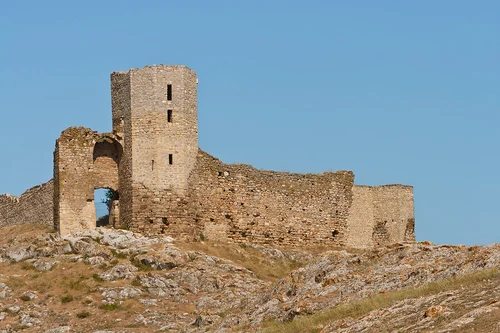
Image 1/4:
1280px the ENISALA WIKIIPEDIA JPG fortress
The fortress has an irregular polygonal plan, adapted to the relief, and its walls and bastions are still preserved today at heights of 5-10 meters. During the reign of Mircea cel Bătrân, Enisala was integrated into the defensive system of the Romanian Country.
It was abandoned towards the end of the fifteenth century, amid the advance of the Ottoman rule in the north of Dobrogea and the geographical changes that led to the isolation of Lake Razim from the Black Sea, thus diminishing its strategic importance.
The name “Enisala” comes from Turkish – Yeni hall, that is “new village”. This name was given in the Ottoman period, and the original name of the fortress is not known with certainty.
