
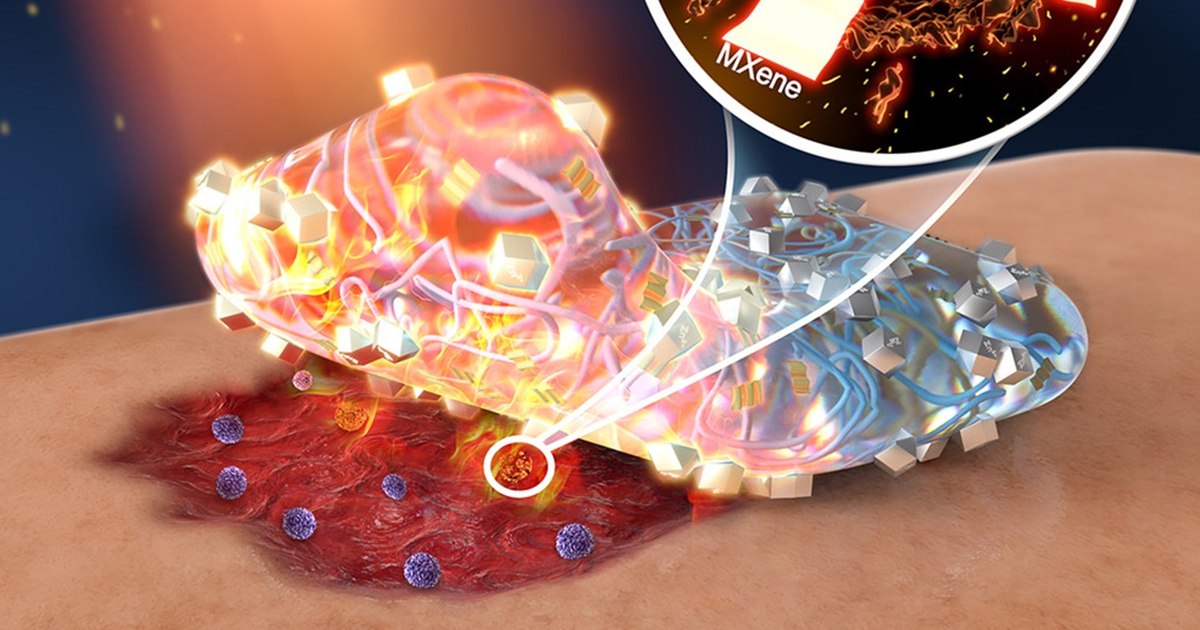
A group of Spanish researchers has designed a smart patch that eliminates bacteria without using antibiotics, activating only under the action of solar light. This invention could replace the classic patch used for decades to protect the wounds.
Smart patch that heals wounds with the help of solar light without antibiotics photo cell com
Traditional patches are an essential element in any first aid kit. However, with the technological advance, their future becomes uncertain: from intelligent bandages and pies that prevent scars formation, to a new photocatalytic material capable of treating infections with solar rays.
How smart patch works
The new revolutionary patch, created by the researchers at the Institute of Madrid Materials Science (ICMM), part of the National Council of Scientific Research (CSIC), is designed from a porous material, applicable directly on the skin, which reduces the development of bacteria without using antibiotics-a major advantage in an increasingly affected world. Under the action of solar light, the material becomes active and fights infections directly to the source.
Solar therapy, a promising solution to treat wounds
This innovation can be an essential step in the prevention of post-operative infections or in the treatment of chronic wounds, especially in areas with limited access to medical treatments or in emergency situations.
In short, the sun is no longer just the natural source of vitamin D, but could soon become an important ally in healing wounds.
A new weapon against bacteria: Sun Light
Spanish researchers have developed a new photocatalytic material that could become an effective weapon against bacterial resistance: a substance that combines metal-organic compounds (mof-after the name in English) with cellulose.
Applied on a wound, like a patch, this material activates under the action of solar light and inhibits the development of bacteria, according to a study published in the scientific journal ACS Applied Material & Interfaces. The work highlights the potential of photosensitive compounds and opens the way for innovative antimicrobial treatments, which does not require the use of antibiotics – a promising solution in the fight with bacterial resistance.
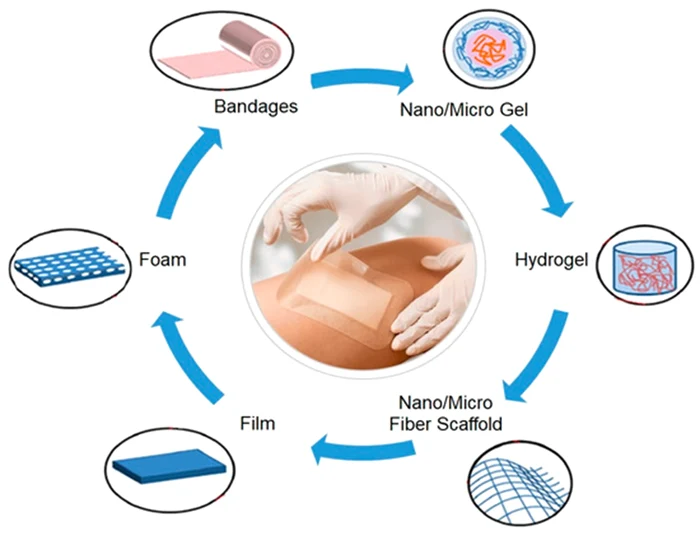
Smart patch that heals wounds with the help of solar light without antibiotic MDPI com
“Photosensitive materials are a promising alternative to combat bacterial resistance by photocatalytic antimicrobial therapy”explains Margarita Darder, researcher at ICMM-CSIC and the main author of the study, in a press release.
This also states that photocatalytic materials are substances that react to sunlight, generating molecules “Capable to eliminate a wide range of pathogens”without the need for the use of antibiotics.
Smart patch created from titanium and cellulose, activated by the sun
To create this innovative material – which could replace the traditional patch – the research team used crystalline and porous materials, made up of metal atoms and organic molecules, known as mof. “I used a titanium -based mof, which is biocompatible and does not have significant toxicity”he explains, in a statement, Javier Pérez-Carvajal, a researcher at ICMM-CSIC and the main co-author of the study.
This mof has nanometric dimensions (on the order of a billion meter) and has been combined with cellulose – a completely renewable, biodegradable, biocompatible and easy to adapt according to specific needs.
Thus the researchers managed to create “A material that, when made in the form of a film or dressing, is flexible and transparent”as Pérez-Carvajal adds.
Once manufactured, the material can be applied directly to any wound, where it acts autonomous under the influence of solar light. However, the invention does not completely stop the development of bacteria, but contributes significantly to its reduction. “I noticed an increased inhibition of bacterial development after a chemical modification of the mof, which makes it more active under the sunlight”points out Margarita Darder.
Successful tested: Paths that reduce bacteria by 58%
One of the essential characteristics pursued by researchers for the use of these materials in the form of patches or dressings is the flexibility and malleability of the films, so that they can easily adapt to the surface of the wounds. In addition, it offers ease in implementation and mechanical resistance.
In order to check their efficiency, the research team has already tested this material against golden staphylococcus (Staphylococcus aureus), a bacterium responsible for most staphylococcal infections.
“The reduction of bacterial growth exceeds 50% under visible light”says Margarita Darder. Specifically, the researchers observed a decrease of about 58%. These preliminary results support the potential of bioneno-composite films as dressing for treatment.
For his part, Pérez-Carvajal adds that the pores of the mof allow the incorporation of some drug substances into the material. This additional functionality could further increase the antibacterial effect of the dressing.
“The results of this preliminary test demonstrate the applicability of the materials developed in the photocatalytic antimicrobial therapy”says the researchers.
This technological and medical innovation strengthens the feasibility of photocatalytic antimicrobial therapy – an emerging strategy that follows alternatives to traditional antibiotics in treating infections.
Thus, this “Banding/solar bandage” Innovator marks an important step towards treatments for more durable, effective and safe injuries. It is joined by other state -of -the -art medical devices that transform modern medicine – from intelligent patches that detect cardiac abnormalities, to revolutionary bandages that monitor in real time the healing of chronic wounds, through an application.
