
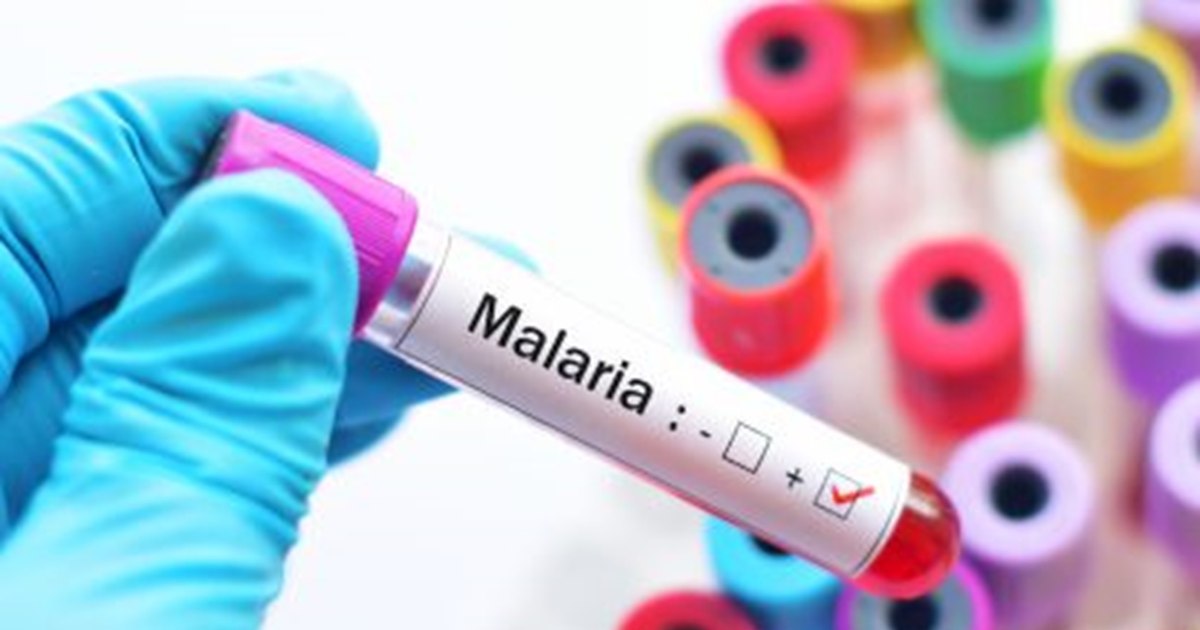
The first case of malaria of a patient who has not left the country raises suspicion about the possibility of existence or occurrence of a local outbreak in Romania.
Specialists do not exclude a local malaria outbreak in Romania. Photo: Archive
Specilists in infectious diseases do not exclude the possibility of Romania already facing a local malaria outbreak, after the first malaria case has been registered in the last decades in a patient who has never left the country.
The patient, a 69 -year -old man, was presented at the hospital with digestive problems, and after the analyzes was diagnosed with malaria. Currently, its condition is stable, and doctors estimate that it could be discharged in a few days.
Local transmission outbreaks have been identified in the anterior years in several European countries, including Greece, Italy, Spain and France.
In Romania, Malaria was eradicated in the 60s, and since then all the cases detected were only in patients who had contracted the disease abroad. Now, for the first time, the appearance of a case in a patient without a travel history raises question marks among infectious doctors.
“We consider that a local transmission of malaria, vectorial, which means transmission through local mosquito and not to be brought to the country,”, said Simin Aysel Florescu, the manager of the “Victor Babeș” Hospital, quoted by Antena3.
The fact that the diagnosed patient has never left the country causes doctors to take into account the hypothesis of a local outbreak, given that climate change and migrations can promote malaria transmission.
“The part of the great population movements, large groups of people who migrate, for the purposes of refugees and many other things that we see, and these people can be infected asymptomatically, in their turn, and generate these things without wanting to be, if there’s a big tank, can be infected. explained Simin Aysel Florescu.
Specialists from the Cantacuzino Institute specify that at present, in Romania there are 11 species of Anopheles mosquitoes capable of transmitting malaria, but nevertheless, the risk of the disease remains low, because they are different from those predominant in Africa and Asia, where malaria is a major public health problem.
The disease can start with fever, chills, nausea, vomiting and muscle pain, but in severe forms it can evolve into jaundice, convulsions, coma and even death.
Researchers warn that climatic changes contribute to the expansion of insects area that can become vectors for tropical diseases, in the context in which insect invasions are increasingly common in Romania.
“The risk comes from the fact that the area of these species extends due to global warming, so that we are facing the Tiger mosquito, which 20 and some years ago we did not have. explained Alexandru Filip Vladimirescu, a researcher at the National Institute for Medical-Military Development “Cantacuzino”.
In addition to mosquitoes, in recent weeks Romania has faced butterflies, gargoyles and locusts, but these species are not a danger to public health, experts say.
