
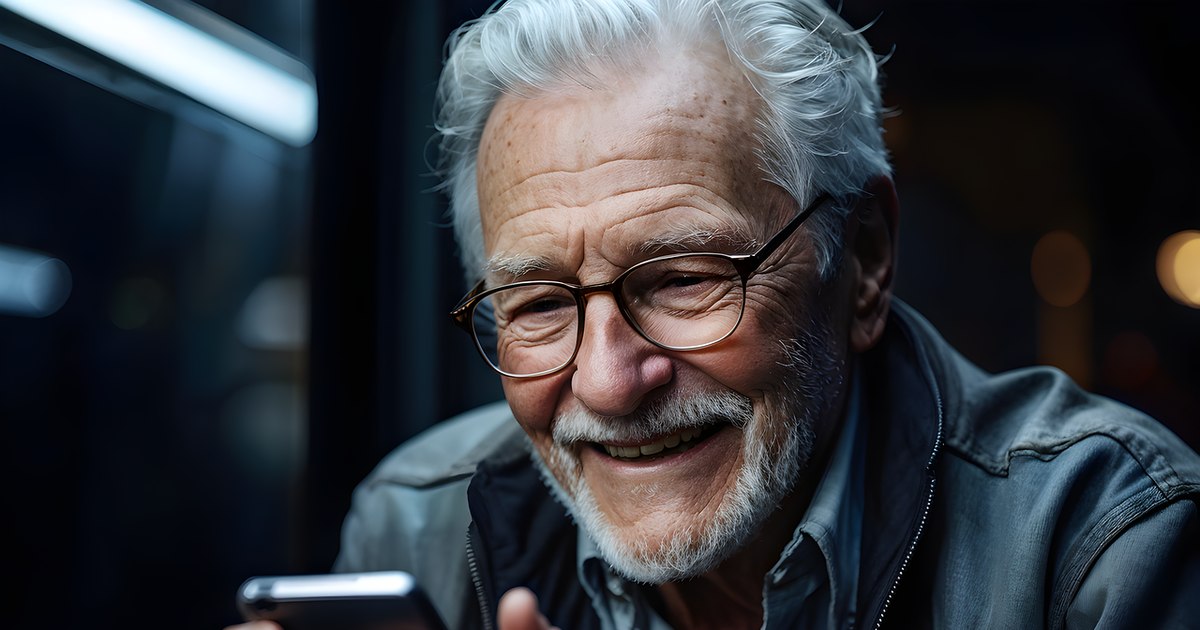
For many elderly, the absence from the digital space is not comforting, but with fear, shame and the feeling of becoming a burden to others. In a society that moves more and more services in the online environment, the lack of digital skills limits access to information, reduces autonomy and deepens social isolation. Psychologist Mihaela Hofman draws attention to the emotional dimension of this phenomenon and the risk of strictly treat from a technical perspective.
Photo source: pixabay
According to the National Institute of Statistics, people over the age of 65 represent almost 20% of the population of Romania, ie about 3.7 million people. Beyond this demographic indicator, a worrying reality is outlined: 1.4 million elderly live alone, and many of them face accentuated forms of isolation and social disconnection.
“The lack of basic digital skills signals a much deeper problem than the simple lack of access to technology”declares, for the truth, the clinical psychologist Mihaela Hofman. From its perspective, digital exclusion is not only a technical problem, but also an emotional one, which activates deep mechanisms of shame, fear and social withdrawal.
“From a psychological point of view, digital exclusion deepens the feeling of inadequacy and uselessness, feelings that can occur with professional disagreement.“, she explains.
Behind the reply “What do I need?” They often hide real fears: fraud, loss of control, to be fooled. “This reluctance is not a mere lack of will”, Sput the psychologist, “But a natural reaction of self -protection to the unknown and potential dangers.”
For many people, especially in the context of rapid changes in society, deciding to remain “offline” becomes a form of coping. However, in the absence of real support, this strategy leads to isolation and dependence on those who master the technology.
“The lack of these skills generates an dependence on other people who master the technology. This addiction can amplify the perception of being a burden, contributing significantly to the degradation of self -esteem.” explains Mihaela Hofman.
In his opinion, in order to transform this negative dynamics, it is crucial to address the problem in a comprehensive way. “It is not enough to offer only basic courses; we must understand and respond to emotional and psychological barriers. The programs dedicated to seniors should focus on increasing confidence in the digital environment, but also on the risks and methods of protection.says the psychologist.
Romania is in the last place in the European Union in terms of basic digital skills: only 28% of Romanians have such skills, compared to a European average of 54%, according to Digital Economy and Society Index (although 2022).
The pandemia emphasized this break, hurrying to pass the services in the online environment. In the absence of adequate support, there is a risk that the elderly will be excluded not only digital, but also socially, in a society in which more and more interactions are based on internet access and minimum technical skills.
In the context of a European population in an accelerated aging process, the participation of the elderly in the digital society becomes a challenge of public policies, but also a problem of fundamental rights, I attract the attention of the specialists. A recent international study, “Active Aaging and Digital Inclusion: Identifying Opportunities and Barriers for the Participation of Older in the Digital Society”, published in the Magazine Sustainability (2024), stresses that active aging and digital inclusion are two interdependent goals and that, without an empathetic approach and adapted to the realities and adapted to the realities of the psychosocial. of the elderly, the digital gap will continue to deepen.
“Active aging and digital inclusion are two interdependent strategic challenges for public policies and society. The participation of the elderly in the digital world can improve the quality of life, health, autonomy and civic participation. (…) An integrated approach is necessary to take into account the diversity of the elderly, to encourage learning, Thus, digital participation becomes a key component of active aging and social cohesion ”, reveals the quoted document.
It’s not just about access but meaning
The authors point out that the simple access to the internet or a connected device is not enough. Real participation in the digital world involves a number of interconnected factors: from functional digital literacy, to trust, autonomy and emotional support. The lack of these components not only limits the use of technology, but they contribute actively to social isolation, to decrease self -esteem and to accentuate the feeling of uselessness – especially after leaving the activity.
Barriers identified in the study include: anxiety in the face of technological failure, fear of fraud, lack of support networks and, perhaps most importantly, lack of real motivation. Many online platforms and services are not created taking into account the needs of the elderly: small fonts, complex interfaces, confused security steps. In the absence of an inclusive digital ergonomy, the elderly remain outside an increasingly essential space for everyday life.
According to the authors, the digital inclusion of the elderly must be understood as a condition of active participation in society, with a direct impact on health, autonomy, access to services and civic involvement. Therefore, public policies should overcome the simplistic logic of “senior courses” and emphasize personalized learning, community support and collaboration between generations.
What is happening locally
Romania takes concrete steps to support the elderly to adapt to the new digital reality, lately. From free community workshops to courses sustained in social centers, more and more initiatives show that digital literacy is not only a practical competence, but a condition for inclusion and autonomy.
One of the most visible programs from us is Hi Digital, developed by the Vodafone Romania Foundation with the Royal Foundation Margareta. It offers digital initiation courses for people over 65, in cities such as Bucharest, Cluj, Arad, Bacău or Galați. Participants learn to use mobile phone, seek information online, send messages, order products and recognize fraud attempts. The sessions are practical, adapted to the individual rhythm, and are held in an empathetic environment, where each question matters.
In Bucharest, the General Directorate of Social Assistance organizes, in partnership with HI Digital, weekly workshops in four day centers: Perla, Hominis, Saint Theodora and Cajal Home. Seniors receive individualized support to learn the basic functions of the smartphone, how to communicate online with family or how to access essential services, from medical appointments to utility payments.
The program also includes an intergenerational mentoring component: seniors who complete the courses can become, in their turn, community trainers. In parallel, organizations such as “never alone” support people who cannot move, offering home visits and printed materials, thus contributing to the digital inclusion of the most vulnerable of us.
These initiatives combat not only the digital gap, but also the risk of isolation and marginalization. In a European context in which only one third of the elderly use the internet actively, digital education becomes a priority of social inclusion. Each senior learns to send a message, seek information or protect online earns more than a technical ability: they regain its independence.
So, if we want digitization to be a cohesion force and not an exclusion, we must start with the deep understanding of the reasons why many elderly choose to remain “offline”. Refusal is not a whim, but sometimes the only form of self-protection in a world that they have not been taught to browse.
