
Cancer does not start with diagnosis; Often, it develops silent over the years. Researchers recently discovered a “Black box of cancer” – An invisible journal that retains the entire evolutionary trajectory of the tumor, just as the black box of a plane monitors the origin, direction and speed of flight. This trajectory is encoded in epigenoma, through a special type of epigenetic brand called fluctuating methylation. So far, methylation was considered only a switch for generating or disabling genes, but the study shows that it also retains a detailed fingerprint.
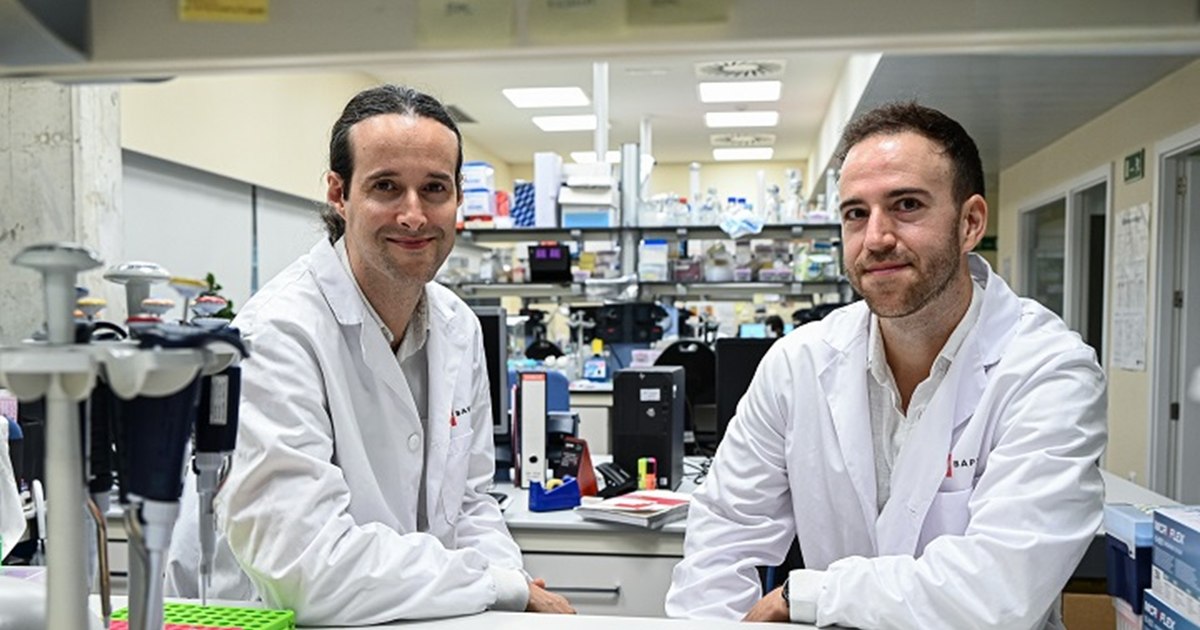
Researchers Inaki Martin Subero and Tuesday Duran Ferrer and the black box of cancer. Barcelona
The innovative method based on DNA methylation, used to decipher the origin and evolution of cancer and predict its future clinical path, has been developed by an international team led by Clínic-Iibaps -ub, together with the London Cancer Research Institute. The study, recently published in the magazine naturallyanalyzes the evolution of tumors in 2,000 patients with leukemia and lymphomas.
In this article, you will find out how the researchers managed to decode this epigenetic signature, what can tell us about the origin and evolution of tumors and how these medical discoveries open new perspectives for predicting cancer and for personalized treatments.
Development of deciphered cancer: Evoflx algorithm analyzes the epigenetic signature of the tumor
The research team discovered that the initial cell that gave birth to the tumor leaves a unique methylation signature, which not only identifies the tumor cells, but also follows how the tumor evolves and diversifies. Using advanced mathematical models, the researchers managed to decode these patterns, reconstructing the origin and evolution of the tumor with unprecedented precision and allowing the prediction of future progression of the disease.
The created algorithm, EVOFLUX, has been tested on 2,000 samples from patients with different types of leukemia and lymphoma. “We have re-analyzed old epigenetic data from a completely new perspective”, explains Calum Gabbutt from the London Cancer Research Institute.
“What appeared before the background noise now reveals the evolutionary history of cancer”, adds Martí Durán-conferer from Idibapaps.
Iñaki Martín Subero, leader of the Epigenomic Group from Idibaps emphasizes: “This tool allows us to read the tumor history, to understand the moment of its occurrence, the speed of growth and the cell diversity, thus deepening the understanding of biology cancer and offering direct applications in the clinic ”.
The evolution of cancer and customized treatments: The tumor history helps to anticipate the development of the disease
Starting from the hypothesis that understanding the past of cancer can help predict its clinical evolution, the study has analyzed samples from lymphoid cancers – from pediatric leukemia, such as acute lymphoblastic leukemia, to adult forms, such as chronic lymphocyte leukemia.
By examining the anonymous medical files, the researchers correlated how the tumor initially developed with the subsequent aggression and evolution of the disease.
“The cancers change over time, which significantly complicates their treatment, and I discovered that the way cancer Initially it increases determines the future evolution, giving us the opportunity to predict the progression of the disease for each patient. Is a major step forward in customizing treatment cancer“explains Trevor Graham.
Iñaki Martín Subero completes: “In the case of chronic lymphocyte leukemia, a form of cancer that does not always require immediate treatment, this test allows us to anticipate years before the disease will require intervention.”. He adds: “Although our study focused on leukemia and lymphoma, we believe that this method can be applied to all types of canceroffering a new perspective in understanding and managing the disease ”.
The study was coordinated by Iñaki Martín Subero, associate professor at the Faculty of Medicine and Health Sciences of the UB, researcher and leader of the Biomedical Epigenomic Group from Idibaps, member of Trevor Graham, director of Center for Evolution and Cancer at Institute of Cancer Research. The main authors are Calum Gabbutt and Martí Duran-Fferrer, and researchers from Spain, the United Kingdom, Sweden, Switzerland and the United States collaborated.
Conclusion: “The Black Box of Cancer” opens new perspectives in personalized treatments
Understanding “Black box” of cancer – the unique epigenetic signature of the tumor – offers an unprecedented look at the origin, evolution and progression of the disease. Recent studies show that decoding these patterns allows not only to identify tumor cells, but also to anticipate aggressiveness and future treatment. This revolutionary approach opens the way to personalized treatments, optimizing clinical strategies and, finally, increasing patients to receive interventions at the right time.
By applying these medical discoveries to different types of cancer – from pediatric leukemia to adult forms – researchers offer a new perspective in managing oncological diseases, transforming how medicine can provide and combat tumor progression.
