
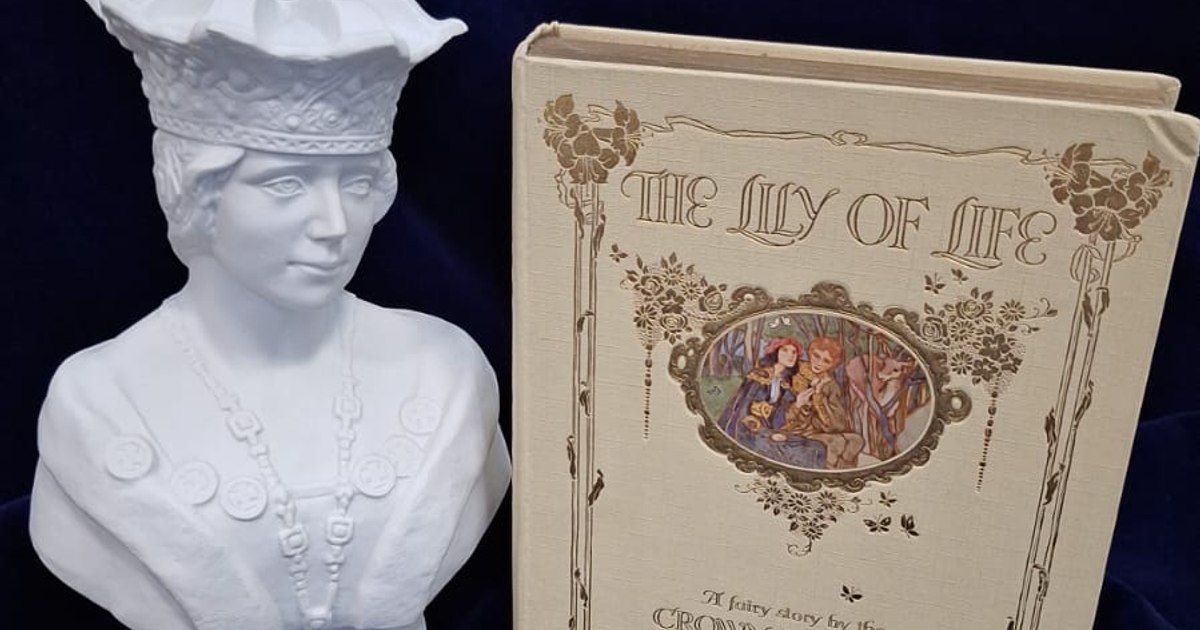
Queen Maria, the woman who made Greater Romania possible, had a romantic soul, and memorable writings were born from her talent.
For Queen Maria, the brush was a means of liberation – an elegant escape from the rigors of the Court, but also an affirmation of her creative identity. He started painting during lessons with teacher Ruth Mercier, specialized in watercolor flowers, and admits: “I had well captured Mercier’s craft of using colors diluted in an abundance of water, so that my flowers… retained a velvety depth that recalled nature and delighted the eye”. The result: numerous decorative watercolors dominated by lilies, irises, poppies, flowers from his gardens in Pelișor and Balcic.
First major work: a book painted on Japanese paper. Then he painted one for his husband, King Ferdinand, on parchment. She herself said about it: “It is my most important work… and it was planned with the idea of leaving something to our house that could not be alienated.”
From brush to pen
Queen Maria, the woman who made Greater Romania possible, had a romantic soul, and memorable writings were born from her talent. “Even from childhood I was gifted with a vivid imagination and I liked to tell stories to my sisters, and later to my children. Beauty played a big part in everything. Beauty of any kind attracted me, so clearly did I see all that I told that I made my listeners wander through desolate places, on mountain tops, on long sea shores, or through terrible places where the four winds met. One day my little girl Elisabeta said to me: “Mother, you should write all this down, it’s a shame to let such beautiful paintings be erased, you should keep them. You were born to write fairy tales”” the queen remembered.
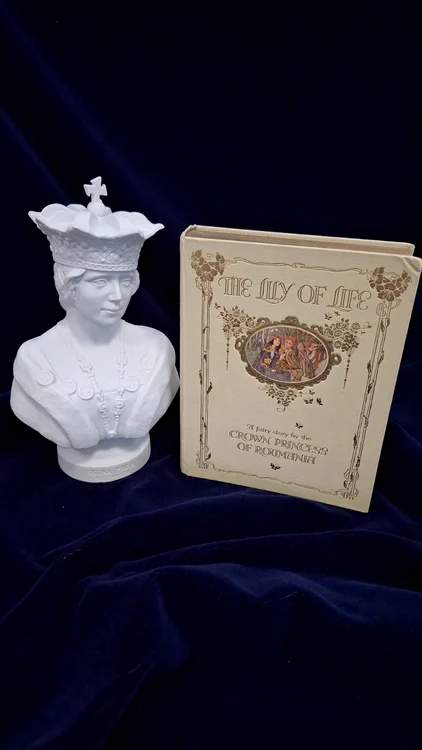
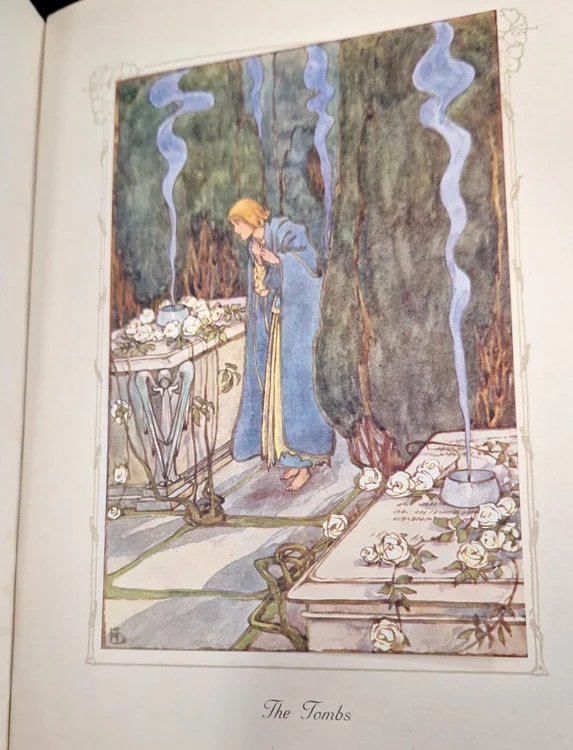
One of the memorable books written by the future queen of Romania is “The Lily of Life, a Fairy Tale”, a volume that Her Royal Highness Princess Maria of Romania wrote in 1913, also being the editorial debut volume of the future Queen Maria of Romania. One of the first editions of the book was recently purchased by the County Library “IN Roman” Constanta. “It is a volume that I searched for quite a lot through antique shops in Romania, but the selling costs far exceeded the buying costs of a library. We were lucky enough to find it in an antique shop in Bacău county, from which our institution has previously bought documents and which informed us that it had this book in an exceptional state of preservation”says librarian Doina Moșoiu, from the Special Collections section, for “Weekend Adevărul”.
Art Nouveau illustrations
The purchase price was 2,700 lei, but the value of the book is inestimable.
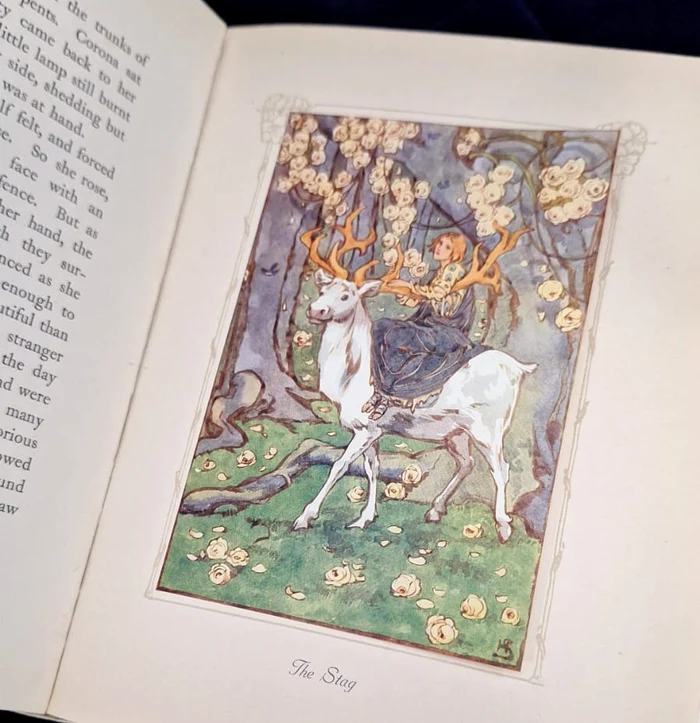
“Keeping the original binding it is very difficult to find a 1913 volume in such good condition. It has a very beautiful cream cloth binding with gold trim and a medallion on the front cover. The volume also has all the Art Nouveau illustrations by Helen Stratton, pictures that complement the text, in each chapter. The paper is beautiful, thick, handmade I believe, the binding is exceptional, it is a volume the complete bibliophile. It is a complete volume and gives it even more value”says the librarian.
The book of the future Queen of Romania was published by a publishing house in London that still exists. The subject of the book is the story of two sisters who are in love with the same young man and one of them gives up the boy because of the love she had for her sister. But he falls ill and she sets out on a journey to find the miraculous cure, this lily of life, to bring him back, to make him well and his sister to enjoy life and love with him.
Rare books: a volume from the castle of Balchik
The Constanța library also owns other first editions of Queen Maria’s writings. For example, a book on the history of the East, written in English, bears the Queen’s holographic signature on the title page. The book was bought from an antique store in 1975. “I can assume that this volume, which has the signature of Queen Maria, was part of his library in Balchik and after 1940 it somehow ended up in antique shops. At that time, we have the price, it cost 100 lei”says the specialist.
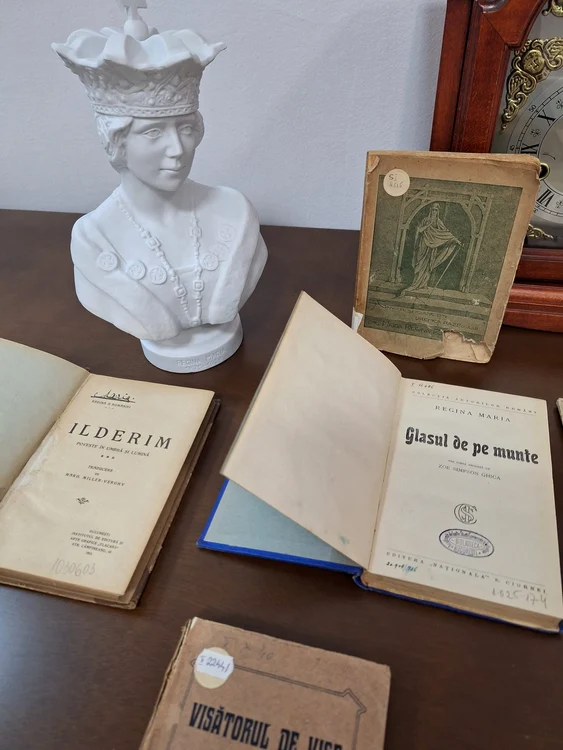
From the queen’s writings, other first editions are kept in special collections: the volume “țara mea”, published in 1916, which appeared for the first time in Romanian in 1917, being translated by Nicolae Iorga, “The Dreamer of Vise”, a story published in 1914, “lderim: story in shadow and light”, book published in 1915, the volume “Vocea de pe munte”, a first edition in English, the printed volume in honor of Her Majesty’s visit to the USA and which had a limited edition of 600 numbered copies. The one now in Constanța is numbered 444. It is a bibliophile copy, its pages are uncut, as is the body of the book.
The queen who set the tone in fashion
Queen Maria was passionate about everything that was beautiful: she made a defining contribution to the decoration of her residences, she promoted young artists and Romanian traditions. Her Majesty was also known throughout the world, even across the Ocean, for her passion for fashion and how she introduced folk costume to clothing – she was a constant presence in the press of the time and on the front page of prestigious publications, both for her beauty and for her diplomatic actions.
He ordered his toilets from various well-known fashion houses, even going over the dreaded restrictions of King Carol I many times. “In my youth, my ideal was the dresses worn by the great actresses on the Parisian stages. I didn’t realize that sometimes I dressed too showy”, Queen Maria testified years later. He also remembered a “dress in long pleats, of black crêpe-de-Chine, embroidered with gold thread and blue like the peruse; the sleeves were long, tight and ended in a corner that slightly covered the hand; I wore it with a little black tricorn hat; he caught me very well, but I imagine that everything was a bit eye-catching”.
