
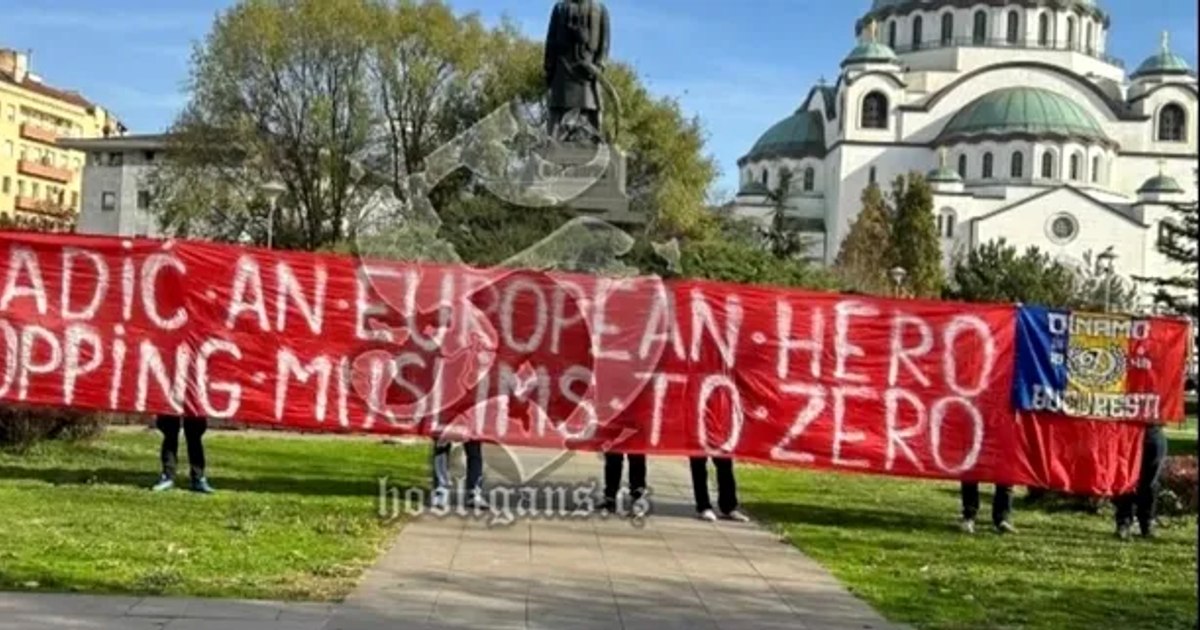
Romania has allocated 600 seats for the fans of the tricolors at the match in Zenica, at the match against the national team of Bosnia and Herzegovina in the WC 2026 preliminaries, which will start at 21.45. But they risk remaining empty, after the Romanian ultras made a controversial stop in Belgrade, where they paid tribute to Ratko Mladić, the former commander of the Bosnian Serb army, definitively convicted of genocide and crimes against humanity.
Dinamo’s ultras and the banner that inflamed spirits in Bosnia. Photo Hooligans.cz
“Ban Romanians from the stadium!”Bosnian newspapers headlined this evening, after supporters of the tricolors displayed a banner alongside their Serbian brothers. “Mladic European hero, reducing Muslims to zero,” is the inscription that has sparked anger in Sarajevo.
The press in Bosnia also picks up the messages sent on social networks by the group “United under the Tricolor”, which stopped in front of a church in Belgrade, alongside the Serbs. “Orthodox Brothers! On our way to Zenica to support the national, we visited our Serbian brothers to convey a common message, through which we want to sound the alarm. Christian Europe has been defended and the blood of our voivods for centuries and we will not accept to lose our Christian European identity. Long live Serbia! Long live Romania!”was the message posted by “Uniti sub tricolor” on the Facebook page.
Ratko Mladić ordered the Srebrenica genocide
The Romanians’ gesture is seen by Bosnians as a provocation and a political and nationalist message, the majority population in this country being of Muslim origin. “It is clear that, even before tonight’s match, the Romanians started with tough challenges”wrote the journalists from the country of our adversary today, who requested that the Football Federation of Bosnia and Herzegovina notify UEFA and FIFA and ban the access of Romanians to the stadium in Zenica.
Ratko Mladić’s name is linked to the Srebrenica massacre, where more than 8,000 Bosnian Muslim men and boys were executed in July 1995. The former general was also responsible for the siege of Sarajevo, which left thousands of civilians dead.
