
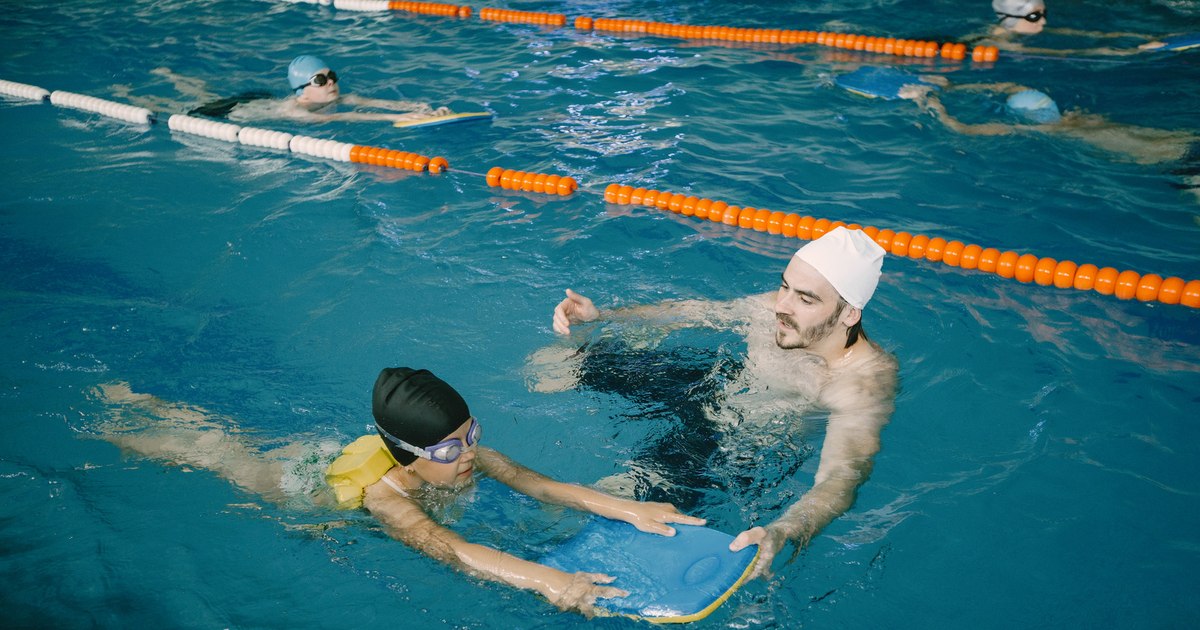
Dozens of swimming pools have been built in Romania in recent years. The investments, but also the performances that inspired the Romanians, such as those of the world champion David Popovici, increased the popularity of this sport. For many Romanians, however, swimming remained a luxury sport.
Swimming lessons are expensive for many Romanians. Photo: Freepik.com
World swimming champion David Popovici has inspired many Romanians to send their children to swimming lessons.
Its performance was complemented by investments in infrastructure, which aimed at the construction of teaching swimming pools or the rehabilitation of former such facilities. In many cities in Romania, such constructions were established for the first time.
The National Investment Company shows that in the period 2011-2025, more than 50 swimming pools were built and rehabilitated in Romania, most of them educational, through the CNI program. Almost 50 other investments are underway, but they aim at the construction and modernization of another 50 pools.
Municipalities such as Moșnița Nouă (Timiș), Cornu (Prahova) or Recea (Maramureș) and the mining towns of Petroșani, Lupeni, Vulcan and Petrila are among the localities benefiting from such investments for the first time. Construction costs for a swimming pool have increased in recent years, with investments estimated at two to three million euros.
The costs of swimming lessons range from free to over 100 lei
In Romania, almost 200 clubs offer swimming lessons, according to the data published on the website of the Romanian Federation of Swimming and Modern Pentathlon (FRNPM). The cost of swimming lessons could be a problem for many Romanian families.
A 55-minute session in an aquapark in the Capital costs 300 lei, but for eight sessions of learning to swim, the cost of the subscription is 500 lei. At another water park in Bucharest, the price of a swimming lesson is 130 lei, and a subscription for four sessions, valid for 30 days, amounts to 450 lei, and for 12 sessions, lasting 50 minutes, to 750 lei.
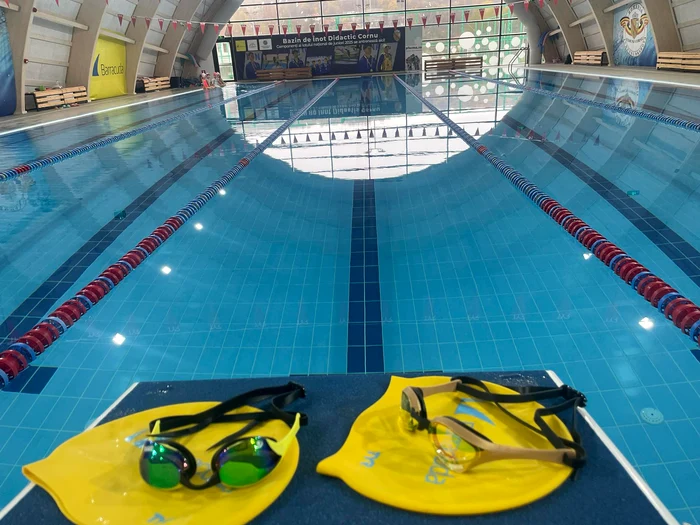
Didactic pool. Source: Cornu City Hall
The costs of swimming lessons also differ in the new teaching pools. In some places, instructors offer classes to children at prices of 40–60 lei per session, a price considered by some families to be too high to be supported from their own budget.
In the new didactic pool built in Lupeni, the rates set by the town hall for training or classes with an instructor are 17 lei per session for adults and 9 lei per session for preschoolers, pupils and students. In recent years, several town halls have supported the promotion of this sport, providing free swimming lessons for students who want to learn to swim.
In the city of Blaj in Alba County, almost 600 children benefited from ten free swimming sessions in the recently built didactic pool. In Bucharest, Alba Iulia, Sibiu, Reșita and Timișoara, the authorities financially supported similar initiatives. In 2025, the mayor of Vultureni (Cluj county) made his personal pool available to provide free swimming lessons with an instructor to the children of the commune.
The health benefits of swimming
Swimming is considered one of the most popular and beneficial sports for preventing sedentary behavior and improving physical condition and health. Regular swimming improves blood circulation, tones the muscles, stimulates the central nervous system, reduces stress and provides a general state of relaxation, experts say.
“Swimming is the only sport that provides life-saving skills, reducing the risk of death by drowning. Research shows that swimming, along with other sports, can help develop fundamental motor skills.” shows a recent study published by the US National Library of Medicine.
Swimming lessons not only give children a life-saving skill, but also the confidence, focus and resilience they need to face the challenges of school life, according to Swim England.
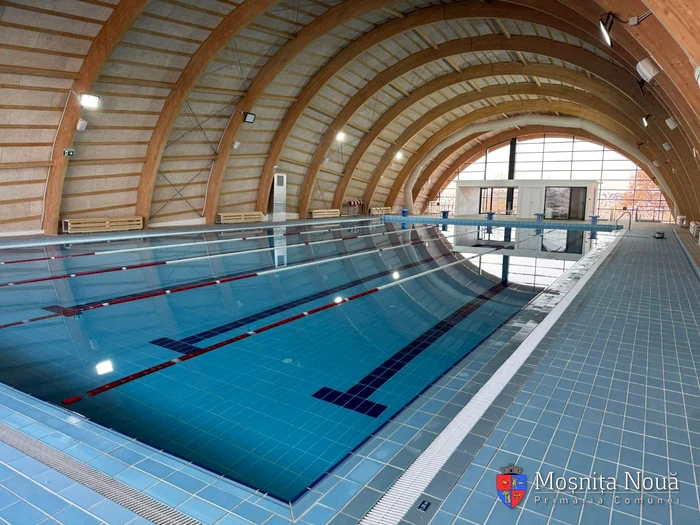
Didactic pool. Source: Moșnița Noua City Hall
“Swimming is uniquely placed to support people throughout life. Swimming reduces the risk of premature death by 28%. Swimming lessons help children develop skills more quickly. Swimming and water activities are a safe, cost-effective and viable option for health professionals to recommend to patients.” shows a study published by the national swimming organization in England.
The oldest pools in Romania, established two millennia ago
Swimming has a history of thousands of years, and the first known swimming pools in Europe date back to Antiquity, being built in Greece.
Some of the oldest testimonies about the science of swimming come from ancient Greece, cited in the Odyssey of the historian Homer, more than two and a half millennia ago. The youth of ancient Greece were trained in the art of swimming, and for them, swimming distinguished them from the “barbarians” and made them consider themselves superior to them during expeditions and sea wars.
In the ancient Roman world, almost every city had its own water supply network and public baths, the baths being places where men spent hours eating, bathing, or enjoying entertainment.
“Baths were open to rich and poor, free citizens and slaves, and their maintenance was a civic duty assumed by public authorities. It was normal practice for people to meet in public baths and make friends and lovers there, discuss business or relax amidst pleasant views.” says the historian Elisabeta Archibald.
In Roman Dacia, the most famous baths were established at Germisara (Geoagiu Băi), Aquae (Călan) and Băile Herculane, originally used by Roman legionnaires stationed on the territory of the province north of the Danube. The depth of a few meters of the ancient rock-cut pools at Germisara (video) and Calan (video) shows that the ancients had to know how to swim in order to use them.
Medieval beaches were controversial
In the first centuries of the Middle Ages, when many of the churches began to be erected on the sites of public baths, the latter were associated with pagan rituals or even brothels. However, medieval “beaches” became an integral part of community life.
“The Church was particularly concerned with providing access to public baths for the poor and sick, although it was concerned about immoral behavior in them. Authors of literary and religious works often linked bathing to sex, yet public baths were often patronized by clergy.” showed Elisabeta Archibald, in the scientific work “Bathing, beauty and Christianity in the Middle Ages”.
Public baths declined at the end of the 15th century and the beginning of the following century, for religious reasons, but mainly because of relentless epidemics and sexually transmitted diseases, such as syphilis, which led people to gradually abandon the habit of frequenting them.
Drowning was one of the most common causes of accidental death during the Middle Ages. People drowned in ditches, wells and rivers, and the great natural disasters produced by storms left behind tens of thousands of victims. In December 1287, a huge storm in northern Europe caused the levees to break and flood large areas, leaving over 50,000 victims drowned. Death by drowning was often used as a punishment for medieval people.
Strands, fashionable since the 19th century
Bathers have become popular again in the modern era. In the historical regions of Transylvania and Banat, the first beaches built in Arad, Timișoara, Alba Iulia and Cluj-Napoca date from the middle of the 19th century, on the banks of the rivers that crossed them. Along with them, the first swimming lessons and competitions were organized.
The Kiseleff beach, the first big beach in the Capital, (later called Tineretului), was inaugurated in the summer of 1929, after being set up in less than two months. On the first day, thousands of people came here, but three of them died.
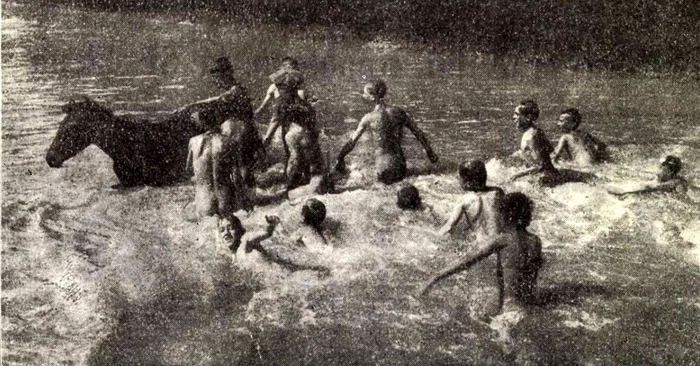
Bathing in Dâmbovița, 1925. Source: Dimineata
In the following years, other beaches and swimming pools were opened in Bucharest, becoming more and more popular, especially on hot days. Many locals considered them a regular ally against the heat and the places that made the summer more bearable in the Capital. Until the beaches were opened, rivers, the sea and lakes were the usual bathing places for many Romanians.
