

A UNESCO report shows that the representatives of pupils and students in Romania were consulted about the education laws. But there is no clear legal obligation to specify that their opinion must be taken into account every time it is about measures that concern them. Beyond regulation, we wanted to know how much young people feel that their opinion matters, at school and high school, but also at university.
Representation with the right to vote only at the high school
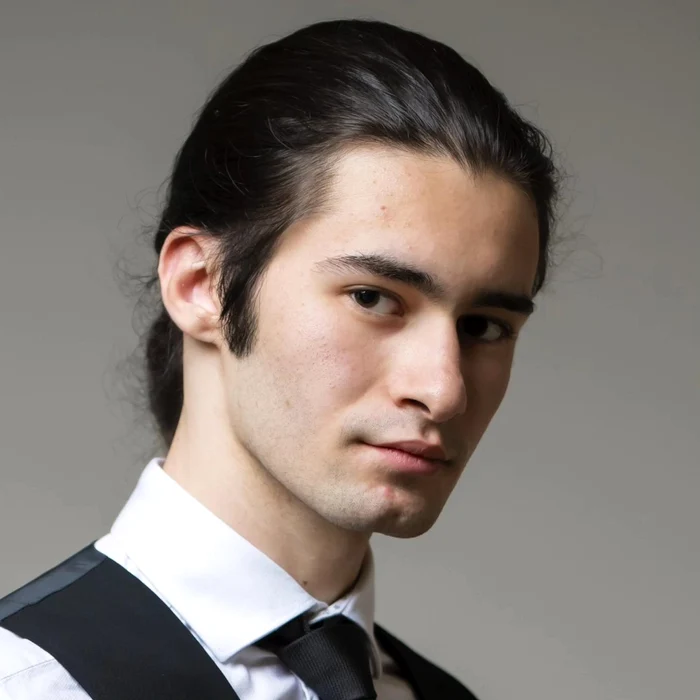
After 12 years spent in pre-university education and two in college, Mihnea Stoica feels that Romania is making progress, but that there is still work to be done. For example, students can have a representative with the right to vote in the boards of directors of educational units only in high school. And only if he is 18 years old.
“This leads to frequent changes because, most of the time, the people eligible to run are in their final year, which leads to the change of this representative every year. This is a problem because it leaves it up to the management of the educational units how much to consult with the school councils of the students in making a decision”.
Romania is less flexible than other European states in this direction. In France, for example, students are represented from secondary school and have the right to vote on subjects that concern them, such as school subjects, but not on topics such as the budget. The Nordic countries go even further. Finnish education law explicitly requires students to be involved in decision-making and, regardless of age, they can be part of school management structures. Among the topics on which they can vote are the school program, the internal regulations, but also the evaluation of teachers. If schools make decisions without consulting students, they can be challenged. Sweden has a similar policy.
“At the gymnasium, student involvement is, most of the time, completely lacking”
Beyond official representation, through the right to vote in the council, schools in Romania are not doing very well when it comes to consulting students when decisions are made that concern them.
“There is also the issue of direct consultation with students, in class, for issues strictly related to a study group. More often than not, in my experience, consultation with students has been poor, sometimes non-existent. At the gymnasium, students’ involvement in decisions is, most of the time, completely missing,” attracts Mihnea’s attention.
In the absence of unitary policies, everything is regulated by the school:
“Either there are managements of educational units that regard the student as a partner in the educational process and consult with them, especially when decisions are made that directly concern them, or there are managements that regard the student as an inferior, who cannot make decisions for himself and who must listen to the guidance and decisions made by the teaching staff, under the pretext that they are better prepared and know what is best for the student’s interest”.
And in the case of teaching staff, we are talking about two categories, Mihnea points out:
“Teachers have become more receptive in communicating with students, many of them listen to their opinion, try to understand the problems they face, the situations they go through. Of course, not every teacher does this. There are still teachers who do not want to accept the fact that these students are part of a new generation, with other problems, and do not take their opinions into account”.
Consider more when it comes to national policies
Paradoxically, sometimes representation works better if we are talking about state policies in education. Mihnea Stoica was executive secretary in the National Student Council right in 2023, when the education laws were changed.
“In addition to the consultation within the social dialogue commission at the ministry level, I had a very good communication with the leadership of the ministry regarding the laws. Many of our proposals were taken into account and even entered the final form of the law”Mihnea remembers.
However, it emphasizes that “the relationship differs fundamentally from minister to minister and depending on his position”.
Student representatives want mandatory consultation mechanisms
And the representatives of the National Alliance of Student Organizations from Romania (ANOSR) felt that their voice mattered in shaping the education laws, but I think this is due to them.
“Participation was possible due to the consistency in the drafting of public positions, policies and analyzes in the field of education carried out by us, as a student structure, continuously in the last 26 years. To maintain credibility, we maintain a consistent pace of engagement”says Sergiu Covaci, president of ANOSR.
He draws attention to the fact that Romania also needs official legislation in this regard:
“It would be very important for Romania and the states in general to develop mechanisms in which young people’s opinions really form the basis of the drafting of normative acts and policies, having a weight in terms of the direction in which they are carried out. Their lack comes from misunderstanding the concepts of young people’s decision-making participation and underestimating their training, which is obviously wrong. In fact, many times, we, for example, ANOSR, bring up extremely necessary subjects but which appear late in the state and/or clarify situations through analyses, which serve to substantiate decisions”.
The organization was consulted by UNESCO regarding the situation in Romania in the preparation of the report.
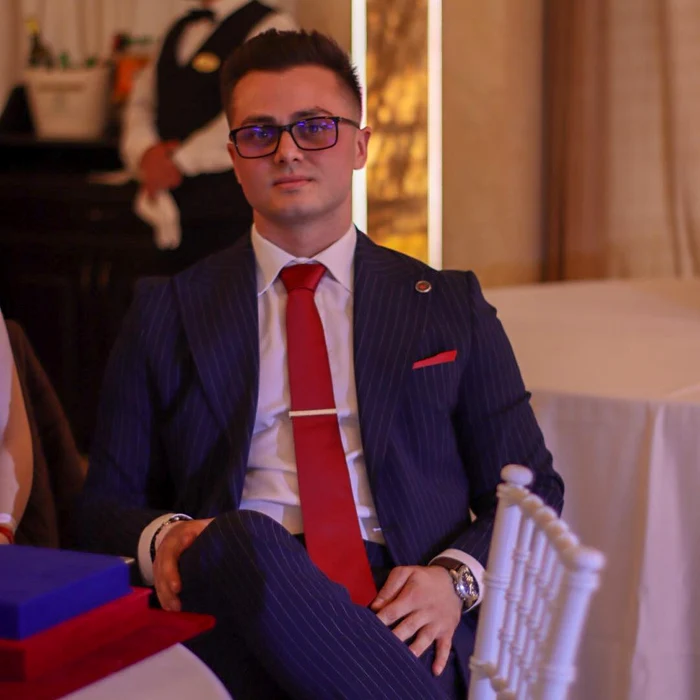
I asked Sergiu how much he assessed, on a scale of 1 to 10, that the arguments and objections of student representatives mattered when it came to public policies and measures that concerned them.
“I would say 7 to 8, but this is due to the fact that we were very insistent and we usually use all possible diplomatic, representative and civic means”, answered the young man.
Other steps to be taken
What could the authorities do better, even in the short term? Sergiu Covaci says:
“To put more value on the voice of young people, at every level, because formal discussions do not help either side. Until we understand that young people must be called because we need them, to listen to them and understand them, so not just because it appears, for example, in a report, we will not be able to overcome our condition as a state”.
In order for the change to be real, Mihnea Stoica speaks of two levels:
“There is a need for both a legislative change (increasing the number of student senators within universities, removing the age limit for representatives in the CA of pre-university educational units), but also a change of mentality among teachers. Consulting pupils and students is essential for improving the education system”.
“Pride in Education is about adults”
Education specialist Gabi Bartic is more blunt when it comes to the involvement of young people in the subjects that concern them. And he criticizes the way adults relate to the big themes in education:
“I think that we actually don’t know how to communicate in education for the benefit and always looking at the student. All the conceits in Education are about adults and our conceits and we look very little at the student and what is good for them. Because if we looked at the real student today, the conversation would be much simplified.”
The UNESCO report on youth engagement can be consulted here.
