
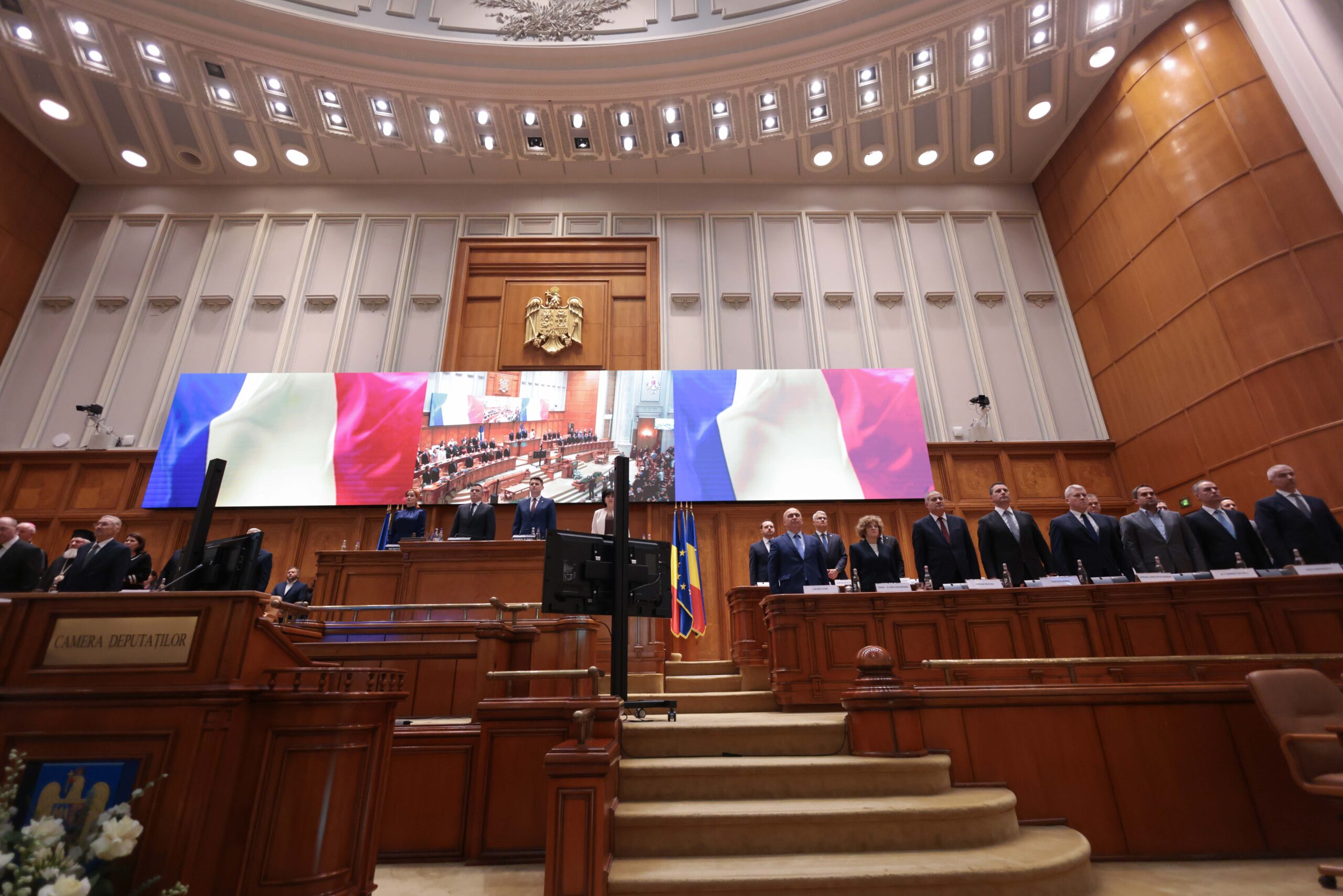
The alarming data of the latest INSCOP survey, which reveals a confidence of only 11.9% in the Parliament and 18.4% in the Government, does not represent a simple momentary erosion, but the symptom of a deep systemic crisis. Radu Magdin, Romanian political analyst and consultant, explains for “Adevărul” the mechanisms behind these figures and warns of the imminent risk of “decivilization” of Romanian society.
The church is the institution in which Romanians have the most trust, 63.9% declaring that they have quite a lot and a lot of trust in this institution (compared to 57.7% in July 2025). Next comes the Army, with a trust capital of 61.8% (compared to 63% in July 2025) and the Police with 50% (compared to 43.2% in July 2025). At the opposite pole are political institutions and the judiciary. The Presidency registers a trust rate of 27.9% (compared to 34.8% in July 2025), the Judiciary of 25.4% and the Government of 18.4% (compared to 20.4% in July 2025). On the last position is the Parliament with 11.9% quite a lot and a lot of trust (compared to 14.5% in July 2025).
In the opinion of political consultant Radu Magdin, the figures indicate the failure of the way power has been exercised in recent decades, especially the dysfunctional relationship between the executive and the legislature.
Why Parliament has become irrelevant
The most affected institution in the polls, the Parliament, is paying the price of its own subordination, believes Radu Magdin. The political consultant is of the opinion that the legislature has become a victim of the abuse of ordinances, a fact that has led to a total disconnection from the expectations of the electorate.
“Parliament has unfortunately for a long time had a low share, and it has to do partly with its activity or perceived lack of activity, and partly with the power play between institutions, the executive overruling the legislature for almost two decades through OGs and OUGs. The social contract must be redone, but it is not only the work of the Parliament, even though it is the key democratic institution of the country“, shows Radu Magdin for Adevărul.
Lack of the three “V’s”: Will, Values, Vision
As for the Government, the analyst draws attention to the fact that the simple administration of the country is no longer enough. In a time of crisis, the public is looking for authentic leadership, and current government communication fails to convey empathy and direction. Magdin provides the clear diagnosis of this lack of traction.
“One must distinguish between the popularity of the institution and that of the current holder of the position of prime minister and the popularity of the Governing Coalition. Anyway, both the prime minister, as an individual, and government communication must show that they understand the basic lessons of leadership and political communication, in order to strengthen the trust of the population. This means direction and stage victories, empathy, but also the 3 V-key: will, values, vision”, explained the political consultant.
The risk of “decivilization” and the anti-system revolt
Perhaps the most serious aspect indicated by the analysis concerns the social consequences of this rupture. Against the backdrop of economic difficulties, the population is running out of patience, and the “pain” caused by the drop in living standards is quickly turning into radicalization. Radu Magdin describes the mechanism by which diffuse dissatisfaction becomes a danger for the stability of the state:
“The major risk is the feeling of the country being blocked, of pain against the background of quasi-austerity and of disappointment with the political leaders. This fact enhances the anti-system feeling and it is not by chance that we see the high share of the opposition as popularity. There is also a risk of social movements and decivilization at the level of public discourse, against the background of the transformation of restlessness and dissatisfaction into stronger instincts for action. They should do their job and communicate this”, points out Maru Magdin.
The “bread and circuses” strategy has reached its limits
Finally, the analyst dismantles the strategy of diversion through public scandals, often used to mask the lack of concrete results.
“Unfortunately, too much is communicated in vain, without getting anything done, the cultural or daily wars can keep the world occupied for a while, but not indefinitely, especially in the context of the deterioration of the standard of living. Let’s not forget what the Latins said: bread and circus. The bread decreases and the circus is in excess, so let’s not be surprised what will follow”. concluded Radu Magdin.
