
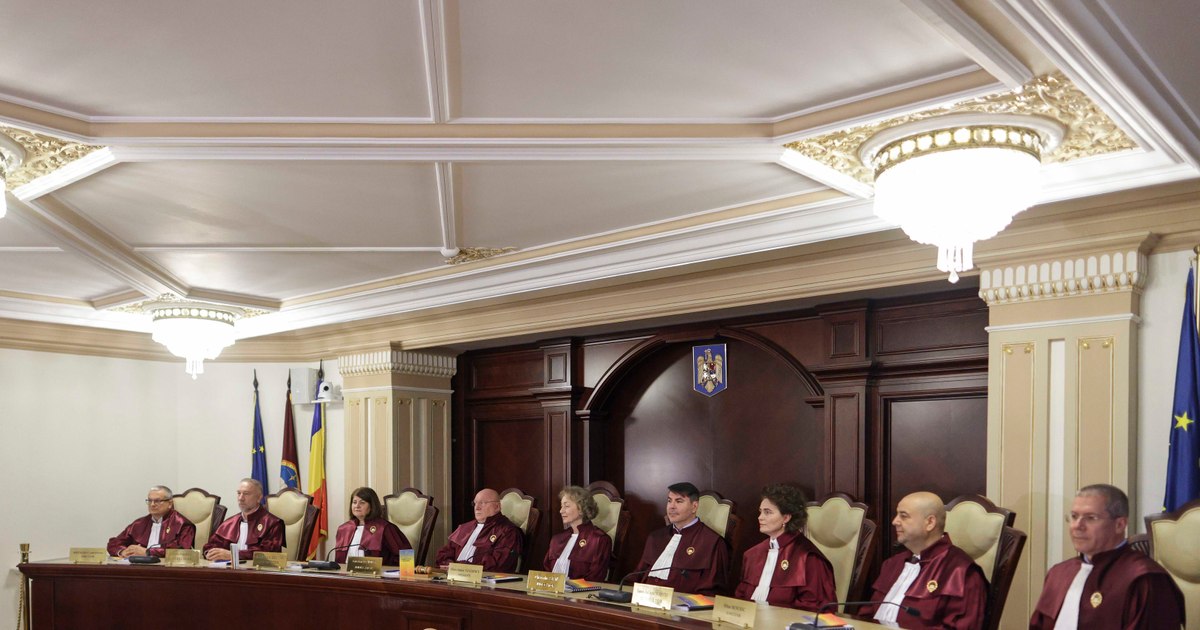
Liberals Raluca Turcan and Daniel Fenechiu submitted a draft law in Parliament that establishes the obligation of Constitutional Court judges to participate in plenary sessions, providing for sanctions — including the possibility of revocation — for unjustified absences. Augustin Zegrean, former president of CCR, indicates several problems of the initiative.
The former president of the CCR, Augustin Zegrean, emphasizes that constitutional judges are irremovable. “They cannot remove them, for judges they are irremovable during their term of office. The judges of the Constitutional Court are independent in the exercise of their mandate and irremovable during its term”. shows the Constitution of Romania.
In the case of the provision that would allow them to abstain and formulate a statement of abstention in writing, if there is a reason for incompatibility or a conflict of interests in relation to the case being tried, the former judge indicates the issue of the quorum required for the plenary sessions of the Constitutional Court. “They are not allowed to abstain because if there are less than six they end up not being able to judge. If four abstain, who judges? In the courts, if a judge abstains, he is replaced by another judge. There is no one to replace them here. The law says that abstention and recusal do not work. It is logical that it should be so”points out the former head of the Constitutional Court Augustin Zegrean.
Moreover, if the legislative proposal were adopted by the Parliament, there is the possibility that it itself will be contested at the Constitutional Court, and the constitutional judges would be the ones called to analyze from the perspective of constitutionality, which would place this very initiative within the scope of the decisions that they are going to judge.
What the project provides
The project amends Law no. 47/1992 regarding the organization and functioning of the Constitutional Court, introducing the obligation of the participation of constitutional judges in the plenary sessions. The absence must be thoroughly justified, in writing, to the president of the Court, who has the duty to verify “thoroughly” the absences, the reasons being exclusively “medical, fortuitous or force majeure”. Otherwise, for each absence, the judge risks sanctioning, by reducing by 10% the gross allowance for the respective month.
The initiative also amends article 67, which provides for the termination of the mandate, so that it ends, “in situations of incompatibility, with three consecutive absences from the sessions of the Court’s plenary session, without good reason, in writing, or if he is unable to exercise the function of a judge for more than 90 days”.
Also, the determination of the termination of the mandate is made by the president of the Constitutional Court, without the vote of the majority of the Court in certain circumstances, as provided by the current law, following which the institution that appointed the judge also determines the termination of the mandate.
The initiative appeared after the project to amend the retirement conditions of magistrates was postponed several times, including because, on two occasions, the quorum was not met after some judges left the meeting and did not want to participate.
