
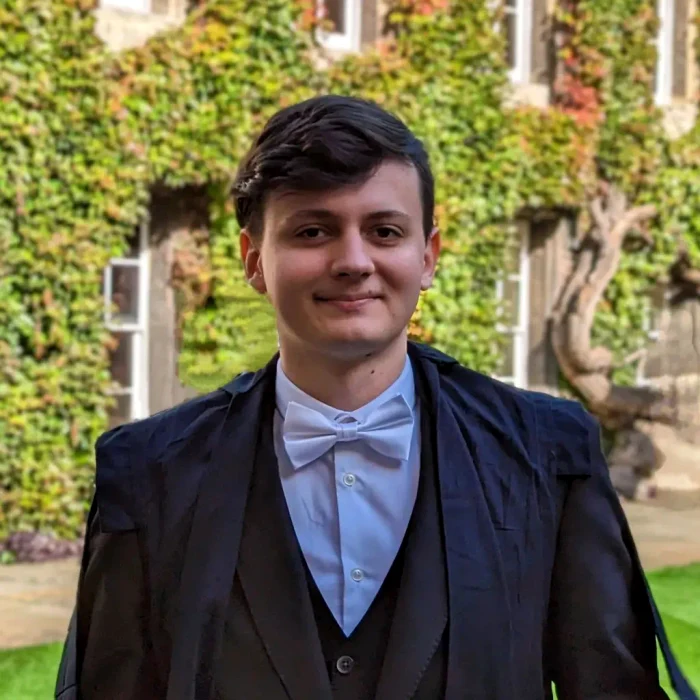
After several voices in Romania brought to the public space the idea of copying Australia’s model and banning access to social networks for teenagers under 16 years old, the Romanian criminologist Vlad Zaha, specialized at Oxford, draws attention to several dangers that could derive from such a measure. Most important: children could migrate to underground areas of the Internet, such as the dark web. “It’s an experiment that Australia has gone into with its hands over its eyes and we’ll see where it goes. As we can only guess for now, it may do more harm than good.”says Zaha.
Vlad Zaha brings several arguments in support of the idea that countries that introduce measures such as banning social networks are practically experiments, which should not be followed for the time being. In Australia, the measure was decided only by politicians, without the support of the scientific community, Zaha points out. And he points to the letter signed by 140 of Australia’s top researchers to the Government opposing the measure, warning of the dangers and proposing solutions.
“Australian professors have been quoted as saying that countries eager to copy the measure should wait until the reviews are being done in Australia, which will start coming out later this year. Why do we need these analyses? In addition to the fact that it is not a scientifically supported measure, because the risks of this ban can create an even worse situation than the one we have now.” says Vlad Zaha.
What dangers are we talking about? The Oxford University research criminologist explains:
“Among the dangers are, on the one hand, the migration of a segment of teenagers who no longer have access to classic social media to hidden and less regulated social media – practically underground or even bordering on or part of the dark web, where we know that there are also illegal markets for weapons, prohibited substances, etc.
On the other hand, there is also this segment of teenagers under 16 who will no longer have access to any social media and will not enter the hidden internet, but who, at the age of 16 and a day (let’s say) will find themselves in front of an ocean of ignorance, which they have not experienced, I don’t know what they eat, but which everyone over 16 uses. Basically, a part of this generation will be completely unprepared for the dangers of the digital world (which is, whether we like it or not, an integrated part of our lives).”
At the same time, organizations that defend human rights drew attention, after the ban in Australia, that a general restriction could block access to social networks for vulnerable young people, for whom the online environment was the only space for expression, socializing or seeking help.
“Prohibition is a very simple way to avoid, in fact, the real problems”
Banning access to social networks for young people under the age of 16 is the simpler way that the authorities can follow, Vlad Zaha believes:
“One of the biggest concerns is that we’re actually hiding behind this ban, without actually addressing the real mental health issues facing teenagers on the one hand and the negative reality of social media platforms on the other hand for all of us, especially adults, not just kids. (…) Prohibition is not a solution. It’s a very simple way to actually avoid the real problems.”
Another issue that arises is how many of the mental health problems can really be attributed to social media? Are they the cause or just the symptom?
“In Romania we are in the first places in terms of the risk of poverty and poverty among young people and children, we are among the first places in the risk of social exclusion, we are among the countries in Europe where it is hardest to have social mobility between certain classes – that is, to rise from poverty – and, of course, we have an underfunded education system, a health system that almost completely ignores mental health and opportunities for children and young people among the lowest on the continent. This is actually where most mental health issues come from, not from the digital social media environment, which can be more of a symptom. The scientific world still doesn’t have an answer as to whether the mental health epidemic can be causally attributed to social media, or whether young people who already have various mental health issues are turning to social media more. We don’t know what the direction is, it’s being studied”says the criminologist.
Network regulation, the main solution
This is far from saying that social networks are safe environments. Moreover, Vlad Zaha points out, we should also look at adults and the elderly who are not digital natives and who are also exposed to perhaps even more dangers:
“Social networks are a dangerous environment, they are an environment full of misinformation and manipulation, they are an environment where profit is made. And all this is done especially at the expense of adults and those over 16 years old. We have no idea – neither we as a country, nor at the level of the European Union – what happens inside those algorithms, how they are controlled by corporations, and it is extremely difficult for us to say no to the expansion wishes of these platforms”.
Regulating platforms, not access, is the safe way to go, the expert points out:
“The main solution is the regulation of these platforms from the perspective of the European Union. Let’s understand what altgorithms feed us, why they do it, how they do it, and then we can break it down by age group. For example, teenagers can benefit from strictly – or mostly – educational content, content that arouses the desire for knowledge, not violent, manipulative or content that aims to keep you there non-stop. Doubled by digital education not only for teenagers, but for everyone”.
Practically, Romania must rally and contribute to European community solutions, scientifically supported and technically implementable, says Vlad Zaha. And it still has important steps to take in the field of digitization.
Humanity has faced such fears before
The researcher also gives another example from history, where humanity was faced with the novelty and the challenges brought by it, and crowds of people also called for the ban:
“Probably few people know that when televisions first appeared and spread, there was absolute panic over television shows, violent films, and there were very loud voices calling for no more televisions.”
And computer hardware has brought such fears. The difference is that, according to Zaha, “for televisions and for computers, it was not this political constellation that now decided to coalesce against social networks”.
The digital world, phased in
The criminologist does not campaign for unrestricted access of children to the Internet, without limits, regardless of age, but offers a perspective adapted to certain age periods:
“The entire scientific community agrees that, at least until the age of 9, there should be no access to social networks, nor much access to electronic devices, but strictly to digital educational environments, platforms that only stimulate learning, exploration, etc.
When we reach between the ages of 10 and 13, in secondary school, access must be extended, but it must be controlled, moderate extremely well. It is also recommended that they have no access to social media, but greater access to safe digital environments than, for example, primary school children would have.
Then we come to the teenage years, which is the critical age and the one that really worries a lot these days. Let’s say from 14 years to around 16-17 years, access can also be given to social networks, and to more time on devices, as long as – and here is the fundamental problem – these platforms are understood, are controlled, are safe and are protected from commercial interests and manipulative practices”.
All this, emphasizes Vlad Zaha, must be doubled by a key point: digital education.
