
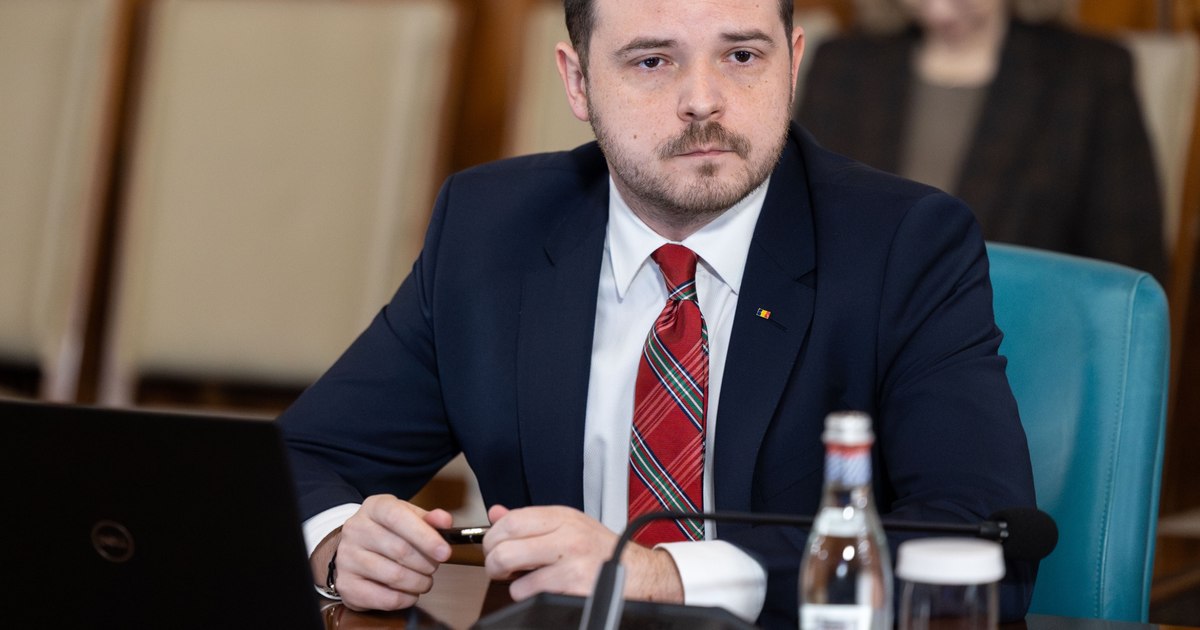
The Minister of Health, Alexandru Rogobete, told G4Media on Saturday that he intends to break the monopoly of the National Health Insurance House and introduce a competitive system, in which several insurance houses, both public and private, will operate. The measure is considered essential in the framework of the reform of the way of financing the health system in Romania.
“The fact that there is a monopoly through CNAS means that we cannot talk about a competition”said Alexandru Rogobete.
The minister argues that funding reform is the most important change the health system needs, regardless of infrastructure investments or other administrative measures.
“I have said since taking over the mandate that, no matter how much new infrastructure we build, no matter how much reform we do, the most important reform, from my point of view, is the reform of the way in which health services are financed and the way in which health insurance is carried out in Romania”, explained the minister.
Alexandru Rogobete showed that the proposal is based on models already working in other European states, such as France, Spain, Belgium or Germany, but also outside the European Union, giving Israel as an example.
“In all these countries there are several health insurance services. Whether they are in the public regime, whether they are in the private regime, whether they are complementary, in the public-private regime, it is obvious that people will have a choice, not necessarily according to the pricing, but according to the services they offer. There will be competition between the Houses, which in any system leads to development”, the Minister of Health also said.
How the new system would work
Asked how to avoid the risk of citizens losing money in the event of a bankruptcy of a private insurance company, similar to the situations that occurred on the RCA market, Rogobete explained that the state will retain control over the collection of contributions.
“In the Israeli model, which I think is the most applicable or replicable for Romania, people do not pay directly to the House. The Ministry of Finance collects the contribution for health insurance and transfers it to the insurance company that the person chooses. Basically, the house will not collect, but the state will collect. The house will pay for hospital services, after which the state will reimburse these services.” said the minister.
Another advantage of the reform would be, according to the Minister of Health, the attraction of new money into the system, funds that would no longer pass entirely through the state budget. However, Rogobete admitted that it is a complex reform that cannot be implemented quickly.
“Of course, it is a reform that will not be done overnight, but I believe that it must be started as quickly as possible, in order to finally align Romania with international standards”he also specified.
The second great opening to the private sector in Health
The implementation of this proposal would represent the second major change by which funds from the health insurance system would be directed to the private sector. Initially, the Single National Social Health Insurance Fund (FNUASS), managed by CNAS, was intended exclusively for the public system.
Through a law adopted in 1997, the settlement of analyzes carried out in private laboratories was introduced, within the limit of a monthly ceiling. From 2020, private hospitals and clinics were also included in the settlement system, and the package of private medical services settled by CNAS was gradually expanded.
Starting from 2026, the ceiling for carrying out analyzes settled by CNAS in private laboratories will be removed.
“The National Health Insurance House will this year remove the ceilings from medical analysis laboratories, so that the patient has access to diagnostic services in real time, when he needs it”, declared, on January 21, on RFI, Horațiu-Remus Moldovan, the president of CNAS.
About doctors trained in Romania
Regarding the statement of Prime Minister Ilie Bolojan, according to which graduates of state medical faculties should stay to work in Romania for several years after completing their studies, the Minister of Health avoided a direct comment.
“I do not comment on the Prime Minister’s statement. All I can say is that the medical profession is regulated at the level of the European Union. There is a directive by which professional mobility between member states is ensured”, said Alexandru Rogobete.
