
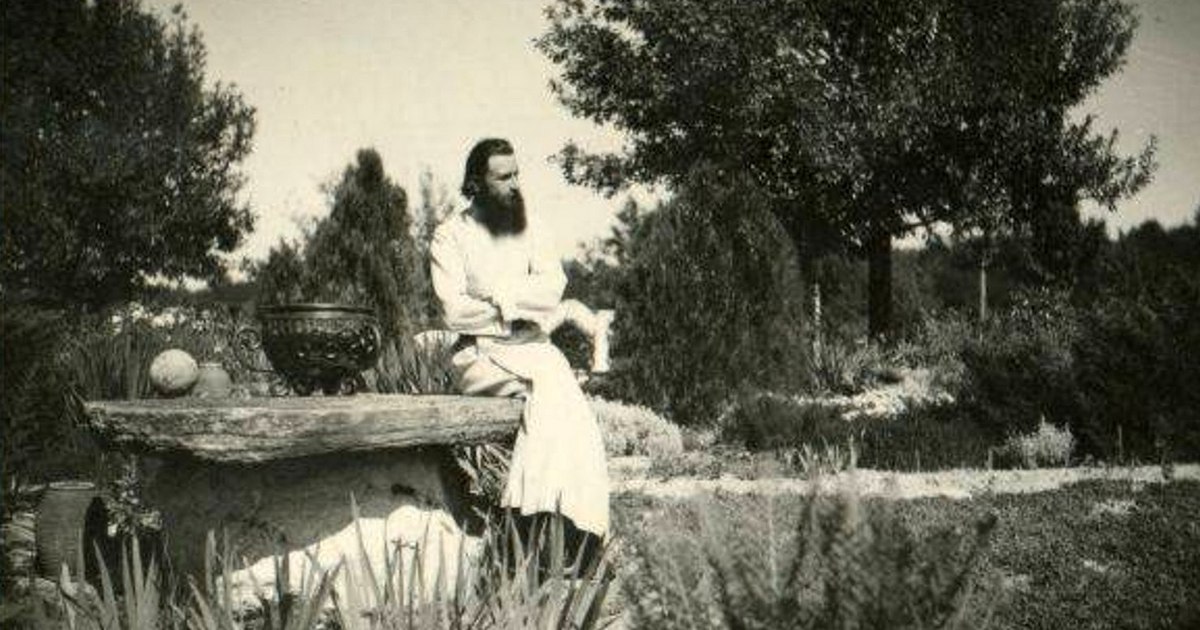
Numerous monks reached memorable ages, some exceeding a century of life, and were at the same time appreciated for their good physical condition in the last years of their lives. Often the austere way of life they adopted was associated with their longevity.
At the end of last week, Archimandrite Climent Haralam, one of the oldest Romanian monks, passed away. He was 102 years old, and in April he would have turned 103.
“Father Climent, who comes from Botoșani county, began his spiritual journey at the Cozancea Monastery. After doing his apprenticeship here, he went to the Curtea de Argeș Monastery, where he served for about 70 years out of the 103 that God gave him. He was a wonderful priest and a servant with a very rich experience. It is very rare that someone reaches a such an age, with so many years of service, from childhood serving the Lord”said bishop-vicar PS Timotei Prahoveanul, from the Archdiocese of Bucharest, quoted by the Basilica.
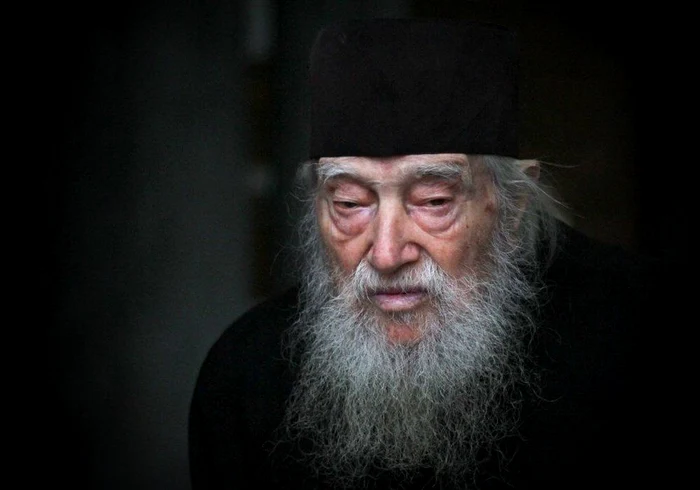
The priest from Curtea de Argeș was one of the longest-lived monks of recent times. But it is not an isolated case, since in the monastic environment reaching old age is a frequently encountered phenomenon, many of the monks reaching 90 or even 100 years.
The Ancient Monk Who Lived 105 Years
One of the most notable examples comes from Antiquity, a time when average life expectancy at birth was much lower than today, and few people lived past 60. Anthony the Hermit (Saint Anthony the Great), considered the father of Christian monasticism, would have lived over 100 years, between 251 and 356, spending a large part of his life in the desert of Egypt, then part of the Roman Empire.
The monk lived extremely austerely, according to the testimonies of the time. For a large part of his life he lived in seclusion in a room of an abandoned funeral building on the outskirts of his village. He spent his nights in prayer and rarely ate, some ancient authors recalled.
“Then he ate once a day, after sunset, sometimes after two days; indeed, many times, and after four days he partook of food, and his food was bread and salt, and his drink was only water; for about meat and wine it is superfluous to speak, when there were not even among the other zealots of this kind”, showed Athanasius the Great, the Archbishop of Alexandria, in the 4th century.
Antony would then have spent almost 20 years in an abandoned fortress in the desert of Egypt, where he lived in almost total isolation. Later, he retreated even deeper into the desert to the area of a mountain near the Red Sea, where he established a cell and remained until the end of his life.
“Many times, wanting to eat with many monks and remembering the spiritual food, he went away from them, thinking that he would be ashamed if he was seen by others eating. But he ate for the needs of the body, often still with the brothers, reverencing them; but, daring for the useful words, he said that it is appropriate to give all the work of the soul more than the body”Athanasius the Great (296–373) described him.
According to the testimony of the bishop of Alexandria, the hermit Anthony showed, in the last years of his life, a good state of health, unaffected by the long fasts and the austere way of life.
“Neither in his old age could he overcome himself to eat fatter food, nor for the weakness of his body did he change the appearance of his clothing, or even wash his feet with water. And yet his body remained unharmed. His eyes were unharmed and whole, seeing well, and of his teeth none fell out, but only some were blunted to the gums by reason of old age; then with his feet and hands he remained healthy; and, in short, he looked better and more diligent than all those who used many kinds of food and many kinds of clothes. So he was everywhere famous and by all who had not yet seen him.”pointed out the bishop.
The simple lifestyle proposed by Arsenie Boca
In modern times, the hermit Anthony has become a legendary figure, often invoked as an example by priests and monks for his longevity and in exhortations to Christians to fast. Romanians sometimes learned from newspapers from the beginning of the 20th century about Anthony the Great and other monks from the lands of Ancient Egypt, who reached old ages, regularly fasting or eating sparingly. Many Romanian monks also reached memorable ages, some despite the fact that they suffered in the prisons of the communist regime. Some are also known for their austere lifestyle.
Arsenie Boca urged the Romanians to fast moderately and to eat once a day, without being full.
“The food should be of one kind, of insignificant dishes that can be found without hassle and that the soul does not crave. Let them eat one kind every day, with restraint. Wine is useful in old age, in weakness and cold, and then a little. And in youth, warmth and health, water is better – but even this little, because thirst is better than all carnal appetites”. wrote Arsenie Boca, quoted in the volume published after his death, “Cărarea emprății” (2007).
Arsenie Boca (1910–1989) died at the age of 79, but much of his life was marked by the oppression of the communist regime. In the 1940s and 1950s he was arrested several times and subjected to investigations, and was later removed from monasticism.
Those close to him reported that he kept extremely severe fasts, and the food he prepared was dominated by vegetables, especially grated carrots.
“He ate very little and only vegetables, only during fasting. He slept low, on the floor, and prayed incessantly. Having a less resistant physical constitution (he was always weak, pale, anemic), he fell ill with the lungs. The doctors forbade him fasting and recommended food and rest”recounted a former relative of his, in an informative note given to the Security of the communist regime.
The longest living monks
Other Romanian priests were appreciated for their austere lifestyle and longevity.
Arsenie Papacioc (1914–2011) was abbot of the “Sfânta Maria” Monastery in Techirghiol and is considered one of the great personalities of Romanian Orthodoxy, although in his youth he was active in the Legionary Movement. He was imprisoned for more than ten years for legionary activity, being pardoned in 1968. He died at the age of 97.
Iustin Pârvu (1919–2013) served at the Petru Vodă Monastery in Neamț county and reached the age of 94. He had a huge notoriety, also due to the 16 years spent in the prisons of the communist regime, between 1948 and 1964, for legionary activity. During his prison years he was sent to work in the gold mines of Baia Sprie, a place that affected his health.
The monk Sofian Boghiu (1912–2002) lived almost 90 years, seven of which he spent in the prisons of the communist regime, between 1958 and 1964, being convicted for belonging to the spiritual movement “Rugul Aprins”.
Dumitru Stăniloae (1903–1993) lived for 90 years, being also imprisoned between 1958 and 1963, under the charge of “conspiring against the social order”.
Ilie Cleopa (1912–1998) also lived almost 90 years, and Paisie Olaru (1897–1990) lived almost 94 years, neither of them being imprisoned in communism.
