
Less than a month separates us from the event “Healthcare Forum 2026. The truth about Romania’s health”. Among the topics that will be debated is the medical personnel crisis. In this sense, the integration of resident doctors in the health system strongly influences the way things go. However, the problems facing doctors at the beginning of their careers are many, they complain: from the fact that too few have a guaranteed job after graduation residency and up to the large volume of work. We talked about what it means to be a resident in Romania with Diana Nastasă, president of the Multidisciplinary Society of Resident Doctors (SMMR) and speaker at the event organized by “Adevărul”.
The main problems identified by residents’ representatives
The Multidisciplinary Society of Medical Residents also provided a list of the main challenges they identified among residency programs in Romania. These are:
- Organizational health and Human Resources: A high level of overload is observed due to the shortage of staff and the frequency of guards, aspects that generate an increased risk of burnout.
- Hierarchical structure and autonomy: The training process is marked by limited autonomy, which to some extent is normal, and rigid hierarchies, which can affect professional development and clinical initiative.
- Quality of training: There are major disparities in the learning process, with the quality of mentoring and exposure to cases being dependent on the training centre.
- Infrastructure and logistical support: The efficiency of the medical act is hampered by excessive bureaucracy, poor IT systems and the lack of basic facilities (equipment and medication) in some centers.
- Residency Curriculum: Some colleagues have pointed out to us that internship rotations (mandatory modules in residency training) are often uncorrelated with curricular needs.
- Salary package: The perception of many colleagues is that the level of responsibility and workload is not reflected in the current remuneration.
“There is only a partial match between the mentality of the medical system and the expectations of the new generation of professionals”
The truth: How big is the difference between the number of places removed during residency and the number of positions available after the residency period?
Diana Nastasa: Between 6-10% of resident physicians have assigned positions upon entering residency (it was a high of 10% a few years ago). One of our volunteer teams tracked these numbers over a period of about 10 years. We tried to calculate how many resident doctors from one generation would have the job secured, but it is impossible to calculate by someone who only has access to the published data, in the sense that we tried to track on the official website of the Government (posturi.gov.ro) how many positions are released for specialist doctors or residents of the last year (because the legislation allows the employment of resident doctors in state hospitals for an indefinite period starting from the last year of residency, if they do not they already have another permanent position). The problem was that a certain ad with several positions, in a certain hospital, was repeated with the exact same text two or three times in the year we considered, and from what we later documented, we learned that if “at the first call” no one shows up (the ad has a limited validity), the hospitals can reorganize the same competition. Which obviously leads to doubled or tripled data, an erroneous estimate of the available positions.
Many of the positions that could be secured after residency are in small, provincial hospitals. Why are these places not attractive to young doctors and how could they become?
In the countryside, indeed, there are only a few psychiatric hospitals and family medicine clinics. Hospitals exist only in small and large urban areas, so for most specialists there is no problem of working in the countryside, as you rightly said. The SMMR carried out a consultation a few years ago on the conditions under which these positions would become attractive and which we should relaunch. The respective results revealed that a significant percentage of the colleagues at that time would work in the small urban area, but some of the essential conditions were: to have educational institutions for children, well-developed local infrastructure (paved roads and public transport well connected to the large urban area) and minimum necessary equipment for the hospital, for their specialty.
What does a week in the life of a resident doctor look like?
Residents’ work schedule frequently exceeds the theoretical norm of 40–48 hours per week, reaching an average of 51 hours per week in Romania, according to a study conducted by EJS (REST JD), and can exceed 60–70 hours in surgical specialties. In understaffed wards or with multiple duty lines, this overload is the result of the accumulation of clinical responsibilities and medical procedures with a considerable administrative volume (reports, preparation of observation sheets and consultations).
Is the current mentality in the Romanian health system consistent with what doctors want at the beginning of their careers?
There is only a partial match between the mentality of the medical system and the expectations of the new generation of professionals. While current structures remain anchored in a model based on rigid hierarchy, high workload and physical endurance, young doctors prioritize competence-based development, constructive feedback and above all want a healthy work-life balance.
Are there residents who end up having doubts about their chosen path? Why does this happen?
Yes, uncertainty about specialty choice is present among residents, fueled by the discrepancy between expectations and reality, as well as limited access to hands-on training in the first year(s) of residency training.
Factors such as burnout, lack of control over the training course (rotations and mentoring) and uncertainty regarding integration into the post-residency labor market exert a major pressure. In this context, financial and family pressures make changing specialties or enrolling in a new residency entrance exam a practice not as rare as it should be.
What do you think are the main weaknesses of the medical system in Romania and what are the main strengths?
Weak points: underfunding and unequal infrastructure, shortage and inequitable distribution of personnel (especially in the province), thick bureaucracy, fragmented digitalization (which mainly affects the patient from our point of view), prevention programs have made many steps in recent years, but somehow there is still a lot of work – better media coverage and public information about these programs would be useful, unequal access of the population to health services and more transparent waiting lists (for patients at least).
Strengths: we have university centers with high expertise on complex pathologies, well-trained specialists, good capacity in “high-acuity” in big cities, great potential for recovery through targeted investments and standardization. A great strength is the teachers, young specialists and resident doctors who still have ambition and willingness to bring improvements to the system.
Who is Diana Nastasă?
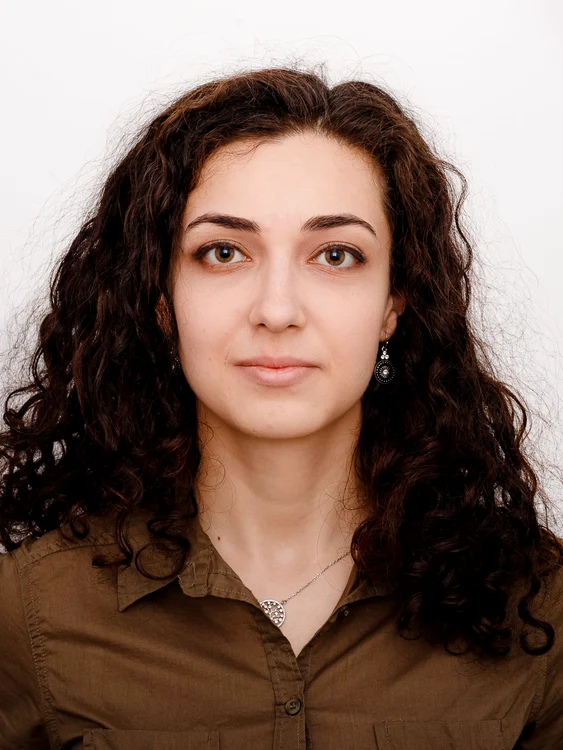
Diana Nastasă, president of the Multidisciplinary Society of Resident Doctors, is a fourth-year resident doctor and has chosen the specialization Public Health and Management.
“I graduated from UMF Cluj. For me it was a very good choice from all points of view. I chose the specialty only in my last year of college (when Public Health was in the UMF Cluj curriculum), and the security related to it appeared only after I passed the residency entrance exam. It’s quite different from everything I did in college, but I like working with numbers, statistics, reports and I like the idea of standardizing services. I think this specialty is very rewarding after residency, but unfortunately I sacrificed some big chapters that I studied in college and that I liked”says the doctor.
The medical workforce crisis, debated at the Healthcare Forum
“The medical personnel crisis” is just one of the topics debated at Healthcare Forum by Adevărul, within the panel,“Public, private and abroad”. The other topics discussed will be:
- The differences between the health systems of the EU countries
- Private-state collaboration, the situation of doctors working in the state and privately; when we have to go to the state and why.
- The role of private investment in health.
The speakers will be Dr. Cătălin Cîrstoveanu (head of the Neonatal Intensive Care Department, Emergency Clinical Hospital for Children, Marie Curie”), Dr. Lucian G. Pop (primary physician Obstetrics and Gynecology, head of works at UMF, Carol Davila”), Monica Althamer (director of the programs “Public Private Hospitals” and “NaviCare”, Metropolis Foundation) and Dr. Alexandru Ulici (Hospital manager) Emergency Clinic for Children, “Grigore Alexandrescu”). The moderator of the panel will be Irina Petraru.
The Minister of Health, Alexandru Rogobete, as well as the ANMCS president, Valentin-Florin Ciocan and Vlad
Truth is an impartial mediator that brings together all relevant voices in the field. Health is not just a service, but a critical infrastructure that supports the functioning of society. The truth facilitates a balanced and constructive dialogue between those who can bring changes in the direction of the health system: governors, doctors, hospital directors, investors, managers of companies in the field, patients and experts in digitalization.
