
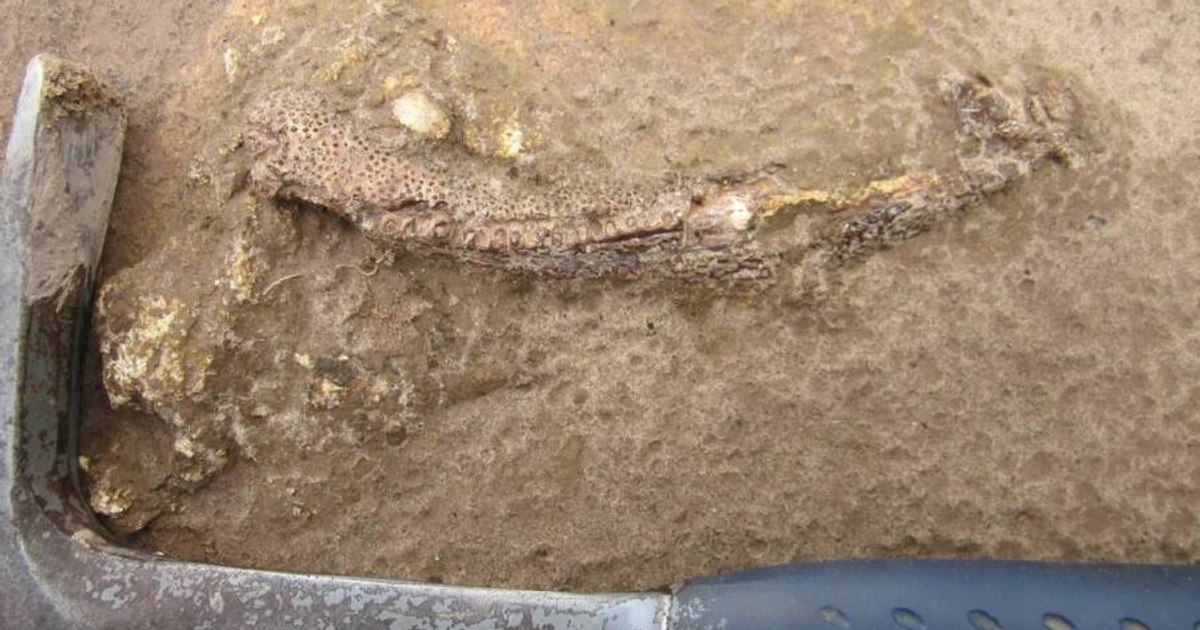
A team of researchers from Brazil has identified a new species of gigantic dinosaur, following the analysis of some fossils discovered in the northeast of the country. The discovery, which shows links to a similar dinosaur found in Spain, provides new clues about how the continents were connected around 120 million years ago.
The new species, named Dasosaurus tocantinensis, is among the largest dinosaurs ever discovered in Brazil. This was described in a study published in March in the Journal of Systematic Paleontology.
The remains were discovered in 2021, in a site near the city of Davinopolis, in the state of Maranhao, where infrastructure works were being carried out, according to Agerpres. The research was coordinated by Elver Mayer, from the Federal University “Vale do Sao Francisco”.
Among the fossils found is an impressive femur, about 1.5 meters long. Based on this, scientists estimated that the dinosaur was about 20 meters long.
“As the excavation progressed over the days, we began to see evidence of that long bone, which is a femur“, said Leonardo Kerber, paleontologist at the Federal University “Santa Maria” (UFSM), who participated in the study.
He pointed out that the size of the bone clearly suggests the huge proportions of the animal. “This indicates that it was a very large dinosaur. Today we know that Dasosaurus is among the largest dinosaurs ever discovered in Brazil“, stated the researcher.
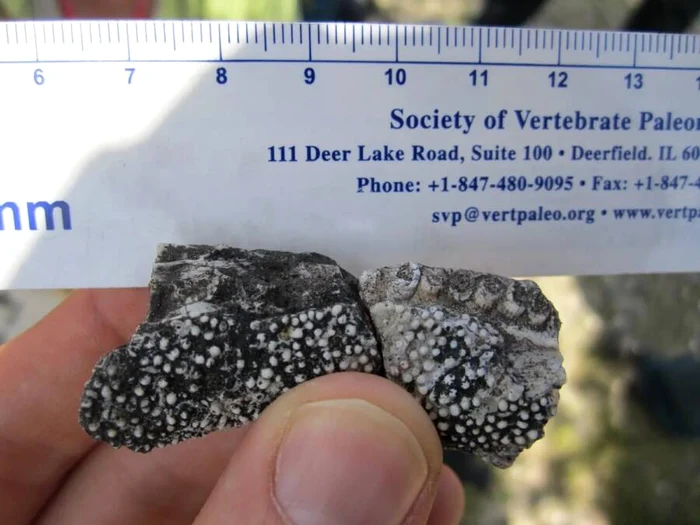
Surprising links to a dinosaur from Europe
The researchers’ analyzes showed that the new species is the closest known relative of the dinosaur Garumbatitan morellensis, whose fossils were discovered in Spain.
According to the Federal University “Santa Maria”, these results suggest that their ancestors would have had a European origin and would have spread to the current territory of South America about 130 million years ago. Migration would have been possible through North Africa, at a time when the Atlantic Ocean had not yet fully formed and land routes existed between the continents.
The scientific name of the new species, Dasosaurus tocantinensis, refers to the region where the fossils were discovered, including the Tocantins River, a major river in the area, whose eastern banks are near the fossil site.
