
An ancient metropolis that disappeared for centuries, founded by Alexander the Great, has been rediscovered in southern Iraq after more than a decade of archaeological research. It is Alexandria on the Tigris, also known as Charax Spasinou, a strategic city of the ancient world that has re-emerged from the desert sands.
The discovery is the result of investigations led for more than ten years by Professor Stefan Hauser and his team at the University of Constance, Germany. According to the magazine Popular Mechanics, the fortress, founded in the 4th century BC, would have been created to shelter settlers from the royal Durian fortress, but also disabled soldiers of Alexander the Great’s army, reports Le Figaro.
Built shortly after the famous city of Alexandria in Egypt, the metropolis on the Tigris had a tumultuous journey. Initially affected by devastating floods, the fortress later experienced a period of prosperity under the leadership of the Persian king Hyspaosines. He erected massive walls and raised the ground level over an area of nearly 10,000 meters in circumference to protect the city from further disasters. During that time, the settlement was named Charax Spasinou.
Although it prospered for several centuries, the city was gradually abandoned, especially in the 3rd century AD, when the inhabitants were forced to flee due to major floods of the Tigris River.
Rediscovering a strategic metropolis
The first modern clues to the city’s existence appeared in the mid-20th century, when a researcher associated remains in the Jebel Khayyaber region with ancient descriptions of Alexandria on the Tigris. However, the Iran-Iraq war in the 1980s permanently interrupted research in the area.
It was only in 2014 that archaeologists resumed investigations, after receiving permission to analyze an area of more than 500 kilometers, using modern technologies of “surface prospecting”. At the site, the teams discovered thousands of ceramic fragments, industrial debris and bricks.
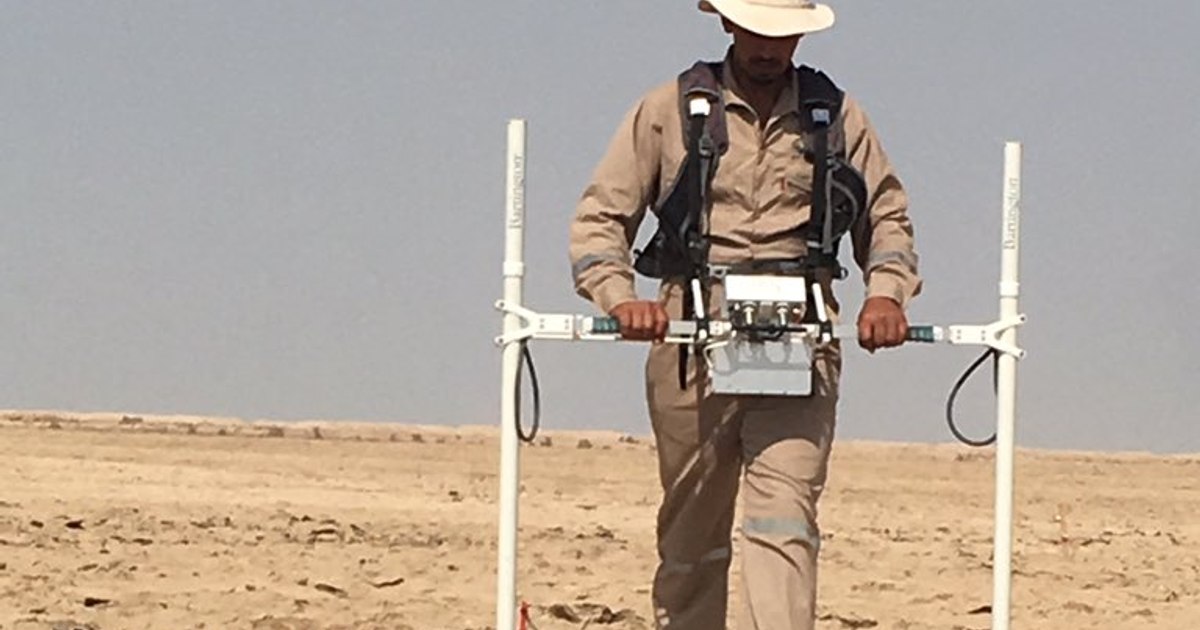
To understand the structure of the city, the specialists turned to geophysicists, who used magnetometers to “see” the structures hidden underground. Thanks to these magnetic maps, the researchers were able to reconstruct the urban organization of the metropolis.
A major trading center of the ancient world
The first conclusions show that the city was divided into four main areas: an extensive residential area, a river port with workshops, a monumental palace and a complex irrigation system for agriculture. The streets were wide and the citadel included temples and quarters dedicated to crafts.
Situated between the Tigris and the Euphrates, Charax Spasinou was ideally situated and functioned as an important transit point for Mesopotamian trade.
After this phase of surface research, archaeologists hope to begin deeper excavations to uncover the city’s buried structures. However, instability in the Middle East could delay this ambitious project.
