
A lot of villages in the Zarandului Mountains offer a strange landscape. Most of their houses are no longer permanently inhabited, the former schools are closed and ruined, and the churches have gradually run out of believers, the locals can be counted on the fingers.
“There was a service here, at the church, in August, last year, and the rest of the church was closed”, remembers Zian, a local from the village of Almasel, in Hunedoara, looking towards the wooden church of the settlement. Almășel, an isolated village from Hunedoara, is one of the almost deserted localities in the Zarand Mountains, outlined in western Romania between the Mureșului Valley and the Crișului Alb Valley.
The almost deserted village, animated by a herd
In the village of Almășel in Hunedoara there are about three or four people left, says Zian, a former worker from the steel plant in Hunedoara, retired here, in the hidden place at the end of a forest road that separates the counties of Hunedoara and Arad.
“Until recently there were five of us, but the oldest of us, Iosif, who is almost 90 years old, was taken in by his family and now lives in nearby Cerbia. He raised sheep and a cow and took care of the church, but at his age he could no longer take care of the animals”says Zian.
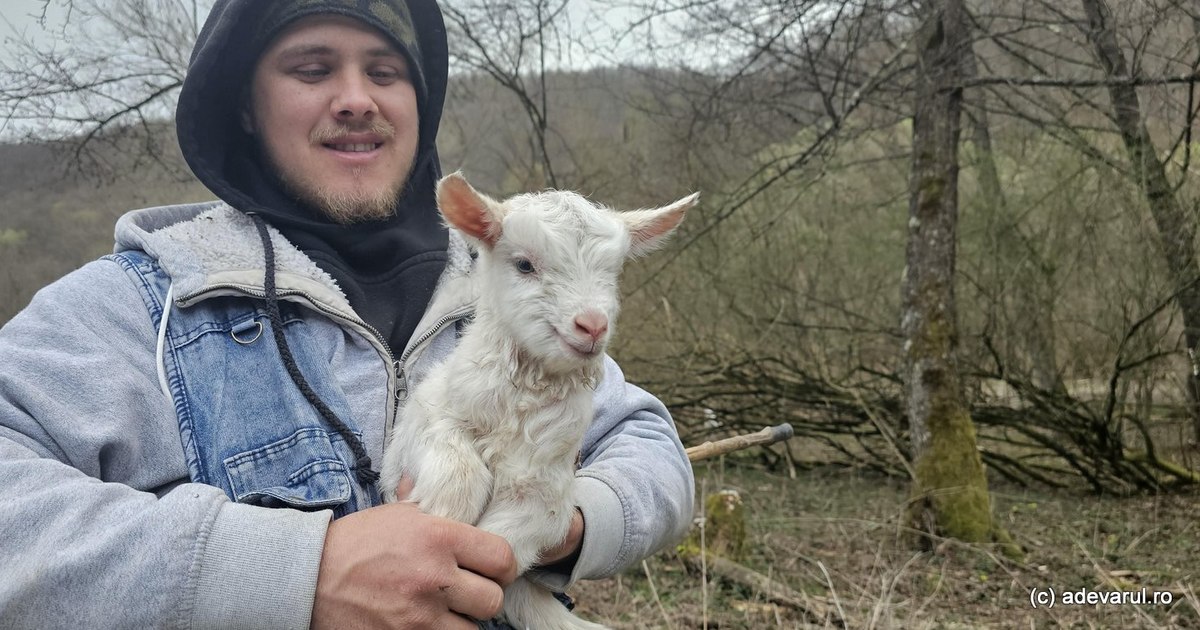
A flock of sheep and goats animate the isolated town in the Zarandului Mountains, and those who take care of the animals are young and more confident in the life lived in such a place.
“After I finished high school, I took up animal husbandry. Now I’m 28 years old and I’m still taking care of the barn, and things are going pretty well”says a young shepherd.
Throughout time, the Zarandului Mountains were a patriarchal land, with less mineral resources than the other mountains of the Apuseni chain, but with lower heights and gentler summits, with meadows more favorable for animal husbandry and fruit growing. The days of subsistence farming are long gone, locals believe, forests have grown over old pastures, and dry years can wreak havoc.
“Last year, I found several dead deer in the forest. They died because of the drought, they couldn’t find water, after the streams here dried up. If they had reached Mureș, they would have survived.” Zian thinks.
The man lives right in the center of the village, defined by the intersection of forest roads that disappear into the mountains, from the border of Hunedoara and Arad counties, by the century-old wooden church and the old school, now ruined. In the vicinity of his house, the road is lined with several households, some ruined, others cared for by those who return here sometimes.
The nearby villages in the Zarandului Mountains, established in both Arad and Hunedoara, offer a similar view.
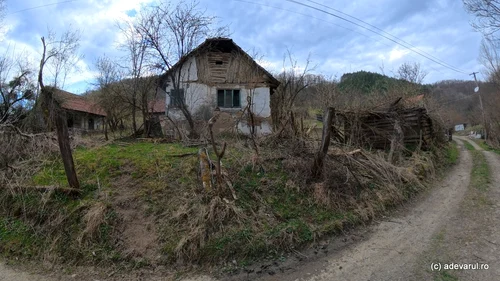
They have dirt roads that wind through forests, accompanying streams that descend quietly towards Mureș and Crișul Alb, old orchards, mostly uninhabited households, old houses from the 19th century that have preserved their archaic appearance and small communities of a few families. In the center of the villages, the wooden churches, some two or three centuries old, remind of the time when they were the spiritual center of the settlements.
Zarandului Mountains, “Cinderella of the West”
Located on the southwestern edge of the Apuseni, between the valleys of Mureș and that of Crișului Alb, between Brad and Lipova, the Zarandului Mountains are divided between the counties of Hunedoara and Arad. The mountainous land has been inhabited since ancient times, and the locals founded their settlements in the valleys of the streams that go down to Mureș and Crișul Alb, but also on the gentle peaks of the mountains, only 800-900 meters high, surrounded by broad deciduous forests.
The massif stretches almost parallel to the Mureș river, from the vicinity of Deva to Lipova, and is crossed by numerous roads, mostly forest roads, which climb to the peaks and descend on the other side of the mountains, towards the localities around the municipality of Brad. For centuries, these connecting roads have been used by the locals for herding, for logging and to bring together the scattered villages on both sides of the massif.
In the past, the communities of Zarandului Mountains lived from animal husbandry, fruit tree cultivation, forest work and, in some places, mining of iron, other ores and building stone. Polymetallic mines worked in the Ciungani-Căzănești area, and in other places people worked in limestone quarries.
The unseen monasteries, carved into the heart of the mountains. What stories hide the oldest cells of hermits
Unlike the Apuseni Mountains and the neighboring Metaliferous Mountains, the Zarandului Mountains were poorer in precious mineral resources, so the forest and pastures remained the main means of livelihood for many villagers.
“Here, most of the locals were engaged in forestry work, and others worked in mining, in Ciungani and Căzăneşti, but there were no cars to go on such roads, which have always been difficult to cross. In order to reach the neighboring villages of Arad and Hunedoara, we walked on foot, on the paths”. said Eugen, one of the few locals left in the village of Obârsia, of the Petriș commune, located on the border of Hunedoara and Arad counties.
Other locals from the mountain villages of “Zarandului Country” tell that they worked either in the gold mines in the Brad area, or in the towns in the Mureș valley, or they even commuted to Deva, 20-30 kilometers away.
The refuge of mobsters and outlaws
The Zarand Mountains are also a bridge between the Apuseni and the Arad Plain, and for centuries they were a border region of Transylvania with the Banat. Their vast forests were a place of refuge for the “Moti Criseni”, as the inhabitants of “Tara Zarandului” were called, the area of the Crișului Alb valley at the foot of the mountains.
Over time, the Land of Zarand was the site of several uprisings and military conflicts, and the locals took advantage of the vast surrounding forests to shelter from danger. In past centuries, the Zarand Mountains were also known for the bands of outlaws they hid. They often attacked gold transports from Apuseni or got in the way of postmen passing by on the road from the Mureș valley, between Arad and Deva.
“All of Zarand was roamed in the 17th and 18th centuries by gangs of outlaws, “lotrii”, as the documents call the Romanian peasants who took the path of the forest, exasperated by oppression, and attacked the nests of the nobles. The movement of the “lotrii” in Zarand had such a large scale that not infrequently armies were mobilized. It even came to close the borders of the county and demand passports for passage. And it is no wonder that such solutions have been reached”. informed the magazine România Pitoreasca, in 1973, citing historical sources.
Some gangs of outlaws supported, according to historians, the gangs of serfs led by Horea, Cloșca and Crișan during the Uprising of 1784–1785. Starting from the 19th century, the Zarandului Mountains became more welcoming places for travelers, due to the increased importance of the surrounding mining towns, but also of the Vața de Jos spa resort.
Subsistence agriculture
In the mountain villages, the locals continued to lead a patriarchal lifestyle, surviving on animal husbandry, thanks to the forest and subsistence agriculture.
“When I was born, around 1938, there were about 70 families here in Runcșor. Now there are about 20. Everyone had cattle, and the fields were worked. After the war, many went to Deva, Hunedoara, Brad or Arad to work in industry, in factories, in quarries, in mining.” recounted Iulian, a local from the village of Runcșor, in the Zarandului Mountains.
The phenomenon of depopulation started in the middle of the 20th century and affected dozens of villages in the Zarand Mountains.
“Here, some families had eight to ten children, but they had no land to work on. In the past, people received land and house sites in Arad county and moved there. Few returned. Others moved to Zam commune”recounted Zian, the retired retiree in the village of Almasel in the Zarandului Mountains.
The King’s Road, built in the Zarandului Mountains. Life in archaic villages, where the asphalt reaches for the first time
After 1990, villages in the Zarand Mountains continued to depopulate, even though some of their old dirt roads were paved and utilities moved to other localities.
“The road from Runcșor has been asphalted for several years, because before it was only mud. But, do you know what happened? They built the road when there were no more people. Now more tourists come here, because the area is beautiful, it is not very far from Deva, only about 40 kilometers”, recounts Crăciun, a local from the village of Runcșor, in Hunedoara.
The King’s Road
Recently, work began on the “King’s Road” (DJ 707), a road section that will connect the towns of the Crișului Alb Valley with those of the Mureșului Valley.
The new 17-kilometer road, built with European funds, will connect the communes of Petriș (Arad county) and Vața de Jos (Hunedoara county), through the Zarandului Mountains. The mountain road, which climbs up to 900 meters, at the border of the two counties, will have two traffic lanes and is proposed as a solution for the revitalization of Zarandului Country, an attractive area thanks to the Vața de Jos thermal resort and the Crișului Alb Valley.
Nearby is the city of Brad, a former mining center that houses the only gold museum in Europe, and the Apuseni Mountains attract with their numerous natural monuments and the archaic villages of the Moti.
In Arad, the “King’s Road” will go down the Mureș Valley, near the Castle of the royal family from Săvârșin, and in Hunedoara it will reach Căzănești, the birthplace of the clergyman Arsenie Boca, and near Țebea and Baia de Criș, historical places that preserve the memory of Avram Iancu and Horea, Cloșca and Crișan.
