
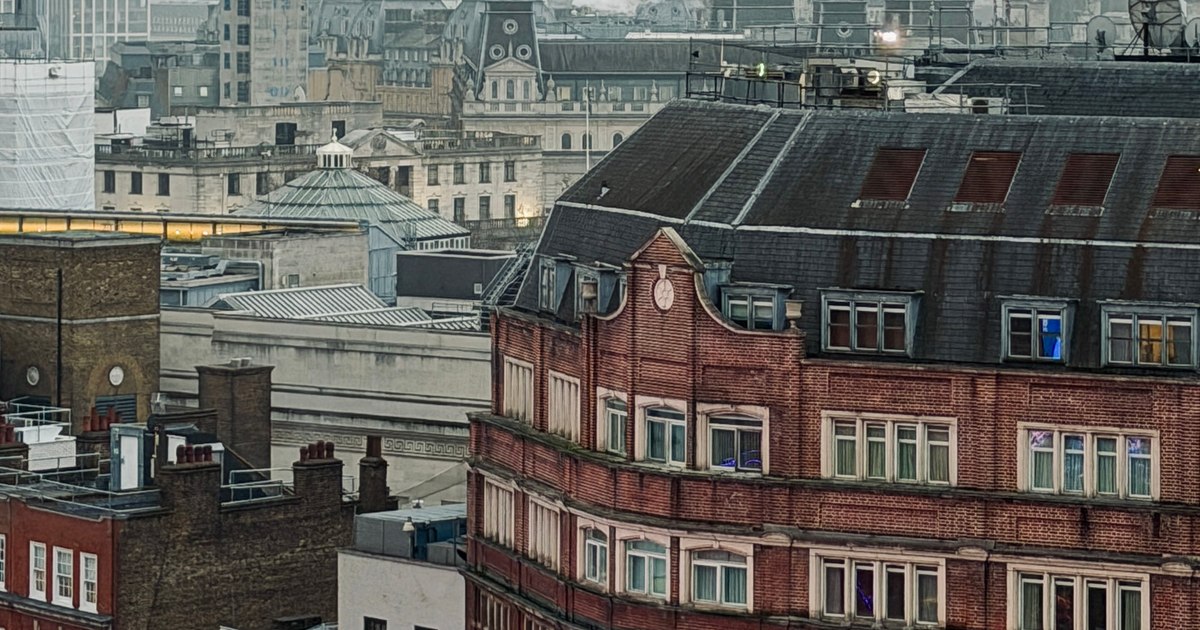
London, one of the most cultural cities in the world, becomes the ideal setting for the “Peaky Blinders” universe. Ahead of the exclusive interview for “Weekend Avevarul” by Cillian Murphy, Steven Knight and Tom Harper, the British capital reveals the connection between history, war and cinema.
“In the bleak midwinter”. In the middle of the harsh winter, at the end of January, I found London friendly, as it had always been with me – an autumn in perpetuum mobile, with heavy, heavy, gray skies, a perfect backdrop for the city to shine, and a few sprinkles of rain to keep you from staring at yourself in the city’s immensity. The British capital does not have the layers of history superimposed, but sewn together, side by side – era by era, the distant past with the barely blinked past –; history or modernity, centuries apart, you can only notice them depending on how you focus your eye and how much your knowledge bag allows. Today’s London is an old lady, elegantly dressed, with small Victorian frills on the collar of her shirt, with a sharp, inquisitive and superior gaze, who retains a certain gentleness, surprising to those who believe in the stereotype of the city where the sun doesn’t really show – a Judi Dench or a Celia Imrie if we wanted to associate her with a face.
British society shows you even from the middle of one of the most transited and popular places, the subway, that its most important cornerstone is culture: stands with newspapers and magazines (plus points with free publications) and an incredible density of advertisements for the latest shows and films. For example, at Leicester Square tube station, it takes around two minutes to go up one of the escalators, and the two walls are decorated with advertisements for theater performances: the size of an A4 sheet, placed side by side in minimalist picture frames. So, I was already in another world.
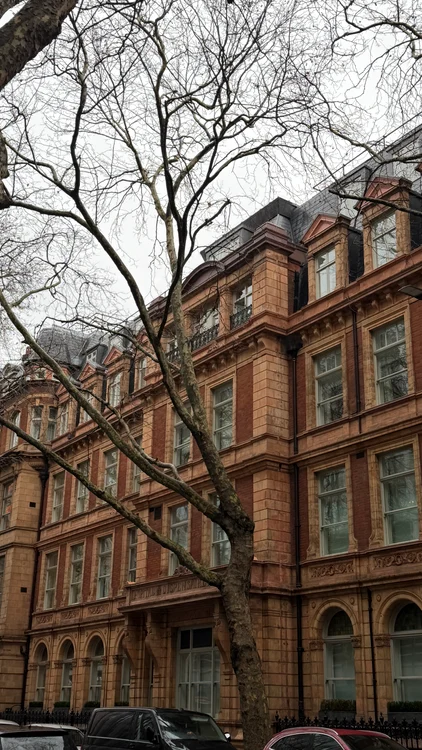
Leicester Square, part of the heart of London’s fairgrounds, proudly preserves its history. With the present you walk shoulder to shoulder – local supermarkers, representatives of famous brands, shops with rather kitschy souvenirs, restaurants of the same kind. But once you look up, not much, but only so that the sky can see a little of your forehead, the architecture amazes you, delights you, embraces you completely – especially the red brick buildings, hidden behind plane trees, inherited from the beginning of the 20th century, the era of King Edward VII.
Walking through the streets famous since the 19th century for their theaters and, later, for their cinemas, I tried to put the filter of the interwar period, when the fire of the Great War had stopped and Great Britain, like all of Europe, was waiting, on the doorstep of the still smoking house, for its men. Almost six million Britons fought on the front lines of the First World War, and almost 80% of them returned home, paying the price of having experienced the greatest tragedy of mankind: when man becomes wolf for men. One of the most dramatic theaters of war was in the fields of Flanders, the northern area of Belgium. In the trenches there, more than 700,000 British soldiers lost their lives out of the two million deployed. The rest returned home with poppies in their breast pockets and PTSD in their pouches. Each built his life as he could; a new one, because no one who returned from the front was the same.
On watch in the field of poppies
From here, cinematography gets under the skin of reality. Filmmaker Steven Knight found a time machine and engineered it to take us not too far in time, space or reality. In 1919, immediately after the end of the First World War, 160 kilometers north of London, the city of Birmingham began to be de facto ruled by a gang of gangsters known as the Peaky Blinders, its leaders being members of the Shelby family – they, the true aristocrats of the great industrial city, and their king, Tommy Shelby, crowned every time he cheated death, in his woolen cap with a blade hidden in the brim, the only one with a lining red. The supreme law to which everyone, from commoners to politicians and nobles, obeyed was “By the order of the Peaky Blinders”. Simple, cold, enough to freeze the soul.
In the shadow of the “Peaky Blinders” universe. Cillian Murphy: “We didn’t set out for Tommy Shelby to be a role model”
Knight created the “Peaky Blinders” phenomenon from his own heritage, from family stories. In 36 episodes over six seasons, the story of the Birmingham gangsters was created with cigarette smoke, illegal business, alcohol and violence. A world under reconstruction where people felt they could overcome their condition. A world where betrayal and loyalty were the sides of a coin often tossed around by families.
The last episode of the series appeared in 2022. Tommy Shelby was not at peace with himself or the past, and the clouds that would unleash the storm of World War II were gathering over him and the entire world. The last episode was a point. A semicolon. Three points? It was an ending that allowed you to play God and guess his fate in the context of world conflagration. But in 2024, Steven Knight confirmed that the Shelby family saga would have an outcome, and Cillian Murphy had already dusted off his coat and woolen cap. A year later the meeting with Tommy Shelby had already been arranged.
High hopes
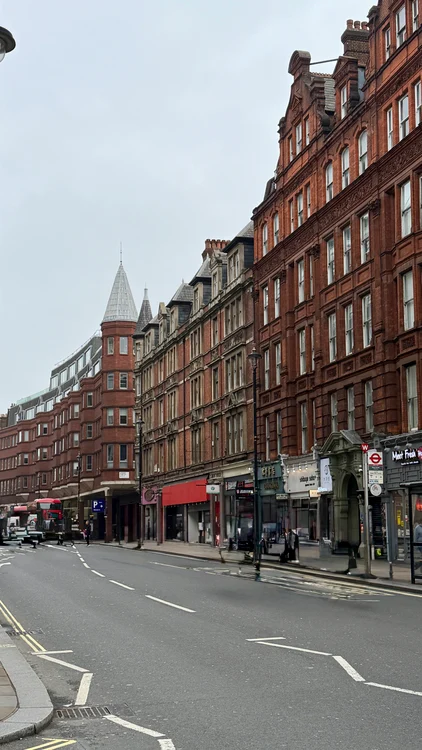
So it was the end of January. In London the air was cold, clear, sharp. The morning was rough, but the closer the clock ticked to noon, the tighter and tighter my stomach became. I strolled out of Leicester Square and past Chinatown, the Asian cultural hub that was starting to prepare for the Chinese New Year with dozens of red lanterns hanging in a dome shape – a red sky under the washed out blue-grey sky. We arrived in Soho, the residence district of British entertainment. Here, history is in a straight line and lies even in details that often beat technology – the color of the carpentry or the hardware of a doorknob tell stories, but so does the correct address. We had reached our destination.
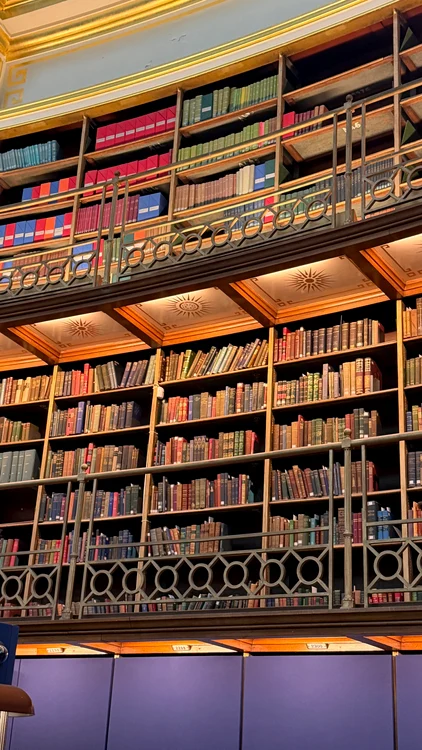
Soho House on Dean Street is famous for the people it hosted, but mostly for its age: it was built in 1732, in the Georgian style, being one of the oldest houses (“townhouses” as the British call them) in Westminster. I almost tiptoed on the creaking floor and barely caught a glimpse: on the left, the elegant drawing room that retained its early 20th century air and the imposing white marble fireplace; on the right, a huge maritime mural, created by the artist John Devoto in the 18th century. I went down the wooden stairs, painted a dull blue-green, and into the movie theater. The nearly 50 huge red-brown velvet armchairs, each lit by an art-deco lamp, waited in silence. From the back of the room, the screen was faced by a library of old books – a complete picture of the relationship between the two arts, a (nearly) perfect bubble for a cultural journalist, an ideal definition of what it means to screen. The hall was empty, and only towards the beginning of the projection did four other people come, fellow journalists from Europe. The lights went out and the first image was that of a print shop. That’s how “Peaky Blinders: The Immortal Man” began. This is how a world that I feel every day is disappearing from Romania, we recover it in less than two days in London, piece by piece.
After the lights came up, I continued to smell the freshly dug dirt in the hole Tommy was supposed to be lying in from the last episode of season 2. I continued to hear the final song – a jerky, funereal rhythm that presses on your every breath, accompanied by a high, shrill voice like a sheet of paper. I kept following the wagon train in my mind, and hearing its wood crackle in the flames. I continued to feel the chill of a haunted house and to be left with the weight of the question of whether beyond death the soul finds peace. All of them have remained even now, just like Nichita Stănescu’s verse: “I will never learn that he died”.
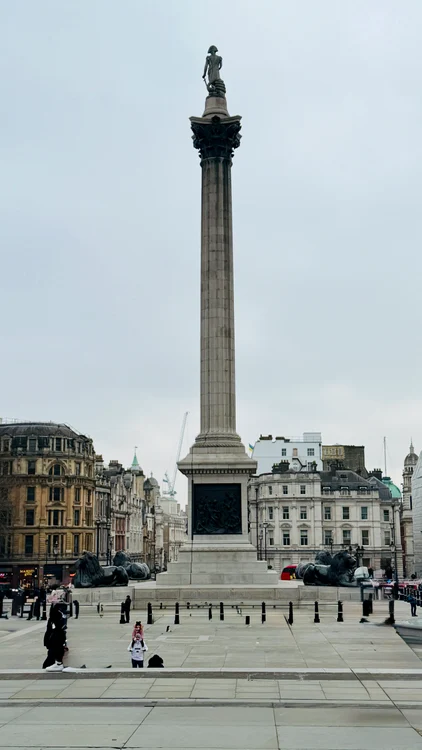
I stepped out into the light of the present and time seemed to pass in slow motion. I was trying to recalibrate my mental clock because the Interview was coming up. I walked down from Soho to Trafalgar Square, but the history filter stopped working. I knew the shadow of Tommy Shelby and his gang would never appear behind a brick wall again. The road to the location where the event for which I had been invited to London would be held had become a kind of path paved with yellow stones – I was certainly not in Kansas, but I was not even in Birmingham in 1940. I arrived in front of the monument hotel, opened in 1885. I had all the questions in the world in my mind, minus the ones already prepared. On the 2nd floor I waited in one of the office rooms of the Netflix team. Only then would I find out that it was a day dedicated to print media, organized long before the other interviews in the promotion tour – I, the only one from Romania.
