
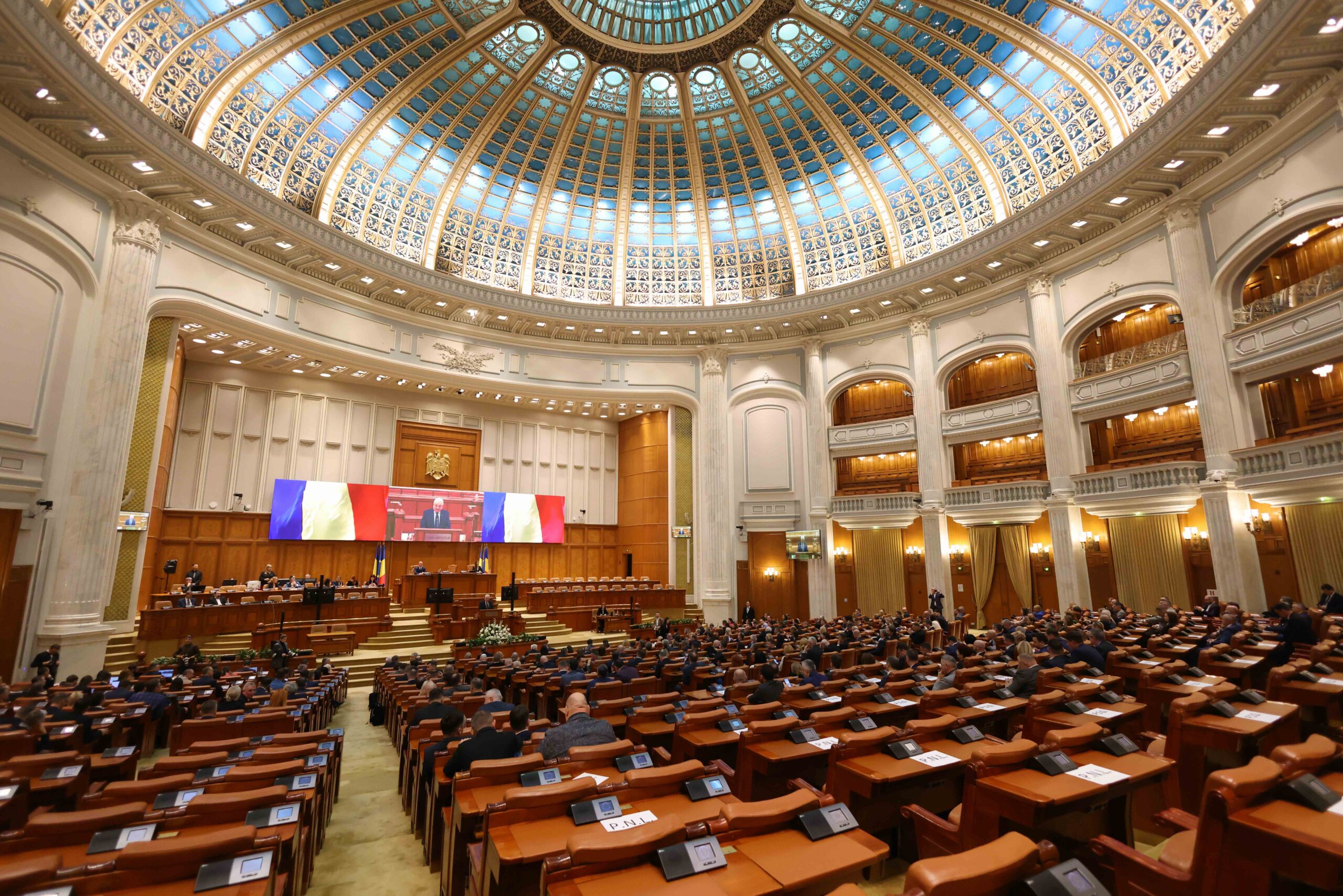
The Romanian Senate recently rejected an initiative that was supposed to define and prevent burnout, although EU member states are encouraged to include psychosocial risks in their work policies and implement prevention measures.
The bill that was supposed to officially recognize burnout in Romanian legislation was rejected by the Senate as the first chamber referred to it.
The vote was a decisive one, the elected officials avoiding a concrete position. Only 15 “yes” votes were recorded. Another 37 senators voted “against,” while 51 abstained. The latter are members of the parties in the government arch: PNL, PSD and UDMR, although the initiative belongs to their governing colleagues from the USR. Senators AUR, PACE-Întâi Romania and those of the non-affiliated group voted against.
The 15 votes given in favor of the initiative came from USR senators and one PSD representative, who made an exception, senator Victoria Stoiciu.
What the project provides
The law introduces extra-salary benefits and days off that can be granted without medical justification. Specifically, the project allows employers to facilitate access to psychological counseling sessions and support related to professional activity, given individually or in groups. To pay for the sessions, the employer can partially or fully bear the costs of packages for professional psycho-emotional support.
Obligations regarding informing employees and including psychosocial risks in the internal assessment are also introduced. In the case of employers with more than 50 employees, they must: “a) draw up an annual prevention plan for professional burnout, adapted to the specifics of the activity, with the consultation of employee representatives or, as the case may be, trade union organizations. b) to carry out an annual specific internal assessment of psychosocial risks, using tools recommended by the Ministry of Labour, Family, Youth and Social Solidarity, developed with the consultation of the Romanian College of Psychologists; c) to establish a confidential and accessible internal mechanism for reporting risks and situations of professional burnout, without negative consequences for the employees who use it”.
Legislation in the EU
The World Health Organization (WHO) recognizes professional burnout as a phenomenon exclusively related to the work environment. In 2023, the European Parliament adopted a resolution asking the European Commission to revise the list of occupational diseases to include, among others, burnout. The responsibility for recognition as an occupational disease, however, remains at the level of each state.
At the European level, however, several states have already adopted specific legislative frameworks. Latvia and Sweden recognize burnout as an occupational disease (no – “Exhaustion Disorder” in Sweden), in which context employees can benefit from public funding for treatment.
In the Netherlands, there is no separate diagnosis, but employers are forced to reintegrate into the labor market. Burnout is treated as “overstrain”, recognized in the practice of occupational medicine. Although not a separate diagnosis in international classifications, the Dutch system allows for leave, psychological interventions and clear return-to-work plans tailored to individual needs.
Although not all European countries have included this term in legislation, in more and more states the right to disconnection appears, which limits communication outside of working hours. This is the case in France, Belgium, as well as in Spain, Portugal, Italy, Ireland, Luxembourg or Greece.
The initiative recently rejected by the Romanian Senate, however, reaches the Chamber of Deputies, which is the decision-making body in this case. But in the parties that form the parliamentary majority, there is no adoption decision.
