
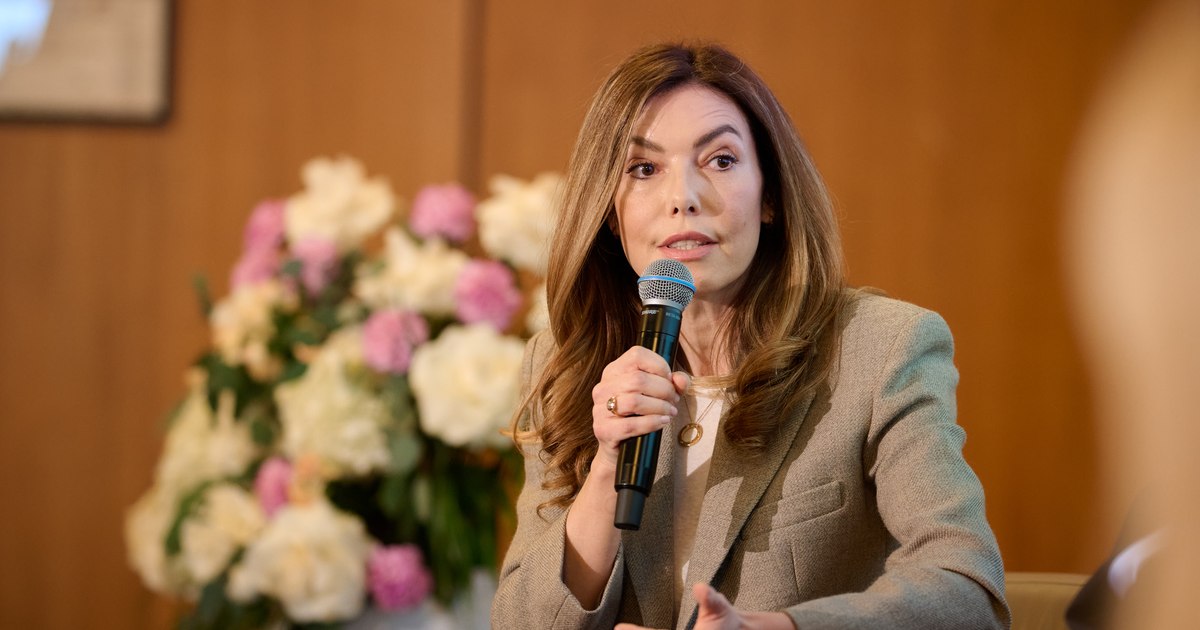
More than two million Romanians have subscriptions to private health networks, and most are offered as a benefit by employers. Representatives of private networks say this has changed the way health in the workplace is viewed and greatly improved access to prevention. ,“More than 70% of subscribers proactively go to the doctor to get their annual screening set and regular checkups,” said Andreea Minuță, executive director of the Subscriptions Division, within Regina Maria, at the Healthcare Forum event, organized by Adevărul.
How medical subscriptions are changing the way prevention is perceived
“At least in the last decade, medical services have evolved from point-of-care access to an integrated, digital and more prevention-oriented ecosystem. (…) The catalyst for development was the medical subscription. Why am I saying this? Because the introduction of the medical subscription has radically changed the way we look at health at work“, said Andreea Minuță, executive director for the Subscriptions Division, at “Regina Maria”.
The company’s data indicates a visible change in patient behavior, with an increasing emphasis on prevention:
“We can say that for the first time we are talking about prevention on a large scale. Because more than 70% of subscribers – and in some companies the access is 90% – 100% – proactively go to the doctor to do their annual screening kit, have regular checkups and keep their health under control.”
On average, according to the same data, a subscriber reaches the doctor about seven times a year, significantly more often than a person without a subscription.
“It is much cheaper and easier financially and psycho-emotionally to prevent than to treat”said Andreea Minuta.
According to her, only at “Regina Maria” the number of subscriptions reached 1.1 million, which positions the company as the market leader.
Expansion into restricted access areas
The company representative rejects the idea that subscriptions are predominantly used by corporate employees.
“Many of our subscribers are actually not corporate. It’s a myth. Almost half are employed in industry, in factories. They are from areas where access to medical services is almost non-existent”she said.
For these segments, the company has developed proximity medical units and adapted solutions.
“We have opened mini-clinics, built offices at factory premises and taken medical services to places where patients would otherwise not have reached. We have about 100 such locations and we reach patients who otherwise would not have reached doctorsMinuta explained.
The company has also developed a concept of modular cabinets:
“It’s a cabinet that we make from containers and that we can shape according to how big the company is. They can be operationalized in a maximum of three months and allow access to tests, ultrasounds and specialist consultations.”
Growing interest in mental health
Another noted trend is the increase in interest in psychotherapy services, especially in the organizational environment.
“A lot these days we talk with companies about psychotherapy services, let’s open this channel of communication. (…) We have to learn to ask for help, learn to reduce this stigma about what psychotherapy means and address these issues”, said Andreea Minuta.
Impact on costs and medical education
According to her, subscriptions also have a financial impact on users.
“It is also a saving tool. On average, a subscribed patient saves about 3,500 lei per year”, said the representative of the Queen Maria Network.
At the same time, it contributes to increasing the level of medical education.
“By going to companies, conducting workshops, webinars and screening campaigns, we have increased the level of education and medical literacy. The benefit also extends to the family, not just to employees,” she concluded.
