
The increase in the price of fuel can mess up the vacation plans of many Romanians during the Easter period. Some of the most popular religious tourism destinations can also be visited by train, at more affordable costs than in the case of a car trip.
The increase in fuel costs may make many Romanians reorganize their trips during the holidays. Rail transport is seen as a cheaper alternative, and in some cases travelers can also benefit from discounts on tickets.
The train, more affordable than the car
According to CFR Călători, train tickets are subject to a 10 percent discount for advance purchase from 11 days inclusive, for the entire advance sale period, and a 5 percent discount for purchase from six to ten days in advance. Travelers also benefit from a 10 percent discount on the price of round-trip tickets, if they are purchased at least one day before the trip.
“The return ticket is the best deal for that traveler who knows the exact date of return. Instead of paying attention to road signs or GPS to find out the right way, you can choose the relaxation that train travel offers you”informs CFR.
The ticket is valid for those traveling on a single train both outbound and return, on journeys of up to 1,000 kilometers.
Most cities in Romania are connected to the railway network, which includes over ten thousand kilometers of railway. In the case of monasteries, which are becoming popular Easter destinations, some are less accessible by train because they were placed in isolated places or with difficult rail connections. However, some of the most sought-after places in Romania during the holidays are located on railway routes or in their vicinity.
Pilgrimage by train to Nicula Monastery
During the holidays, the Nicula Monastery in Cluj county is visited by many Romanians, especially from the historical region of Transylvania.
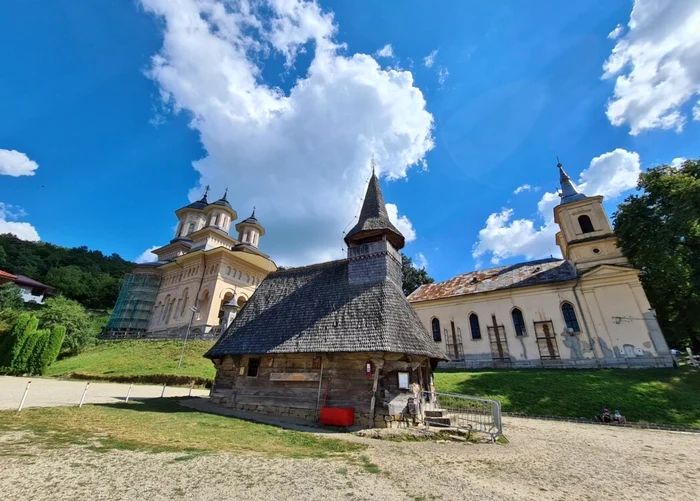
Founded in the 16th century, the monastery neighboring the city of Gherla is known as one of the oldest monastic settlements, dating back to 1552, but also as a place of pilgrimage. It keeps an icon of the Mother of God, painted in 1681, which, according to tradition, would have shed tears for 26 days in 1699.
A train journey from Cluj-Napoca to Gherla can take about an hour, and the ticket costs about 30 lei.
“From Gherla Train Station you can reach the monastery with buses that run at an interval of about 30 minutes”, shows CFR.
In Gherla, travelers can also visit the Armenian-Catholic “Holy Trinity” Cathedral, where one of the three paintings in Romania signed by Rubens, “The Descent of Jesus from the Cross” is located. Here are also the Franciscan Monastery, the Solomon Church, the Synagogue, the Karácsonyi House, the current Gherla History Museum, and the Gherla Citadel or Martinuzzi Citadel, built in 1540, where the Gherla Penitentiary currently operates.
The legendary Curtea de Argeș monastery
For the residents of the Capital and the Muntenia area, the Curtea de Argeș Monastery, built by voivode Neagoe Basarab in the first half of the 16th century and rebuilt during the reign of King Carol I, is more accessible. The rulers Neagoe Basarab and Radu de la Afumați were buried here, as well as the kings of Romania. Curtea de Argeș Monastery is also known by the legend of Master Manole.
“The legend says that Master Manole, trying to build the monastery and running into heavy obstacles (what he built during the day crumbled at night), resorts to the ultimate sacrifice and builds his wife, Ana, in one of the outer walls of the monastery, this being the only way that the edifice can be raised. The human sacrifice does not stop here, Manole himself losing his life when he tries to fly from the roof where his body hit the ground, legend says that a spring appeared, on that spot, today, Manole’s Fountain is located”shows the history of the settlement.
How John of Hunedoara spent his great fortune. The famous fortresses and monasteries built by the medieval hero
The Curtea de Argeș Monastery is located about 150 kilometers from Bucharest, and travelers can reach it by car in about two hours, the cost of fuel being over 100 lei on the Bucharest – Curtea de Argeș route.
The cost of a train trip between Bucharest and Curtea de Argeș is about 30 lei, and the journey takes about three hours, depending on the railway connections.
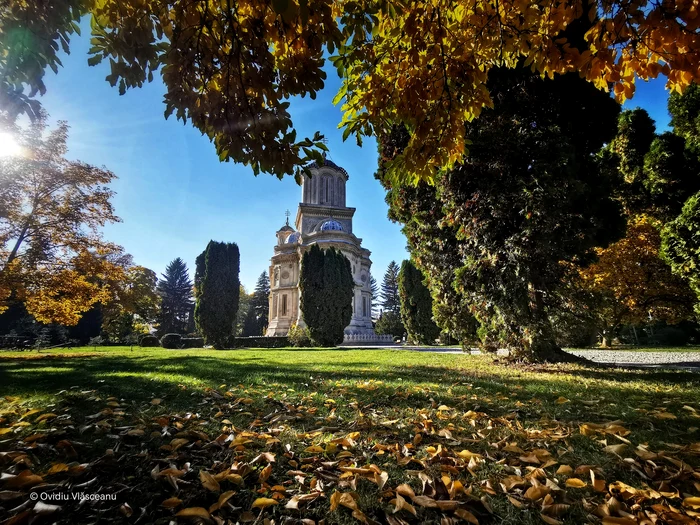
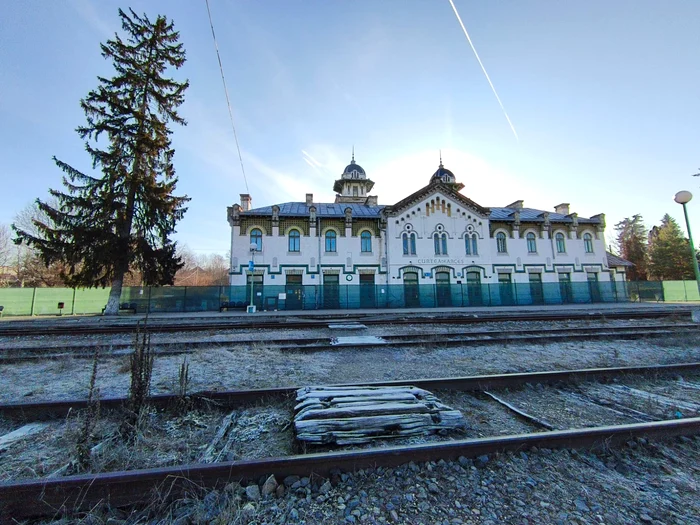
“From the Curtea de Argeș train station you can walk, the distance to the Curtea de Argeș Monastery being about 2.5 kilometers, or by car”, shows CFR.
Putna Monastery, near the train station
In the north of Romania, a sought-after destination during the Easter holidays is the Putna Monastery, in Suceava county. It was the first and most important foundation of Stephen the Great and, at the same time, the necropolis of the voivode and his family. Here you can see the tomb of Stephen the Great, covered with a white marble canopy, the medieval museum of the monastery, but also the cell of Daniil Sihastru, one of the most important Moldavian saints.

The Putna monastery is located in the commune, approximately 70 kilometers from the municipality of Suceava. The nearest train station is the one in the town of Putna, from where travelers can take buses to the gates of the monastery. The railway connection is provided on the Suceava-Putna route, a railway from the historical Bucovina region, appreciated for the places it passes.
“The train journey on this route leads you to an area full of history and beautiful landscapes. The line crosses part of the Suceava Corridor, on the left side of the Suceava River. As a parenthesis, from Dornești to Vicșani, the railway crosses over the broad-gauge railway, which connects to Ukraine. Here, the trains to Putna make a rebus (change the direction of the route). After crossing the Suceava River, the railway it passes through the town of Rădăuți, then through the Sucevei Valley and up through a wooded area to Gura Putnei. Once we arrive in Putna, it is impossible not to visit the Putna Monastery (located at a distance of about 1.5 km from the station), as well as Daniil Sihastrul’s Cellar (1 km) or the Putna Wooden Church”CFR showed.
The price of a train journey between Suceava and Putna is approximately 16 lei, and it takes between two and three hours, depending on the traffic schedule. By car, the cost of fuel between the two towns is estimated at 50–60 lei.
In Bucovina, along with Putna Monastery, Voronet Monastery and Humor Monastery are also accessible by train, both having the city of Gura Humorului as their rail access point.
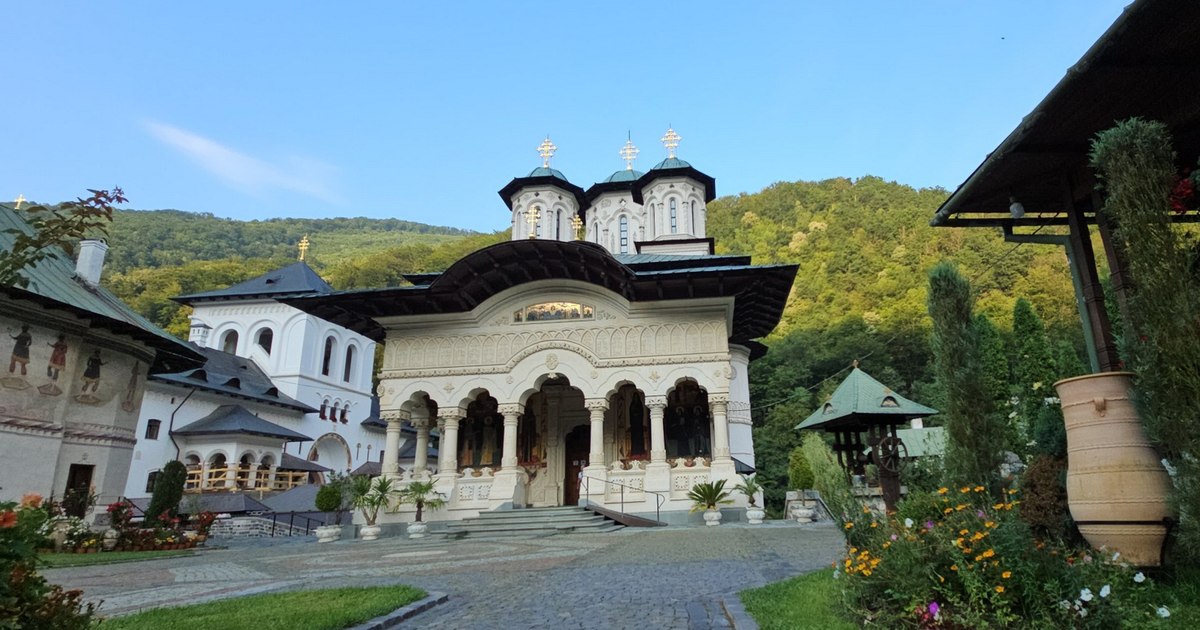
Lainici Monastery, place of pilgrimage by train
The Lainici Monastery, built and painted two centuries ago, is the most sought-after place in the Jiului Gorge, the pass that connects the historical regions of Transylvania and Oltenia.
40,000 pilgrims arrived at Prislop Monastery. Images of the “assault” of the Romanians at the eternal place of Arsenie Boca
At Easter, the monastery located more than 30 kilometers north of Târgu Jiu and 25 kilometers south of Petroșani becomes a place of pilgrimage for Romanians from the south of the Carpathians, but also from Transylvania and western Romania.
A journey on the railway through the Jiului Gorge, with a stop at the stop adjacent to the monastery, offers a unique experience. More than 30 kilometers long, the Jiului Gorge starts from the edge of the Petroșani municipality in Hunedoara and continues on a winding route, which closely follows the course of the Jiului, towards the south of Romania, until the entrance to the town of Bumbești-Jiu, from Gorj county, located at the exit of the mountains.
The railway, inaugurated after the Second World War, is appreciated for its large number of works of art. More than 30 tunnels dug into the rock and more than 120 viaducts, bridges and footbridges, all within a distance of only 30 kilometers, make the Jiului Gorge one of the most attractive destinations for train travel enthusiasts.
The price of a train trip from Craiova to Lainici Monastery is approximately 30 lei. The route of about 130 kilometers can be covered in 3–4 hours, due to the difficult route through the mountains. By car, a trip between Craiova and Lainici can cost around 80–100 lei, the route being covered in less than two hours.
The Lainici Monastery is one of the few human settlements in the gorge and the most visited place in the Jiului Gorge National Park, a reserve of over 11,000 hectares, attractive due to the wildness of its landscapes.
