
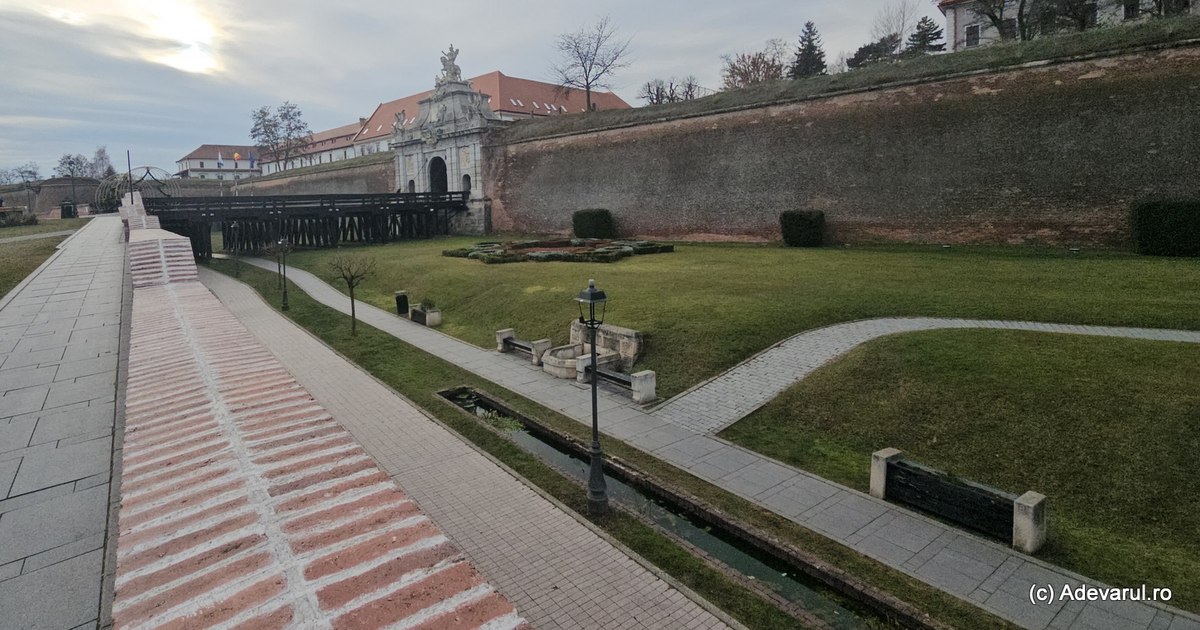
Built three centuries ago, the fortresses of Alba Iulia, Arad and Timisoara were built to defend the regions from the Ottoman threat. Fortifications of impressive dimensions have long lost their defensive role, but have become historical and touristic symbols of the cities.
Alba Carolina Citadel has remained, over time, the most visited place in Alba Iulia, a city with more than 60,000 inhabitants, in economic growth, thanks to the investments accelerated by the highway network in the neighborhood and supported by tourism and the local university.
Alba Iulia is known as the site of the Great Union since December 1, 1918, but its story begins from the time of ancient Apulum, one of the largest cities in Roman Dacia, where the XIII Gemina Legion was stationed.
Alba Carolina fortress, built in two decades
In the Middle Ages, Alba Iulia, also called Bălgrad, became one of the important cities of Transylvania, with a history marked by numerous disturbances and wars, and from 1541 to 1690 it was the capital of the Autonomous Principality of Transylvania.
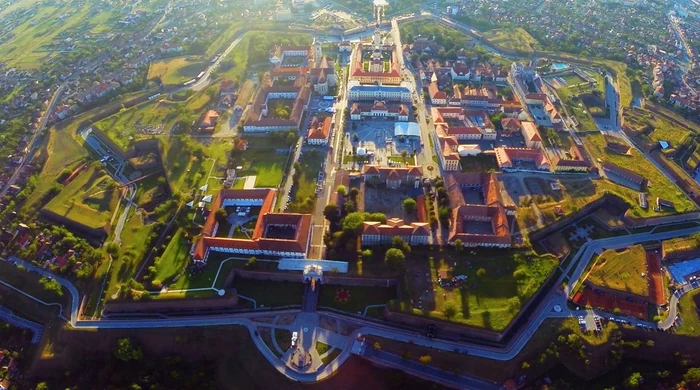
At the beginning of the 18th century, under the authority of General Eugeniu de Savoy, the most representative historical complex in Alba Iulia was built: the Vauban-style fortification, one of the best preserved and largest such edifices in Europe.
“On November 4, 1715, in the presence of officials, construction work began on the most important Habsburg fortification in Transylvania, the fortress at Alba Iulia, called Alba Carolina in honor of Emperor Charles VI of Habsburg. Finished after more than 20 years, the works on the fortress designed and approved by Prince Eugene of Savoy were supervised by military architects such as Giovanni Morando Visconti, Joseph de Quadri or Konrad von Weiss”, showed the Union Museum in Alba Iulia.
The construction of the bastion fortress at Alba Iulia required huge human and material efforts, to which more than 20,000 people contributed, apart from the authorities and specialists.
“The volume of work proved impressive, including the construction of a terrace, the demolition of the city and the medieval fortress, and the new fortification extended over an area of just over 70 hectares, the length of all the walls totaling over 12 kilometers. The fortress was endowed with its own sewage system, a mill set up in the Capistrano bastion, deep wells for water supply, two powder mills, warehouses of food, fodder and materials, repair shops, services and other facilities necessary for a force of about 10,000 soldiers, in time of war”, shows the history of the Alba Carolina fortress, published by the Alba Iulia Town Hall.
The best preserved Vauban fortress
The Alba Carolina fortress impresses with its military architecture, characteristic of the Vauban style. The main body has the shape of an irregular heptagon, and the seven bastions give it the image of a star. The ensemble, with massive brick walls, loses its sobriety through the gates adorned with art monuments. Also here, numerous ancient vestiges have been preserved, reminding of the importance of Apulum, one of the largest cities in Roman Dacia.
“Overcome by the new historical realities, including the tactics and strategies characteristic of modern wars, the Alba Iulia citadel failed to fulfill its role as a “bastion” of the anti-Ottoman struggle, the only notable events that can be linked to its past being the Horea uprising (1784-1785) and the revolution in Transylvania (1848-1849)”its history shows.
In Alba Carolina, tourists can visit the Cathedral of the Reunification of the Nation, the place where, in 1922, King Ferdinand and Queen Maria were crowned, and the Roman Catholic Cathedral “Saint Michael”, one of the oldest Gothic cathedrals in Romania, the place where John of Hunedoara was buried.
The National Museum of the Union and the Hall of the Union are two other emblematic buildings within the citadel, and a monument erected in front of the III-a Gate of the citadel recalls the place of the martyrdom of Horea, Cloșca and Crișan, in 1785, but also the place where Avram Iancu, the leader of the Apuseni mobs, was imprisoned during the Revolution of 1848-1849 in Transylvania.
After 1990, the fortress went through an extensive restoration process, which increased its popularity and turned it into one of the most appreciated historical complexes in Romania.
Arad Citadel, rebuilt by the Habsburgs
The construction of the Arad Fortress, located at the crossroads of the roads that connected the Banat with Crisana and Transylvania, took more than two decades.
Great medieval fortress, with broken cable car, after an investment of four million euros
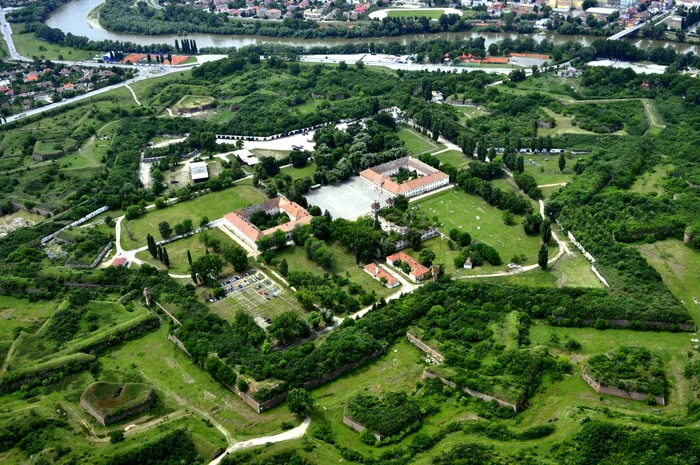
Like Alba Carolina, the project of the Arad fortress was inspired by the Vauban style, a type of military architecture that appeared in the 17th and 18th centuries and named after the French engineer Sébastien Le Prestre de Vauban. It is characterized by star-shaped fortifications, with bastions, low and thick walls, ditches and lines of defense arranged so as to eliminate vulnerable points and allow defense from several angles.
“The works began in 1762 and lasted over 20 years, under the supervision and according to the plans developed by the Austrian military architect Filipp Ferdinand Harsch. The plan of the fortress is star-shaped, with six bastions, joining the Vauban-type fortresses from the late phase, which also ends the evolution of the star systems in Transylvania”. shows the history of the fortress, published by the Arad Tourist Information Center.
Inside the fortress, the buildings of the headquarters, the fortress guard and the monastery-hospital were built, which also included a baroque church. More than 1,500 families from the surrounding area participated in the construction of the fortress, and 169 houses were demolished to build it.
The fortification permanently housed a military garrison, but, like the Alba Carolina Citadel, it was not put in a position to fulfill its role of defending the empire against external threats. During the Revolution of 1848–1849, the fortress was besieged for nine months by Hungarian revolutionary troops. From the fortress, the garrison bombarded the city in the summer of 1849, and later the fortress also became known as a military prison. Numerous revolutionaries were imprisoned here, including the 13 generals executed by the Austrian military authorities near the fortress on October 6, 1849.
Unlike the Alba Carolina Citadel, the Arad Citadel is not usually open to the public, being still used for military purposes.
The remaining bastion of the great citadel of Timisoara
The fortress of Timișoara, of which only a small part has been preserved, was rebuilt from the ground up in the 18th century, after the armies of Prince Eugene of Savoy conquered the old citadel of Timişoara, the power center of the region under Ottoman control until then.
The main role in the reconstruction of the city went to Count Claude Florimond de Mercy, governor of the Banat, who coordinated the transformation of the former Ottoman citadel into a modern, Western-inspired city. Some historians show that the garrison city, developed around the Vauban-type fortifications, followed the model of European centers such as Prague, Krakow or Pressburg (today Bratislava).
Like the fortifications in Alba Iulia and Arad, the Timisoara fortress was besieged during the Revolution of 1848–1849.
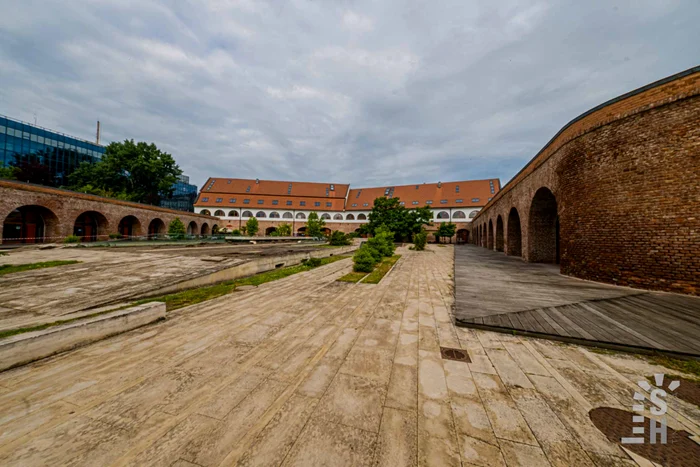
Instead, the development of the city required the demolition of its bastions. The fortified citadel of Timișoara, with bastions, ramparts and defensive ditches, was systematically dismantled at the end of the 19th and the beginning of the 20th century. The Theresia bastion was preserved, however, because some institutions were based here, and its presence did not hinder the development of the city or the circulation between the Cetate and the Fabric industrial district.
The great fortresses of Romania, rebuilt from the ruins. Monuments neglected in the past have become emblems of cities again
“Unlike the other eight bastions, it was closed from all sides, among its functions being the defense of the Transylvania Gate. In 1734, it was completely completed, being included in the first ring of fortifications and receiving the name Theresia Bastion, in honor of Queen Maria Theresia. Apart from this fragment, three smaller fragments have been preserved, near the roundabout from Clinicile Noi, within the Botanical Park and near 700 square”, informs the National Museum of Banat.
The fortress moved from Ada Kaleh
Ada-Kaleh Island had a strategic role due to its position, being considered by historians as “the key to Transylvania, Hungary, Serbia, Bulgaria, Romania”. The importance of the island on the Danube was given by the fact that it dominated the roads on both banks of the river, in a sector where the relief forced traffic to pass under the fire of the fortress.
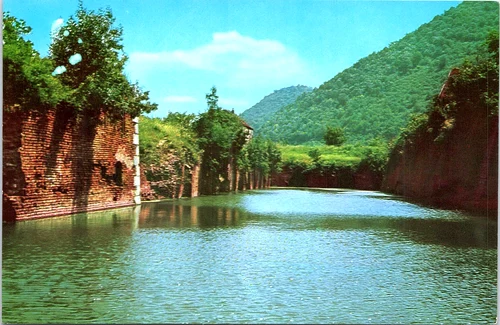
After its conquest by the Austrians, in 1717, a Vauban-type fortress was built on the island, which would become the shelter of the communities here in the following centuries. At the end of the 60s, with the construction of the Iron Gates I Hydropower and Navigation System, Ada-Kaleh Island was submerged under water, and its Vauban-type fortress was partially relocated to Șimian Island.
The fortresses of Făgăraș, Oradia and Deva also keep solid bastions that remind of their past military importance.
