
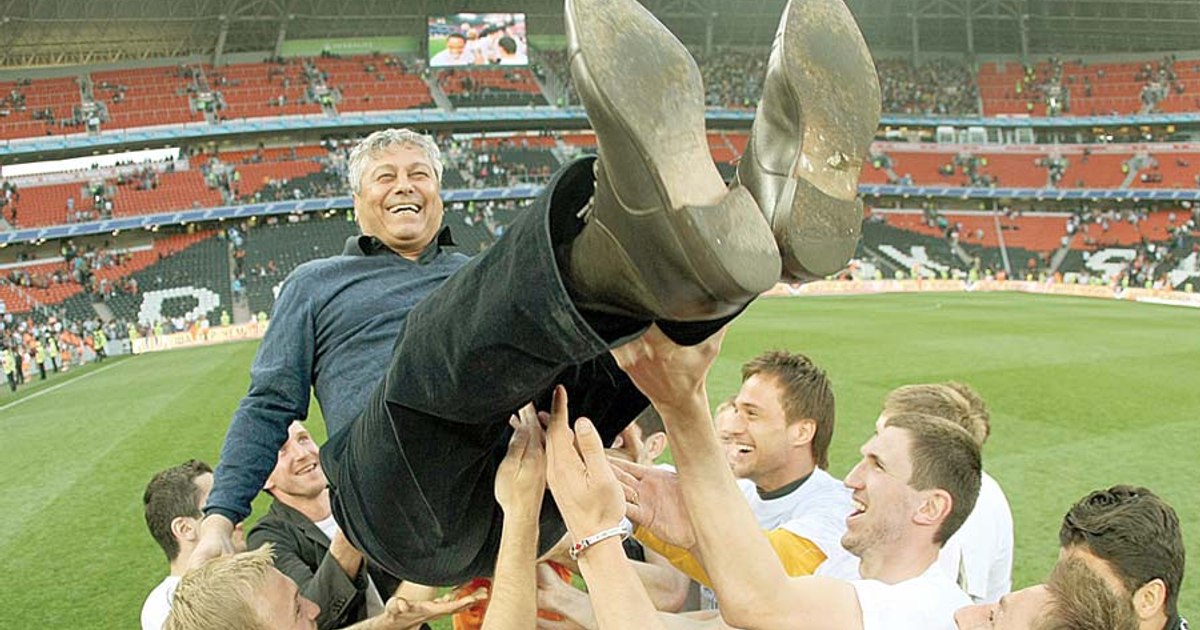
After more than a torturous week for Romanian football, Mircea Lucescu left to train the angels. The legendary technician remains a model for all, his life being an example both for generations of footballers and for other compatriots.
A difficult childhood, dominated by shortcomings, led Mircea Lucescu to always want more and more. A fabulous career, both as a footballer and as a coach, resulted. During his time at Shakhtar Donetsk, the coach made sensational revelations for the Ukrainian club’s magazine. “I was born after the war, those were very hard times. We had nothing to eat and our parents struggled with us. We were five brothers and we had nowhere to stay”he said.
His family lived somewhere on Berceni Road, where today is the Aparătorii Patriei neighborhood. In the 1950s, the area was populated by houses, some poorer than others. Lucescu continues with his confessions: “We lived in a shack for a long time, then we moved to a hospital, where my parents worked. My father was a stretcher bearer and my mother cleaned there. We were very, very poor. That’s when I learned a precious life lesson! I learned what it means to share. I used to share a corner of bread for five…”.
The illiterate father gave him an extraordinary education
Mircea Lucescu was born in a family with 5 children, on July 29, 1945. After his sister Stela, the brothers Moțu and Nelu and before Gelu, the youngest of them. “Dad was very strict, but he never beat us. And even though he was illiterate, he gave us an extraordinary education. Later he took a few classes, enough to read and write, to manage in the world. From him I learned that any achievement requires work and that any satisfaction is hard to come by.
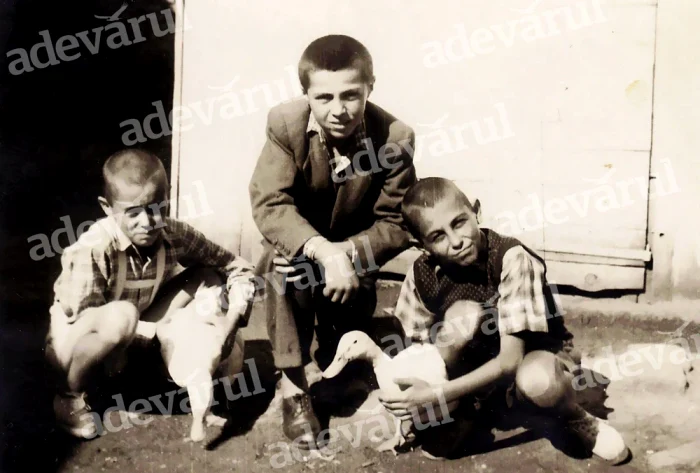
Childhood was beautiful, because we were 4 boys of relatively close ages, we played all kinds of games together. We would run after trams, jump rope, climb trees and, being four brothers, we could play two-on-two football. We played football everywhere, in the yard, in front of the house, including in the house, in the space between the beds. I played most of the time barefoot, I had one or two pairs of tennis shoes for everyone, and often I did the lessons of the others to earn the right to wear the tennis shoes myself even when it was not my turn”said Mircea Lucescu with emotion.
They ate meat once every two weeks
The great coach grew up in the difficult years after the Second World War. And childhood was just as hard: “Until the sixth or seventh grade, I went to school barefoot when it was warm, I remember how in the fall, in the first days of a new school year, there was diesel on the parquet floor, and I, walking barefoot through the school and through the dust of the street, came home like woe to me. Every year my father took care to fill the cellar with potatoes and sauerkraut. Plus wood for the winter. As my mother was often away worked for the neighbors, he would make us a 10-kilogram pot of potato or vegetable soup, which would last us a few days. I think we saw meat once every two weeks. It seems that that difficult childhood hardened me for life and taught me not to give in to difficult times.”.
Debut at Dinamo at 18 years old
Football was Mircea Lucescu’s great chance. A convinced dynamist, he wrote history in the red-white shirt. He was registered with Dinamo in 1963, at the age of 18, and made his debut in Division A on May 21, 1964, in a Dinamo – Rapid 5-2. The most beautiful years as a footballer followed, until 1977 in Division A, with a two-year break, 1965-1967, in Division B, at Știința Bucharest.
Mircea Lucescu was registered at Corvinul. Two years later, in 1979, he was appointed coach and player. At the tender age of 34, Lucescu was beginning to develop what the football world would call the “Hunedoara Phenomenon”. He took a band of children, with Gabor, Rednic, Andone, to which “veterans” like Radu Nunweiller and Dumitrache were added and took it to the UEFA Cup, in a championship dominated by Craiova Maxima, Dinamo, Steaua or FC Argeș.
“Anyway I’m going, let’s die in mine, let’s be great!”. Shocking dialogue with Mircea Lucescu, before the technician fell into a coma
He created the Corvinul phenomenon
Towards the end of his playing career – which culminated in his participation, as captain, in the 1970 World Cup in Mexico – Il Luce chose to go to Corvinul Hunedoara, a club that during his tenure became a source of talent for Romanian football, but also performed domestically and internationally. The move took place in 1977, when Bucharest was hit by that terrible earthquake, which affected the strike and the apartment on Știrbei Vodă Street, where the Lucescu family lived – he, his wife Neli and his son Răzvan. So the three took the Hunedoara road. Nea Mircea arrived in Hunedoara in 1977 and stayed there until 1982, being paid a monthly salary of 4,500 lei, there inventing the position of player-coach. From his hand several important players for Romania appeared in big football: Ioan Andone, Mircea Rednic, Mișa Klein, Dorin Mateuț or Romulus Gabor.
Romania national team, first term: qualification for Euro 1984
In 1981, at the age of 36, Mircea Lucescu was appointed coach of the Romanian national team, a team adrift after missing the qualification for the World Championship in Spain 1982. In another two years, Lucescu defeated the world champion Italy in Bucharest, in the unforgettable night with 80,000 torches on the former “23 August”. The victory against Italy and qualification for the European Championship in 1984 propelled him to the attention of European football and Italian football in particular. He was dismissed from the national team in 1986, after a 4-0 against Austria, the biggest injustice of his career.
Mircea Lucescu started from scratch. He took over Dinamo, who were languishing in the middle of the standings, and took them all the way to the semi-finals of the Cup Winners’ Cup. Also with a troop of carefully raised kids from Hunedoara: Stelea, Lupescu, Sabău, Lupu, Răducioiu…
7 years in Italy, in the best football of those times
After the Revolution, the doors of foreignness opened for the Romanian coach. He reached the strongest championship in the world at the time, where he would coach for 7 years, in Pisa, Brescia and Reggiana. In 1997 he returned to Romania, to Rapid, lured by the investments and ambitions of George Copos. He took, after decades of waiting in Giulio, the championship and the Romanian Cup, after which there was an intermezzo at Inter Milan. Four years followed in Turkey, two each at Galatasaray and Beşiktaş, after which came the big challenge: Shakhtior Donetsk. He made the Ukrainian team not only a domestic force (8 championships and 6 Cups), but also a European force, the “miners” from Donetsk, winning the UEFA Cup in 2009. Zenit St. Petersburg, the Turkish national team, Dinamo Kiev and, last on the list, the Romanian national team, complete a simply exceptional career of a poor child who went on to conquer the world.
Mircea Lucescu, in everyone’s prayers. Mihai Stoichiță visited him: “He is in an induced state, connected to the machines. May God give him days!”
Mircea Lucescu appears in the top 50 best coaches in the history of football, compiled by France Football. The Romanian is in 41st place, two “lengths” ahead of another great and late technician of ours, Ştefan Kovacs.
Mircea Lucescu was one of the few coaches in Romanian sports who received medals other than those obtained on the field. In May 2009, Lucescu was decorated by Traian Băsescu with the National Order “Star of Romania” in the rank of Knight, “in high appreciation of the entire football activity and the performances achieved as a coach, crowned by winning the UEFA Cup 2009, in the final in Istanbul”. Shortly after this moment, a new high-level meeting followed for Mircea Lucescu. The President of Ukraine, Viktor Yushchenko, decorated him with the Order of Merit 2nd class for winning the UEFA Cup.
Mircea Lucescu’s CV
Player career: Dinamo (1963 – 1965), Science Bucharest (1965 – 1967), Dinamo (1967 – 1977), Corvinul (1977 – 1982)
Coaching career: Corvinul (1979 – 1982), Romania national team (1981 – 1986), Dinamo (1985 – 1990), Pisa (1990 – 1991), Brescia (1991 – 1996), Reggiana (1996), Rapid (1997 – 2000), Inter Milan (1999), Galatasaray (2000 – 2002), Beşiktaş (2002 – 2004), Shakhtior Donetsk (2004 – 2016), Zenit (2016 – 2017), Turkish national team (2017 – 2019), Dinamo Kiev (2020 – 2023), Romanian national team (2024-2026)
Mircea Lucescu won 36 trophies throughout his career
Contributed by: Daniel Nanu, Daniel Contescu
