
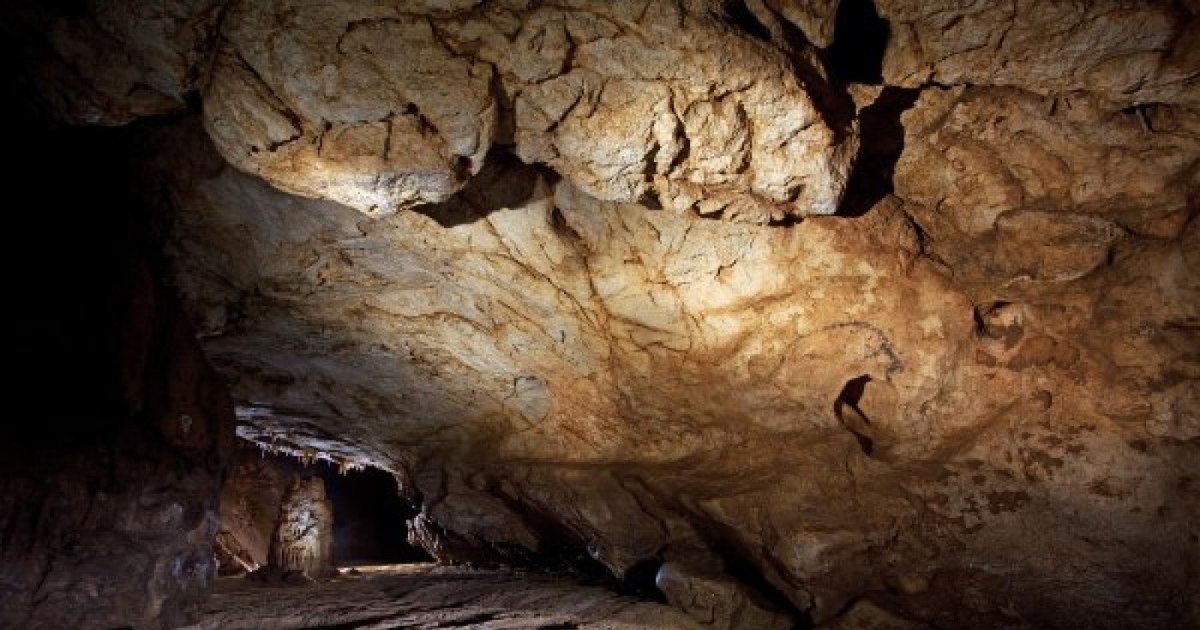
A cave in the Apuseni Mountains became famous after the discovery of tens of thousands of years old paintings. The strange place in the Sighisel Valley, now forbidden to tourists, continues to surprise scientists.
Located in northwestern Romania, the Apuseni Mountains are known for their impressive mineral resources: gold, silver, uranium, rare and precious metals. They have been inhabited since ancient times, and the traces left by the ancient communities have been preserved in still wild places, such as the numerous caves in the Apuseni Natural Park.
The valley full of caves
One such place is Valea Sighistelului, a nature reserve spread over more than 400 hectares, near the town of Ștei and the localities crossed by Crișul Negru, sought after for its many mysterious caves.
“Although the entire valley measures only nine kilometers, almost half of them are traversed through vertical walls that transform its lower sector into a canyon. The Sighistel basin houses over 200 caves on only 10 square kilometers, being the area with the highest potential for endokarstification in the country.” shows the administration of the Apuseni Natural Park.
Among the most famous caves in the Sighistel Valley are the Corbasca Cave (300 meters), with the Crystal Lake, gurus, stalactites, columns and large deposits of montmilch; Coliboaia Cave (310 meters) and Peştera din Dealul Secăturii (1,450 meters), which are part of the same karst system; Măgura Cave (1,885 meters), with labyrinthine galleries, impressively sized rooms and narrow galleries.
The starting point for visiting the Sighistel Valley can be the national road 75 Lunca – Câmpeni, which, in the town of Câmpani, branches off, continuing towards the village of Sighistel on a paved road. Another possible route crosses Culmea Măgura, coming from Peștera Urșilor, and descends on the path marked with a red dot.
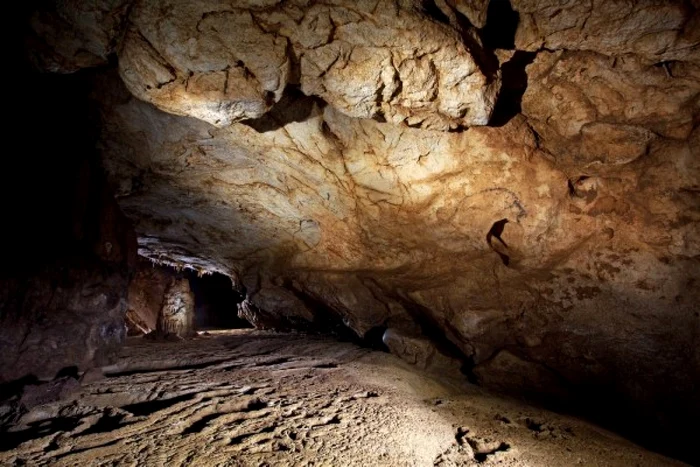
A special place of the reserve is the Coliboaia Cave, located approximately five kilometers upstream from the town of Sighistel (Câmpani commune, Bihor county). The cave has a triangular-shaped entrance with a portal about two meters high, and from here travelers descend into galleries crossed by an underground river, about 750 meters long. Deep travel is difficult and requires speleological equipment. The halls at its end have been the site of impressive discoveries of Paleolithic rock art, some 23,000–35,000 years old.
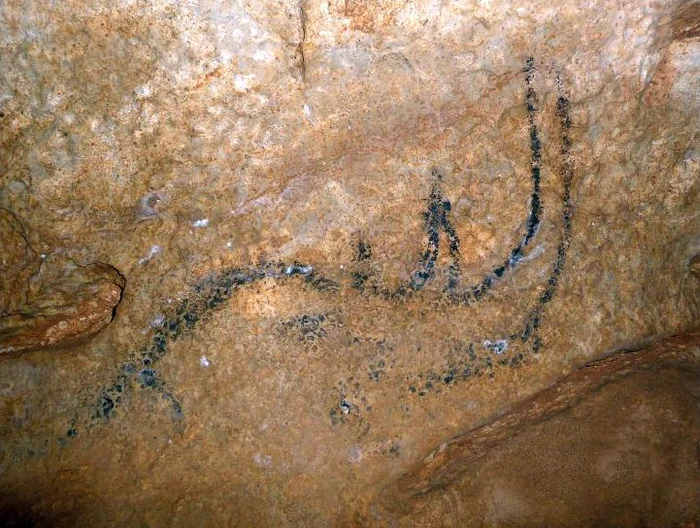
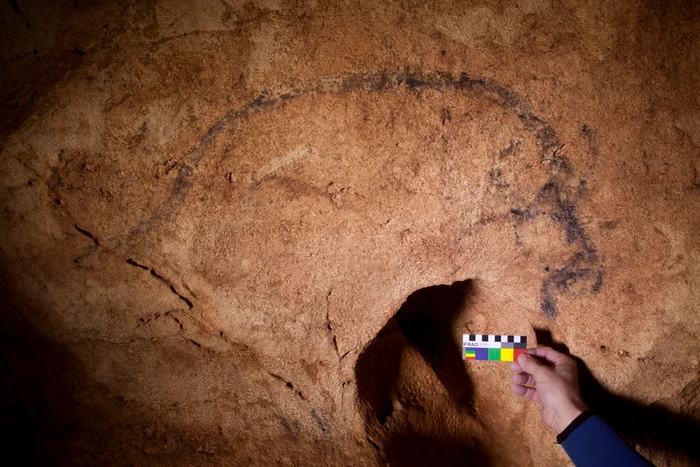
“The drawings in the small decorated hall of the Coliboaia cave were made, according to the researchers, with charcoal and would represent animals: especially a bison, possibly a feline, a rhinoceros, a small bear, as well as several engravings, including a vulva, whose anthropogenic origin is mentioned with some reservations. The homogeneity of the decoration, the black lines, the way the animals are represented — made especially with protomes (the front part of the body) are noteworthy in vertical profile—and the frequent use of the natural relief of the cave wall,” noted the researcher Marin Cârciumaru in the work dedicated to the discoveries in the cave, with the title “Coliboaia no e Chauvet”.
A land that did not announce such ancient habitation
Surprisingly for scientists, the Sighistel Gorges have preserved no other vestiges that show that, more than 20,000 years ago, this area, with numerous spectacular caves and shelters, would have attracted the interest of prehistoric communities.
The mystery of a skull from 33,000 years ago, discovered in a village in Hunedoara, during the Second World War, solved
Other researchers have observed bone remains and bear skulls in numerous places in the cave, along with claw marks or wall polishes, indicating that bears have long used the cavity as a hibernation den. The room where the paintings were discovered is located about 6–7 meters above the current bed of the stream, so it is possible that many other drawings were destroyed by the flow of water in the lower areas of the cave.
“The researchers’ first hypothesis, based on stylistic and thematic analysis — especially the clear predominance of animals considered ‘dangerous’ — is that the images were made in an early phase of Paleolithic art. This hypothesis was confirmed by two radiocarbon datings. It is the first time that such ancient parietal art has been identified without doubt in Central or Eastern Europe,” says the study “Discovery of a new Paleolithic decorated cave in Romania (Bihor County)”, made by Jean Clottes, Mihai Besesek, Bernard Gély and Călin Ghemiș.
The speleologists made the decision to close the cave in order to preserve and conserve the discoveries as best as possible. However, according to speleologist Viorel Lascu, a trace and a modern inscription were discovered, which shows that some curious people did not understand that access is not allowed. The footprint of an animal, possibly a dog or a wolf, was also identified in the cave.
Romania, the country of over 10,000 caves
Over 10,000 caves have been identified in Romania, some of them preserving traces of human habitation from ancient times. Many of them have become, over time, tourist attractions or places that arouse the interest of visitors due to the legends and vestiges preserved here.
Vicu, the prehistoric man buried in a cave in Apuseni. The discovery stunned the cavers
A skull discovered in the Cioclovina Cave in the Șureanu Mountains would have belonged to a person who lived here more than 30,000 years ago, and the traces on it led scientists to conclude that the prehistoric man had a violent death.
In the Cizmei Cave in the Apuseni Mountains, inhabited since prehistoric times, a gallery was decorated with 14 cave engravings, carved into the walls with the help of sharp tools.
“Looking at the left wall of the Boot Cave, from the beginning we are struck by the regularity with which the subject of the respective figurations is repeated — the circle, with its variants. It is certainly established by specialists that the development of the solar cult took place at the beginning of the age of metals, competing with the cult of the Neolithic goddess. It is possible that it acquired, with the passage of time, a mystical and cosmogonic value (the spiral can represent the symbol of the beginning and end of the unfolding of time) or anthropocentric (the labyrinth of human destiny or the search for the soul in crossing the vicissitudes of life)”, pointed out the scientist Dr. Marin Cârciumaru, who studied the engravings in 1987.
In the same cave was also discovered the skeleton of a prehistoric man, aged 20–25 years, with a delicate constitution, which researchers believe may have been buried here in a peaceful ritual.
Caves were among the earliest human shelters, but they were also used as sanctuaries and sacred places where prehistoric communities held their rituals.
