

Fewer and fewer cities in Romania have allowed the maintenance of old zoos, where wild animals need special conditions of care. Instead, farms with friendly animals set in theme parks and entertainment areas have become increasingly popular.
Fewer than 20 public zoos remained in Romania, according to the most recent situation published by the National Agency for the Environment and Protected Areas, in November 2025. While the spaces reserved for wild animals, managed by municipal services, have gradually decreased in recent years, farms with friendly animals, arranged in theme parks and recreational areas, attract more and more visitors.
Farms with animals, increasingly popular
From 2021, Dinosaur World Transylvania, one of the largest theme parks in Romania, was opened near Hațeg (Hunedoara county), in the Sibișel valley, at the foot of the Retezat.
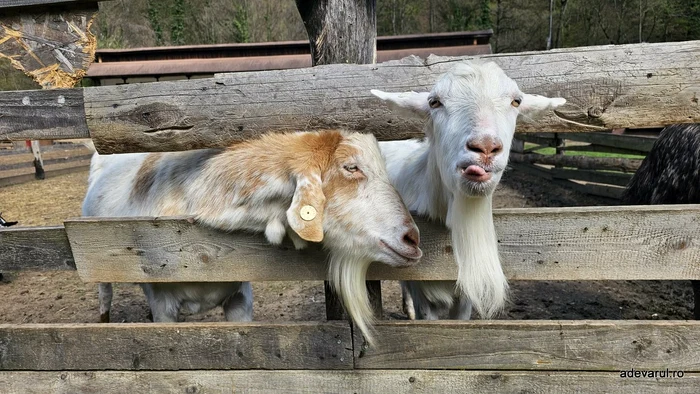
Although the amusement park was dedicated to the “dwarf” dinosaurs that lived tens of millions of years ago in the “Hațegului”, one of its main attractions is the many animals kept in pens or allowed to roam the place. Tourists find here herds of sheep, goats, rabbits, horses, donkeys, ponies, but also less domesticated animals, such as American bison, deer and alpacas.
“The bison, the grandest animals in North America, have also arrived at our farm! They are imposing animals, robust and able to adapt to all climates. The alpaca is a little-known animal in Romania, but which has been causing a stir lately. Originally from South America, it is an intelligent animal, with charisma and personality, funny and playful. Seeing deer always arouses great enthusiasm, maybe because it is very rare to admire them so close”say the representatives of the amusement park.
Children are invited to rides on donkeys and ponies and can feed the animals grass.
In Timiș, in the Begăi Luncanilor valley, at the foot of the Poiana Ruscă Mountains, another recreation area attracts its visitors with its animal farm. The Valea lui Liman tourist complex was established in the 70s and was modernized in recent years, and a special place in the investment was reserved for domestic animals.
Several sheep and goats, rabbits, pigs, poultry, but also emu birds and an alpaca animate the park of the complex, arousing the interest of children. Visitors also find grain and hay here, which they can feed to the animals.
“I came here with the kids and what I liked most was that they were able to pet some gentle animals that they don’t normally get to see in the city.” says a tourist from Timisoara.
In Valea Avrigului (Sibiu county), at the foot of Făgăraș, in the Brambura Park amusement park, in the center of which is a house built upside down, a corner of the recreation area has been reserved for domestic animals. Nearby, in the same valley that has become an increasingly popular tourist area in recent years, visitors can find the Poiana Neamțulu deer and fawn farm, established in 2008. Tourists can visit the animals, observing some precautions.
They are forbidden to touch or pet the deer, make noise or make sudden movements near them and must keep a safe distance of about five meters. Also, the animals cannot be fed with food brought by visitors, and it is recommended to wash hands with soap and water before and after the visit.
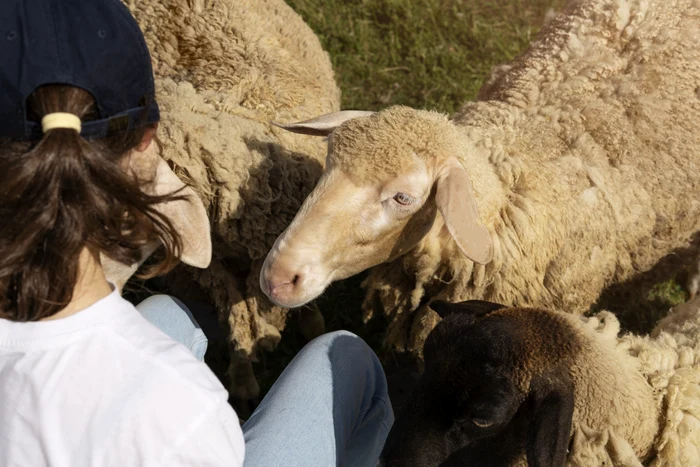
A farm of fallow deer, with almost 100 animals, welcomes tourists in the village of Bulbuc in Alba, at the foot of the Apuseni. In other places in Romania, ostrich, emu farms or mini-farms with domestic animals set up as recreational areas have become increasingly popular tourist destinations.
Zoos, weekend attractions in communist cities
While friendly animal farms have become increasingly popular in Romania and attractive as investments, public zoos have dwindled year by year due to the high costs of maintaining wild animals and stricter requirements for their care.
Romanians no longer love zoos. The series of startling incidents that destroyed their popularity
The oldest zoos in Romania appeared at the beginning of the 20th century, in Bucharest, Sibiu and Craiova. In the capital, the first “zoological corner” was set up in 1906, in Libertății Park, followed by those in Cișmigiu, Herăstrău and Snagov.
From the 1950s, the animals were moved to the new zoo in Băneasa, officially opened to the public in 1959. In the 1950s and 1960s, zoos appeared in Târgu Mureș (video), Turda, Brașov, Reșița (video), Târgoviște, Hunedoara, Bârlad, Oradea, Galați, Pitesti and Vânători-Neamț, and in the 1970s the zoo-parks multiplied in most counties in the country.
Since the 70s, the way some zoos operate has been criticized by specialists. Doina Bujor, expert in art history and heritage protection, noted their proliferation in provincial cities and the problems related to their administration.
“The sight of a zoo, with some tormented animals, reminiscent of the menageries of the traveling menageries of old, will create an unpleasant impression on the visiting public, causing them to leave the establishment with an obvious state of dissatisfaction and disapproval. Unfortunately, there are many provincial cities that initiate the creation of so-called zoos.” specialist note in the Museums and Monuments Magazine (1975).
Museography showed that zoos posed serious problems for wildlife, as many animals were captured from the wild and few zoos attempted to breed them in captivity. It was easier for them to buy animals, even from other continents, than to create good conditions for them and train specialists, but many animals died frequently.
“Analyzing the situation of the zoos in our country, it is found that a large part of them require substantial changes in terms of location, constructions for animals, ensuring quarantine, supply possibilities and care staff, thus overshadowing an interesting and instructive activity for people of the most different ages and professions”notes Doina Bujor.
Amusement parks boost tourism in cities with struggling economies
Public zoos, fewer and fewer
After 1990, many zoos became real burdens for the local administrations of some cities. Less and less visited by tourists and bypassed by important investments in the modernization and rehabilitation of the premises, complained by locals and environmental organizations for the way the animals are cared for, some were, in the end, closed.
In 2025, the Hunedoara Zoo ceased its activity, after half a century of existence. Some of the animals here were targeted in captivity since the communist era. Among them was a bear that had reached the age of 40.
“The garden no longer meets the standards in the field. Another argument is of a financial nature: in recent years, the maintenance and operation costs of the zoo were over 1 million lei/year, and the receipts from the sale of tickets were almost 8 times lower. Last year, the total amount of expenses generated by the Zoo was almost 1.1 million lei, while the receipts were 146,870 lei”informs, in August 2025, Hunedoara City Hall.
In Romania, according to the 2025 report of the National Agency for the Environment and Protected Areas, 32 zoos, public aquariums, dolphinariums and vivariums, and six care or rehabilitation centers were registered.
Of these, the zoos listed on the ANMAP list in 2025 were located in Roman, Vânători-Neamț, Rădăuți, Galați, Brăila, Ploiesti, Târgovişte, Pitesti, Călăraşi, Craiova, Râmnicu Vâlcea, Hunedoara, Reșita, Oradea, Brașov, Sibiu, Târgu Mureș, Bucharest-Băneasa and Sălicea, in Cluj County. The zoo in Bârlad was also on the list, pending authorization, and the one in Timișoara was temporarily closed.
