
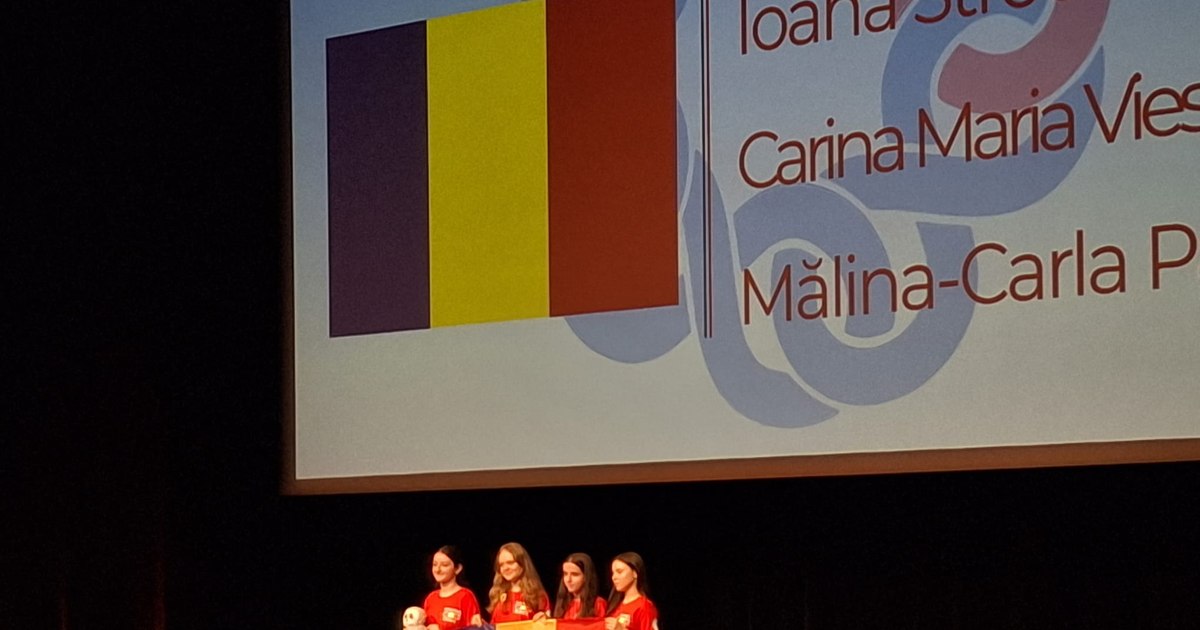
Mălina-Carla Pavel, Aida Mitroi, Carina Maria Viespescu and Ioana Stroe are the four teenagers who turned Romania into the European champion in mathematics, through their exceptional results at the European Mathematics Olympiad for Girls. Worldwide, it ranks second, because countries outside the continent are also invited to the competition. Their result is the best in the history of our country’s participation in this competition. We spoke to three of the four Olympic students, as well as the teacher who trains two of them, to find out what is behind their success.
Mălina-Carla Pavel: “Passion for Mathematics appeared when solving 3D puzzles”
At 17, Mălina-Carla Pavel is the best mathematician in Europe. The young woman, who studies at a state high school in Pitesti (“Alexandru Odobescu” National College), obtained the highest score – 30 points – among all the participants from the official countries in the competition.
The back work has been going on for several years, since the first Olympics, since the first competition. After the two days of the competition, I knew I was going to win gold, but at no point did I expect to be first. I don’t think anyone expected it. I really wanted to do well and I’m happy with the result!
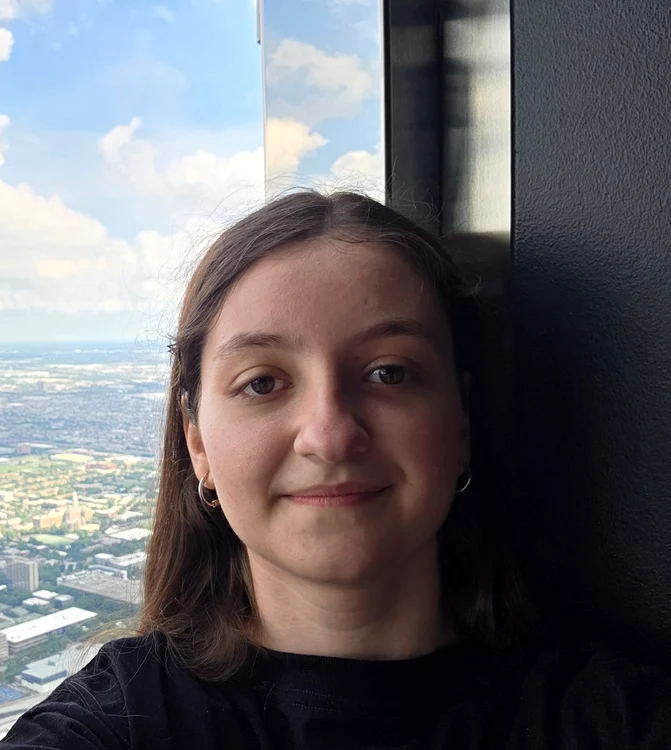
To reach this result, he followed several training programs.
“For example, in the summer of 2025, those from the Mathematical Sciences Society sent me to Chicago for a month, to a camp called MOP – where I was two Romanian children – based on the results of the Olympiad. There I did mate with the American team“, the young woman shows.
Where does the love for Mathematics come from? The teenager explains:
“The passion for Mathematics appeared when I was little, when I was solving 3D puzzles. For me, mathematics helps you develop your way of thinking and solving problems that seem impossible at first”.
Mălina also has other passions. She likes classical music and her favorite composer is Strauss. In the future, he wants to study two faculties: Mathematics and Computer Science.
“I would like to inspire future generations, as others, in turn, have inspired me.”
Carina Maria Viespescu: “My story is a message for all those who think it’s too late, that time has already passed”
Carina Maria Viespescu, gold medalist, is 18 years old and comes from Craiova. He completed grades I-VIII at the “Buzești Brothers” National College
“I participated in the national mathematics and computer science olympiads, and that encouraged me to continue on this path, which I want to follow in college, even if I was always attracted to the artistic area as well. I like to skate and write poetry, and sometimes I write verses even when I’m solving math problems – then I have to stop and put them on paper.”says the young woman.

At 15, he moved to Bucharest, to continue his studies at the International High School of Informatics.
“That was the first time I saw problems of the type at the international Olympics. Professor Flavian Georgescu, who is also my supervisor, is the one who saw my potential and encouraged me to work for EGMO. I’m glad that I was able to recover and reach this level in a relatively short time, but most of all I’m proud that I didn’t give up, that I didn’t stop on my way“, says Carina.
Beyond the performance, the young woman wants her success to motivate others:
“I think my story is a message for all those who think it’s too late, that the time has already passed. If you are motivated and persistent enough, you can do amazing things!”
Aida Mitroi, a student at the International Informatics High School, was also awarded a gold medal.
Ioana Stroe: “My mother showed me that Mathematics does not only mean calculations, but much more than that”
Ioana Stroe, who won the bronze medal, is also a student in the 11th grade, at the same high school as Aida and Carina.
“For me, my passion for mathematics appeared in the early grades, when I noticed that I could do calculations faster than most children of my age. It was developed with the help of my mother, who is a mathematics teacher by profession, and who showed me that mathematics is not only about calculations, but much more than that.”says the teenager.

Competitions are no stranger to her. “My competitive spirit was developed by participating in various competitions. In addition to mathematics, I also played the piano, thus being used to the pressure of international competitions from an early age, and this helped me a lot to control my emotions.”
Students do not give up Olympiads and competitions, although they do not receive monthly performance grants: “Learn to control their emotions”
Now, Ioana has another dream:
“I want to continue to progress and reach the best version of me. I hope to be able to participate in at least one more international math competition, it would mean a lot to me”.
Professor Flavian Georgescu: “This performance also comes with some beautiful characteristics of them as people”
Flavian Georgeste is a Mathematics teacher at the International Mathematics High School, where he was involved in the training of Carina and Ioana. Behind some performances at the level of the girls, there is a titanic work.
“We are talking about hundreds of hours of training or even thousands. 10-12 hours of preparation per week in Mathematics. We are talking about the working days and nights of these students. Individual work, because in addition to these preparations together, they work much more at home. I remember there were nights when I would see them online and ask <
>. And they were still working on mathematics, hoping to reach such international competitions”, says the teacher.
The work stretched over several years, explains Flavian Georgescu: “Carina and Ioana started preparing for such competitions at least four or five years ago. You have no way of knowing in advance if in a few years you will have the opportunity to enter such a competition, because it is quite difficult to enter the Romanian team: you have to overcome certain hurdles where the subjects are difficult and the competition is very high. Whether you are in 9th or 12th grade you have the same subjects, it is a standard subject for the international olympiad subjects”
The teacher remembers how much Carina believed in her chance from the beginning:
Carina believed enormously in the fact that she could reach this competition and risked a lot. (…) And seeing what stage he reached and how much he performed, I even gave him a call between the first and second day, during the break between the two tests of the competition, and I said: <
>. I remember that he laughed and did not even expect such a medal. We are also talking about the modesty of these students, because this performance also comes with some beautiful characteristics of them as people: they develop beautifully and have this ability to feel so good, but also so modest.
How the results are calculated at the European Mathematical Olympiad
Flavian Georgescu explained for “Adevărul” how the European Mathematics competition is going, in which the four Romanians obtained the best score on the continent.
“Such a competition consists of two consecutive days of competition. Each day there is a test with three subjects. So three topics on day 1, three topics on day 2. There are six problems for the girls to solve. Each problem is marked with points from 0 to 7. We are therefore talking about possible results in the range of 0 – 42 points”.
The difficulty level of the subjects is extremely high.
“There are Algebra, Geometry, Number Theory and Combinatorics problems, subjects that are often not covered at all in the standard school curriculum. Problems 3 and 6 are often not solvable by almost anyone. If you solve two of the six problems, you can get the bronze medal. And you can get the gold medal in about four problems. This is to understand how difficult they are. We are talking about problems that may not be solvable by the majority of teachers in the world, not necessarily in Romania”.
At the end, the scores of all the contestants from the same country are added up and thus the national ranking is reached.
Psychological preparation, extremely important. “The great results came after the students also had great disappointments”
What is needed for success at the Olympics of this kind? In addition to training for the chosen discipline, perseverance and encouragement, explains Flavian Georgescu.
“We are also talking about hours of psychological training for these children, because there are times when they fail. Maybe there are two or three competitions in a row where they don’t perform – and that’s normal, it’s like in a sports competition where you play every week, you win the championship, but there are also matches where you lose, maybe two, three, four consecutive matches. When you are at the age of childhood, at the age of adolescence, it is very difficult to digest such results. There were times when the students stopped believing in them. And then it is very important to intervene as a teacher, it is very important to manage as a parent. Students need to hear that they can, to receive that confidence in them, to be told that it’s perfectly normal to overcome certain difficult moments, because otherwise they can’t make it to the podium. If you want to be on the podium at such competitions, you need to hit the ground hard and with your head. I really noticed that in most cases – I would even say 100% – the great results came after the students also had great disappointments. In fact, this is the test of maturity for a champion, for an Olympic student, to overcome these obstacles, to overcome the moments when they feel that it is no longer for them, that they can no longer do it, that they surpass their other colleagues“, shows the teacher.
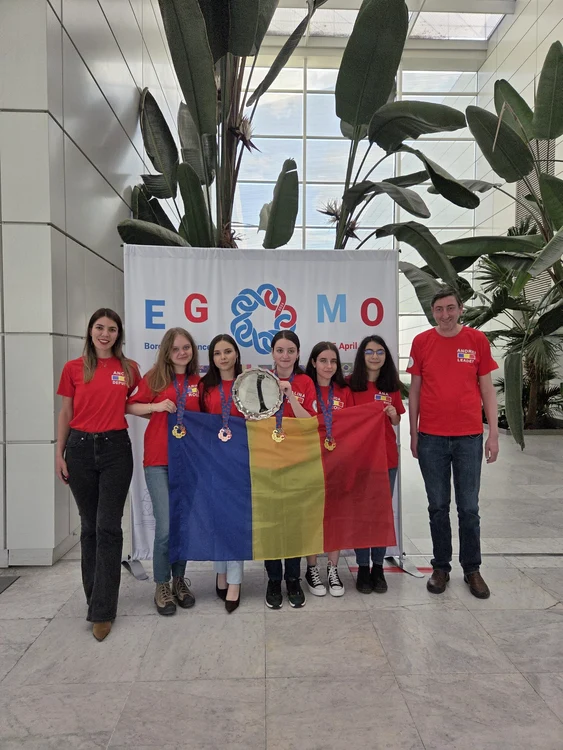
Romania, first place in Europe at the European Mathematics Olympiad for Girls: four medals, three of which are gold
What do Olympic students need?
For the four teenagers who wrote history for Romania at the European Olympics, with the best place achieved so far, there will be a period in which they will receive well-deserved congratulations. And their path will be followed by other persistent students. What do they need from adults? Professor Flavian Georgescu says:
“Olympic children need special conditions, including at school. When every day you have to go to classes for six to seven hours, you have maybe three to four hours of homework to solve at home, you are effectively exhausted. How else can you prepare to perform in something? If you want to excel in a certain school subject, then you have to prioritize your performance in that area. And to do that you have no way to get them all to the end and very well. Expectations are high from teachers, it needs to be that way, but these children need some special conditions. And from the school, and from the teachers, and from the parents. I would like to congratulate the parents of these students, who took it upon themselves and who carried the weight behind them, because we are talking here about investments from many points of view. (…) It is not easy at all. Basically, these students leave much of their childhood and the joys of adolescence to perform“.
