
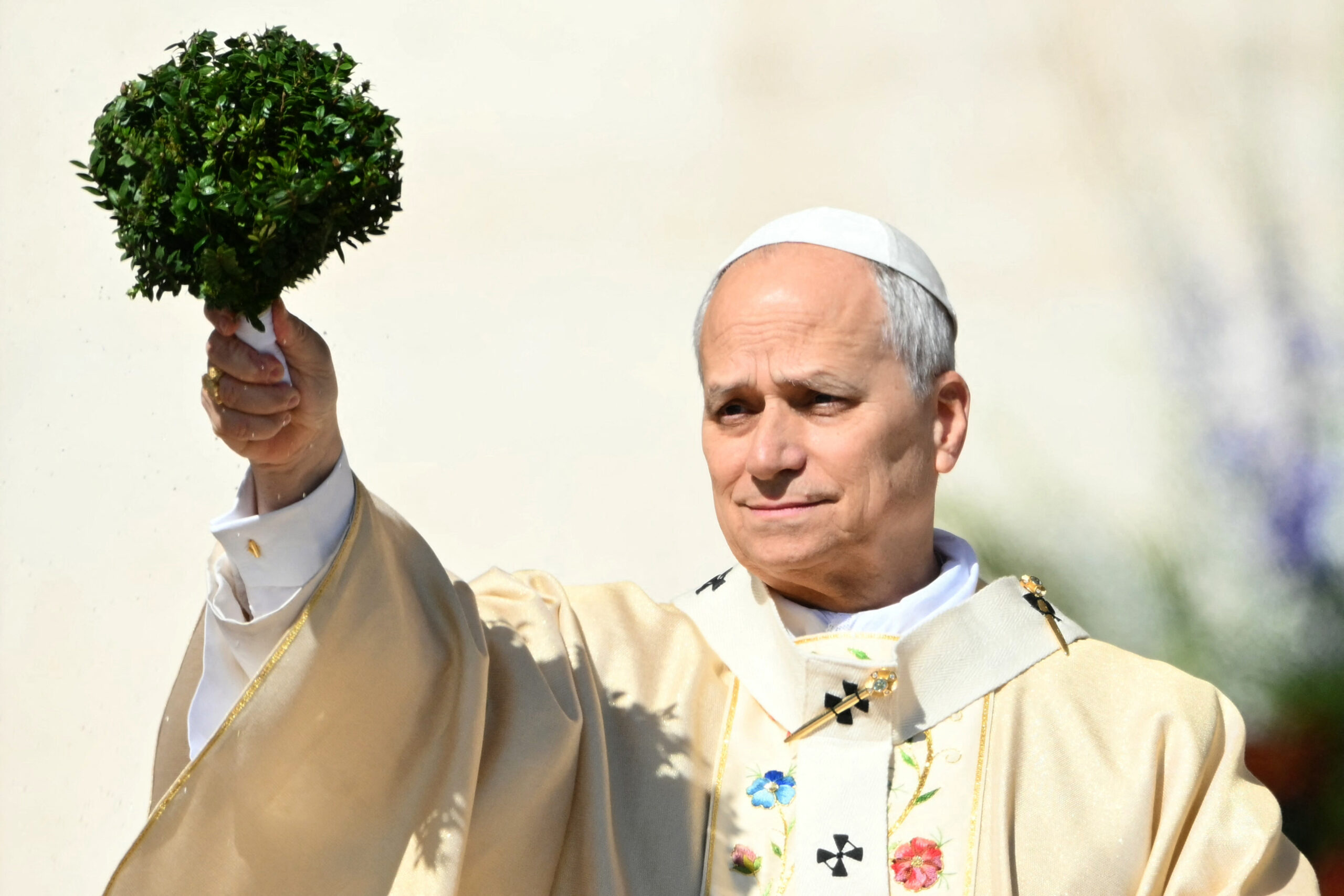
Analyst Hari Bucur-Marcu explains the backstage of the harsh exchange of lines between Pope Leo XIV and Donald Trump. The conflict has deep roots, the analyst says, and has to do with the prelate’s vocal involvement in American politics and in promoting anti-Trump theses and themes.
The conflict between Donald Trump and Pope Leo XIV represents one of the most unusual confrontations between political power and religious authority in recent decades.
Tensions escalated in 2026 amid the Iran war and American foreign policy. Pope Leo, the first American pope, strongly criticized military interventions and condemned violence, insisting on the need for peace, dialogue and the protection of civilians. He described bellicose rhetoric as “unacceptable” and emphasized that the gospel promotes peace, not war. In response, Trump publicly attacked him, calling him “weak” and “too liberal”, accusing him of interfering in politics and undermining US security interests.
“Leon should review his behavior, show common sense, stop serving the radical left and focus on being a Great Pope, not a politician”Trump wrote on Truth Social. “What he does is of great service to him and to the Catholic Church!”
The conflict quickly went beyond the level of simple statements. Trump even suggested that the election of the pope was related to his own political influence and shared controversial images with religious overtones, which drew international criticism. On the other hand, Pope Leo responded calmly but firmly, saying that he “is not afraid” of the Trump administration and that he will continue to speak out against war and the abuse of power.
“I will continue to speak out strongly against war, seeking to promote peace, promoting dialogue and multilateral relations between states to seek just solutions to problems“, Leon told reporters on a flight to Algiers.
“Too many people are suffering in today’s world,” he said. “Too many innocent people are being killed. And I think somebody needs to stand up and say there’s a better way.”
This rupture generated diplomatic tensions between the US and the Holy See and polarized the American Catholic community as well.
Politically and in the media, the conflict was amplified by Trump’s allies and conservative commentators, who accused the pope of an “anti-Trump agenda”, but also by religious and European leaders who defended the Vatican’s position. At the same time, Pope Leo warned of the risks to democracy when power is used without a moral foundation.
The conflict has older roots than it seems
Analyst Hari Bucur-Marcu explains, in a post on Facebook, the backstage of the harsh exchange of lines between Pope Leo XIV and Donald Trump.
In his opinion, the conflict has older roots than it seems at first glance. Everything starts from the different perception of the two actors: political leader versus religious leader, but with obvious ideological interference.
Donald Trump and JD Vance chain attacks on Pope Leo XIV: ‘Be careful when he talks about theology’
Bucur-Marcu emphasizes that the current Sovereign Pontiff “is only six years into the big politics of the Vatican”his rise being closely linked to the support of Pope Francis. Before becoming Pope Leo XIV, Robert Francis Prevost stood out for his work in Latin America, but also for his involvement in sensitive debates. More, “has been very vocally involved in American politics, supporting and promoting all anti-Trump theses and themes”, including criticism of the immigration policy of the former and current US President.
“The Pope, a head of state with a policy hostile to that promoted by the Trump Administration”
This positioning explains, in the analyst’s opinion, Trump’s reaction. For the White House leader, Pope Leon is not only a spiritual leader, but “a head of state with a policy hostile to that promoted by the Trump Administration.” For this reason, Trump “he even confessed that he doesn’t like the current Pope Leo as a person at all”which turns the dispute into a personal one, not just an institutional one.
However, the analysis also raises questions regarding the election of the new pope. Bucur-Marcu wonders if Robert Prevost was elected “because his hostility to Trump was notorious” or, on the contrary, because he was American and could have facilitated a better relationship with Washington. This ambiguity actually reflects the tensions within the Catholic Church and its relation to global politics.
Pope Leon promotes the idea that “whatever Trump does would be bad, would be against humanity”
At the same time, the analyst notes a similarity between the Pope’s speech and that of the American opposition, arguing that Pope Leo promotes the idea that “Orice face Trump would be bad, it would be against humanity”. Such consistently critical positioning raises questions about the role the Vatican plays in international political debate.
On the other hand, Bucur-Marcu believes that Trump’s intentions are easier to understand: “It is very clear to me what President Trump wants from Pope Leo XIV.” Even though he does not explicitly detail these goals, he suggests that they relate to the clear demarcation between politics and religious authority.
Finally, the analyst adopts a reserved position, explaining that he does not feel directly involved: “I am neither an American citizen nor a Catholic Christian so that my opinion counts in any way.”
The conflict between Trump and Pope Leo XIV is not accidental, the analyst explained, but the result of an inevitable clash between two opposing worldviews.
