
A competition that requires you to thoroughly study seven subjects in order to hear your name spoken at the end, among the laureates, annually gathers students prepared in school to enter the world of business.
Two students who worked hard to get on the podium of the National Tourism and Food Olympiad reveal that it took them being assigned a computer at a high school with an economic profile to understand that this actually suits them.
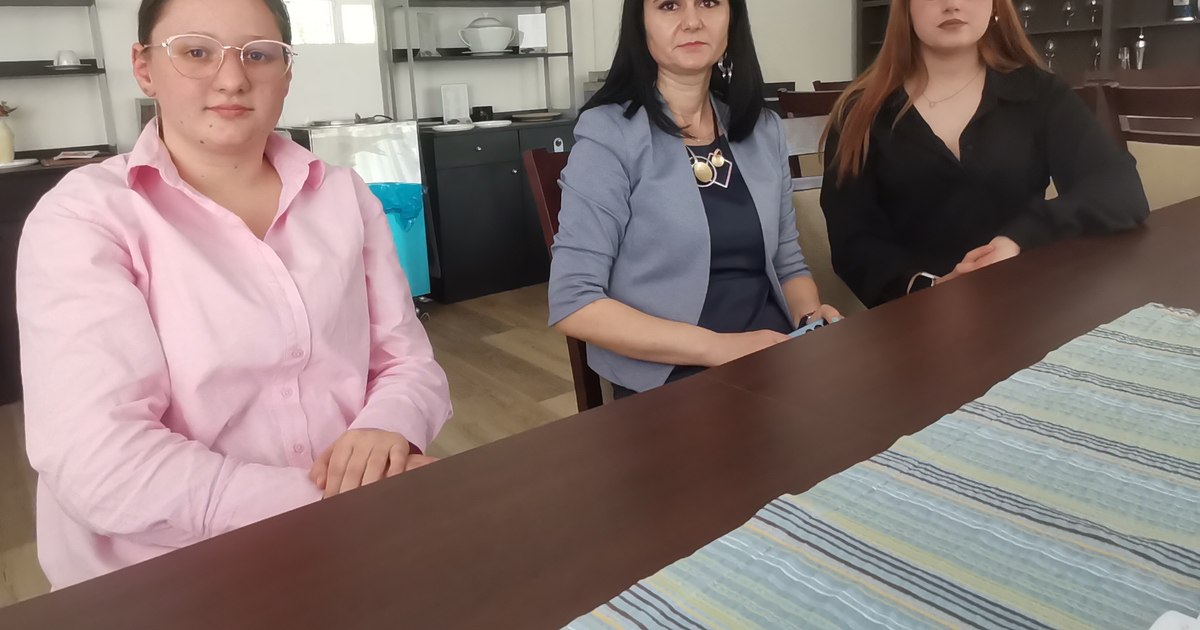
Ileana Geanina Bucică and Flori Gabriela Comănescu are students in the twelfth grade at the “Petre S. Aurelian” Economic High School in Slatina. The first one was among the awarded students at the 2026 edition of the national Olympiad, taking 4th place (the first mention in the competition), while her colleague, also qualified for the national phase, did not take the stage again this year, instead last year she obtained 3rd place at the same Olympiad. Even more interesting is the way the students have traveled to get here, the Olympiad requiring the preparation of seven distinct disciplines.
The students are actually studying the ABC of the hospitality industry for this Olympiad, explains teacher Dorina Diță.
“They start with the easy part – raw material, dishes, utensils – and then go deeper, going to business administration – marketing, business administration, negotiation. They have modules from the basics of tourism and gastronomy and deepen towards the twelfth grade with subjects that even help them to set up and manage a business in the field”, elaborates Prof. Dița.
They start “from the bottom”, the students show. “We learn to wipe even the utensils in the kitchen, to work with the raw materials, then slowly we move on to working at the cash registers, sometimes even in the rooms at the hotel”the students explain what happens in the first years of school.
For example, the “gastronomy technician” specialization encompasses everything a cook, waiter and pastry chef does, plus the disciplines that prepare them for running a business, at the end of high school obtaining a level 4 qualification. The qualification offers graduates alternatives according to their skills and interests, including the knowledge needed to start and run a business in the field. From the next school year, things will be even more applied, because the practice period at the high school will increase from three weeks of practice to six, and this from the first year.
He wanted Philology, the computer decided otherwise
Flori Comănescu is, after four years of economic high school, passionate about Accounting, as she would never have thought. However, he remembers that at the end of secondary school he wanted something else entirely: Philology. She was admitted to the Economic High School following the computerized distribution, being her second option.
“I wanted to run away from Mathematics for a bit and this is where I ended up. And I said that in Tourism and food somehow I combine them all: marketing, economics, and… Not like in Accounting, because then I didn’t want Accounting”. He forgot Philology since the 9th grade. “I have convincing teachers”says the student.
Professor Dorina Diță elaborates. “I have a word. When I go to the 9th grade, in the first lessons, I ask each one of them: voluntarily or assigned by the computer? That’s my point. Many say they are assigned by the computer. And many, because they wanted to go to Filo, to get rid of Mathematics. And the 9th grade, for us teachers who teach specialized subjects, is somehow a year in which we have to convince the students to stay with us. We tell them what the advantages are, that they end up with a job, that they can go to whatever college they want at the end of high school, we give them examples. We also tell them that in college they can support themselves with this job”says the teacher.
And most of the time, the teenagers who end up in a different high school than the one they wanted stay out of conviction. “Now, honestly, I don’t want it to be thought that big things are being said. I see my child, who is in the twelfth grade in a theoretical high school. The work and the book that was done here, at Economic, are maybe ten times more intense. My child will take the BAC, but it is much more the effort that he makes alone at home, daily.” adds the teacher.
In the high school where he teaches, on the other hand, he says that there is a lot of work in the classroom with the students, in each subject. “The fact that they are Olympians, that they end up in the 3rd national place, the 4th national place, I think says a lot. The fact that 3 years ago we had a pass rate of 76% at the Baccalaureate, in the conditions where the maximum entrance average here is 7 and a little, likewise, says a lot. That is, taking a child and taking him from 3-4 to the National Assessment so that he ends up taking the Baccalaureate…”the teacher emphasized.
The new sensation in world swimming. A 14-year-old kid, a real threat for David Popovici at the 2028 Olympics. Incredible results
Students are also attracted to the projects in which the school is involved, because this means practical training internships in the country and, for many years, also abroad. These are experiences that they would not have experienced in a theoretical high school, the teacher is convinced, and the students say the same.
A work from scratch
In the case of the Olympiads in technical disciplines, the work is one that starts from scratch, Prof. Dorina Diță also points out. They are completely new subjects, the students do not have a basis in this respect. “They come without knowing anything. It’s our work and that’s all. In Mathematics, if they went to the Olympiad now, it would be the work of the teacher, the middle school teacher and then the high school teacher. In these economic subjects, they come to the 9th grade without knowing anything. They learn in the 9th grade, they learn in the 10th grade and in the 11th grade we take them to the Olympiad, where they teach subjects from the 9th grade IX. And it’s not just one discipline, there are seven disciplines.” completed the teacher.
The national competition has a theoretical part and another practical part, the latter putting to the test both the concepts learned and the skills.
“It is a problematization. I mean, you’re an entrepreneur and you have to open a restaurant. How do you compartmentalize it? How do you feed? How do you do the organoleptic control of the raw material that enters your restaurant? Things like that,” Dorina Dița also showed.
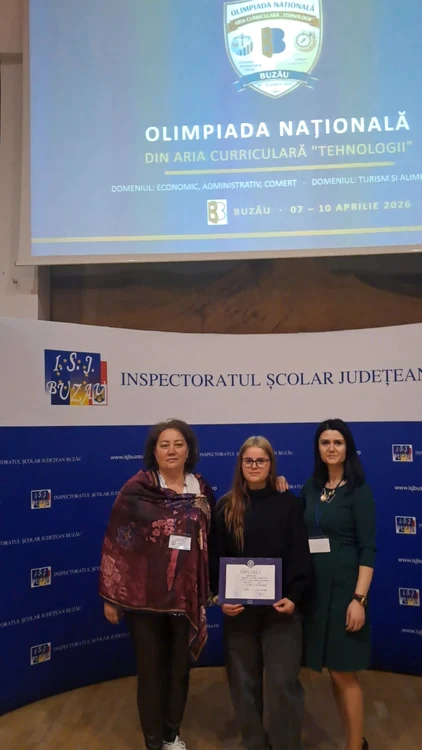
At this year’s Olympiad, the students had as a practical part the scenario in which they are entrepreneurs, they have a fishing restaurant and they have to receive the fish. The requirement was to explain how they do the organoleptic check of the fish. Another requirement was to identify ways to reduce the physical effort exerted by employees. They are extremely concrete themes that challenge students to transpose themselves into a real situation.
As in the case of other Olympiads, the holders of the first three places at the national level can be admitted without an exam to a faculty with an economic or tourism and food profile. Flori Comănescu will most likely benefit from this opportunity, the student choosing to study Accounting.
Securitization in Romania: old system in new times. Two teachers say how the skills of teaching staff could be tested in real terms
Ileana Bucică has not yet decided on the faculty, but she knows very clearly that she wants to become an entrepreneur.
“At the Olympics, I didn’t get the result I wanted. This year I got a mention, but it could be even better, there is always room for better, always. But at least we grew, compared to last year”, says the student.
His dream is to open a restaurant, or even a boarding house, where he can exploit everything he learned during high school. “I want to open a restaurant. I don’t know if here or elsewhere, but I’m already studying opportunities to access European funds”, says the student.
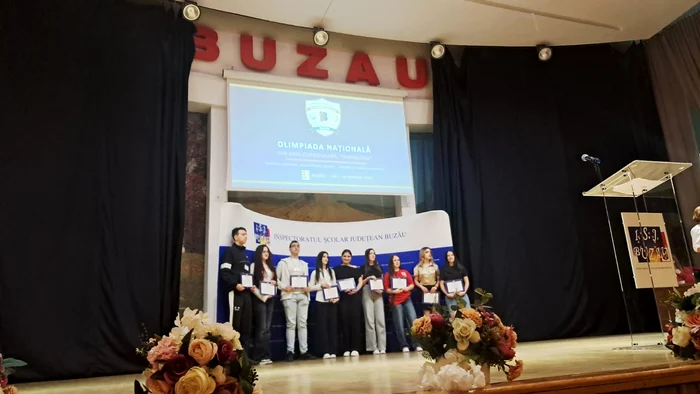
We return to the Olympiad experience and the students describe how much work the preparation entails. For the theoretical test, the subjects gather the information from seven subjects studied, and for the practical test, from three subjects. “Then the arithmetic mean is made between written and practical”the students explain. For the written test they have subjects from: Accounting, Marketing, Business Administration, Human Resources Organization, Ethics and Communication, Basic Processes – Food and Tourist Reception Structures.
The preparation for the Olympiad takes place partly at school, with the teachers who teach the subjects involved, but it is also a lot of individual effort, the students say. The fact that the names of several teachers appear on the diploma of a student awarded at such an Olympiad, something little understood, has this simple explanation: the Olympiad brings together several disciplines, taught separately.
