
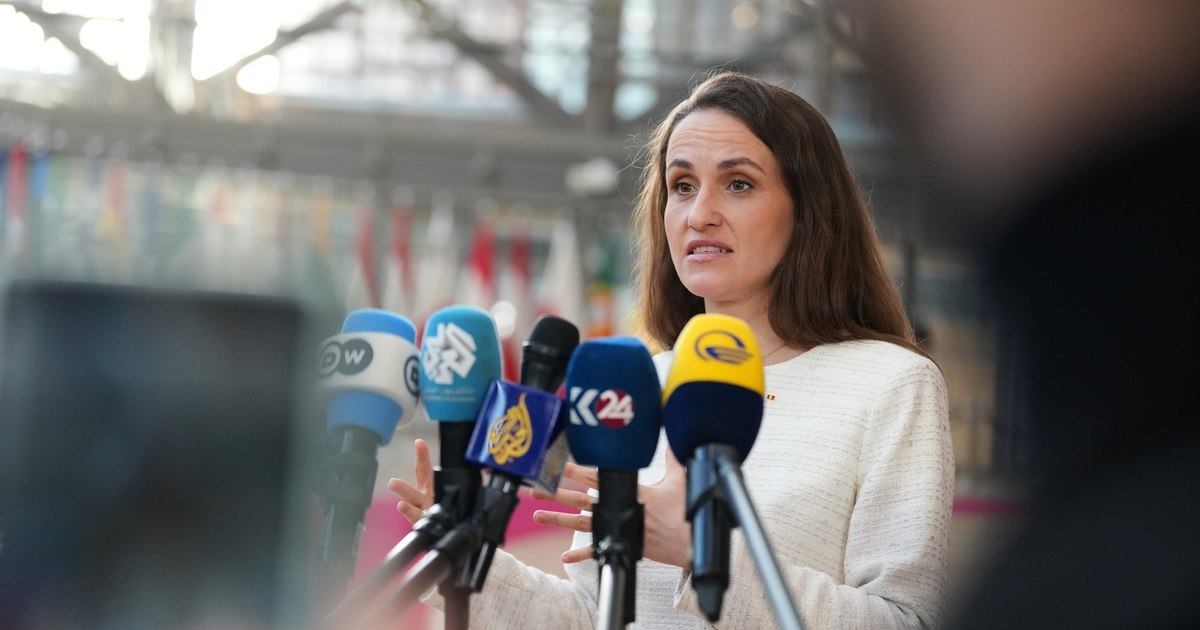
The Minister of Foreign Affairs, Oana Țoiu, stated on Friday, May 1, that the censure motion submitted by PSD and AUR against the Bolojan Government “it feels directly in the pocket of the Romanians”.
Oana Țoiu spoke about the censure motion to be voted on on May 5, stating that at the moment “we are in an unnecessary political crisis” and which could be avoided.
“Romania must reconfirm the pro-European direction, not through statements, through decisions. First of all, each of us as parliamentarians is indebted to those who gave us power by voting”, said Oana Țoiu to Digi24.
She also affirmed that I had arrived “a historic course of the leu, the impact of the decisions of these parties, to submit a motion of censure, is felt directly in the pockets of Romanians” and that this means “higher rates, negative leu exchange rate, but beyond that, the concern of our international partners regarding Romania’s direction is felt”.
“We are in an unnecessary, avoidable political crisis, a political crisis triggered irresponsibly, superimposed with security crises, superimposed with crises that Romanians understand very well regarding the price of energy, superimposed on the instability in the region and the war on the border. This crisis was not necessary at all and it was not the time at all”added Oana Țoiu.
Declassification of files from the transition period
The Minister of Foreign Affairs also spoke about the declassification of the 5,000 diplomatic files from the first years of transition from the archives of the Ministry of Foreign Affairs, stating that “it is the right of the Romanian people to information that concerns them”.
Asked about the speculations that appeared in the public space, according to which the name of the former independent candidate in the canceled presidential elections in 2024, Călin Georgescu, could appear in the declassified information, she replied that “not directly related”.
We remind you that Oana Țoiu announced, on Thursday, the declassification of more than 5,000 diplomatic files from the first years after 1989. It is about more than 5,000 files that include information about the May 1990 elections, mining, the visit of King Mihai I of Romania, but also correspondence with the former Soviet Union.
