
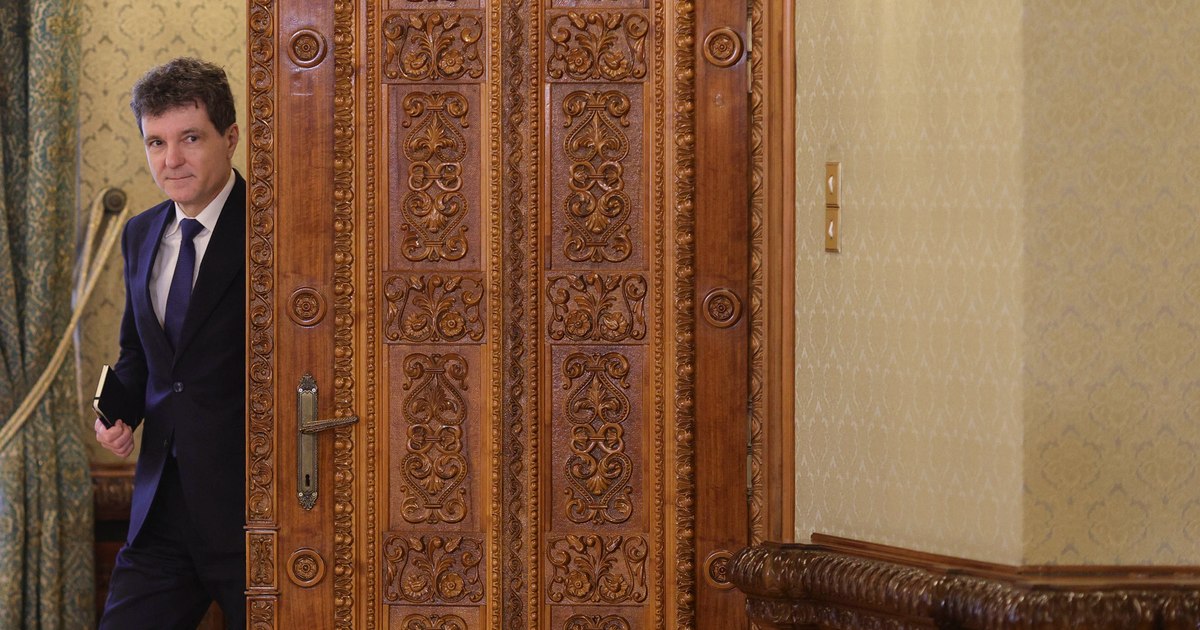
According to sources, the option of installing a technocrat prime minister, an idea associated especially with the presidential area, has reappeared in the public space. At the same time, the parties say they are ready to either take over the government or go into opposition, publicly rejecting the hypothesis of a technocratic executive. The profile of such a prime minister remains difficult to outline, but the political analysts consulted by “Adevărul” say that the future head of the Government should be devoid of political ambitions and focus especially on the relationship with financial markets, rating agencies and international economic institutions.
For now, the leaders of the main parties do not seem to take into account the names circulated in the public space, such as Delia Velculescu or Radu Burnete. Kelemen Hunor stated that it is the first time he has heard the name of Delia Velculescu as a possible prime minister, Sorin Grindeanu confirmed that the option of a technocratic prime minister was discussed at the consultations in Cotroceni, without any names being advanced, and Ilie Bolojan stated that he will not support a technocratic government supported by the PSD.
“Adevărul” talked with political analysts Cristian Pârvulescu and Adrian Papahagi about the scenario of a technocrat prime minister. The two have different positions, but both believe that the current crisis has a strong economic dimension and that the future government will have to send a signal of stability.
Cristian Pârvulescu claims that an independent prime minister could represent the only formula capable of avoiding political deadlock and the deterioration of the economic situation:
“PSD sometimes takes steps, but please, it’s two forward, one back. And it’s quite complicated. As a result, the only solution to have a government, and not a government that will throw us into the abyss, is to have an independent prime minister who is politically supported by Parliament.
And this is the rational solution. What the parties are doing is trying to remove it, not necessarily remove it, because it is not in their power, to compromise it in the public debate and to marginalize it. Because that means a failure of the political parties in trying to find a solution. The problem is that, in Romania, in difficult situations, technocrat prime ministers solved the difficulties. And we are talking about Stolojan 1991-1992, then about Isărescu and, finally, about Cioloș. They were not absolutely technocratic governments. In 1992 the problem, in ’91-’92 the political problem was more complicated. It is the resignation of Petre Roman following the mining in September 1991.
Resignation which, please, was interpreted excessively by Iliescu, who accepted a resignation that was not a resignation, did not put the mandate at the president’s disposal, appointed a technocrat, who nevertheless came from within the apparatus of the former communist party, did not come from outside. And it solved it, please, it was a government that was able to control the situation. Favorable to whom? PDSR.
’92-2000, Isărescu. Favorable to whom? PDSR. 2016, Cioloș. Favorable to whom? PSD”says Cristian Pârvulescu.
“Those who obstinately refuse the hypothesis of an independent prime minister are those from the PNL”
Pârvulescu claims that the opposition to an independent prime minister comes especially from the PNL area and part of the USR and warns that the parties ignore the seriousness of the economic context.
“Those who obstinately refuse the hypothesis of an independent prime minister are those from PNL and USR, but not USR as far as we are talking about the USR which is controlled by Ilie Bolojan. A good part, most of the ministers, are controlled by Ilie Bolojan. They are in Ilie Bolojan’s sphere of influence.
That’s actually the most important formula and less about the president, because I don’t come from that area. Nor are they old USR-ists. You know that Nicușor Dan resigned due to ideological conflicts in 2018.
Those who still run the USR today are among those who forced him to leave then. I’m not talking about Dominic Fritz. Dominic Fritz came later, but Dominic Fritz has to face the situation.
The catch, the formula they use from the PNL-USR, is that a technocratic government would be a PSD government. Which is not true at all. It’s a tough economic issue, and we’re talking about responsibility here.
If the political parties do not understand that Romania is on loan, that those who massively lent Romania need clear answers, they are playing with fire. A PSD-AUR government would be an absolute disaster. I understand that they want to win the elections with absolute majorities, but you don’t play with Romania. And the president understands this very well.”
“We have no evidence that it is the president who is pushing the idea”
On the other hand, Adrian Papahagi believes that a technocratic solution would mean an avoidance of political responsibility:
“We have no evidence, at least I have no idea, that it is the president who is pushing the idea. The idea has been circulated in the public space, no connection with the president or anyone else. My opinion is that it is not a good idea to have a technocrat prime minister, who is not owned by anyone.
Why is Nicușor Dan losing the support of the reformist electorate. “Rather, those who projected unrealistic expectations were wrong”
Sorin Grindeanu should have asked this problem before, because he had Ilie Bolojan as prime minister, who knew the realities in Romania, it was clear that he wanted to reform, that he was an honest, honest, serious and hard-working man. They took it down, they have to give us a solution. The crisis was political, the solution must also be political. Hiding behind technocratic solutions is a form of political non-assurance.”
The profile of the technocrat prime minister who can take over power
A first argument brought by Adrian Papahagi is the fact that the president should not think, together with his team, about solving the political crisis, but only focus on gathering a majority.
“As for the president, I think the president should not take responsibility for this crisis. It’s not his fault, it’s the fault of those who made a majority and brought down a government.
But if the president gets too involved in all these so-called negotiations, he will end up paying all the blame. So what should I do?
You see, normally it’s like this: a new majority has been created, the majority has brought down the government, they go to the president or the king or the sovereign or whoever and say: “Your majesty, sire, Mr. President, we brought down this government because we want to come. We have the new majority, Mr. X is running for prime minister this year.”
He says, “Okay, we give him the mandate to get his majority,” and it’s over in two days.
You don’t come like that and after that the president has to find you another or we sneak behind a technocrat or not, let them be the panellists, but we tell them who should be their boss and whom we approve. It doesn’t work that way.”says the analyst.
Several unaffiliated MPs elected on the AUR, SOS, POT and PSD lists joined the PNL group. Bolojan: “We have an interesting situation”
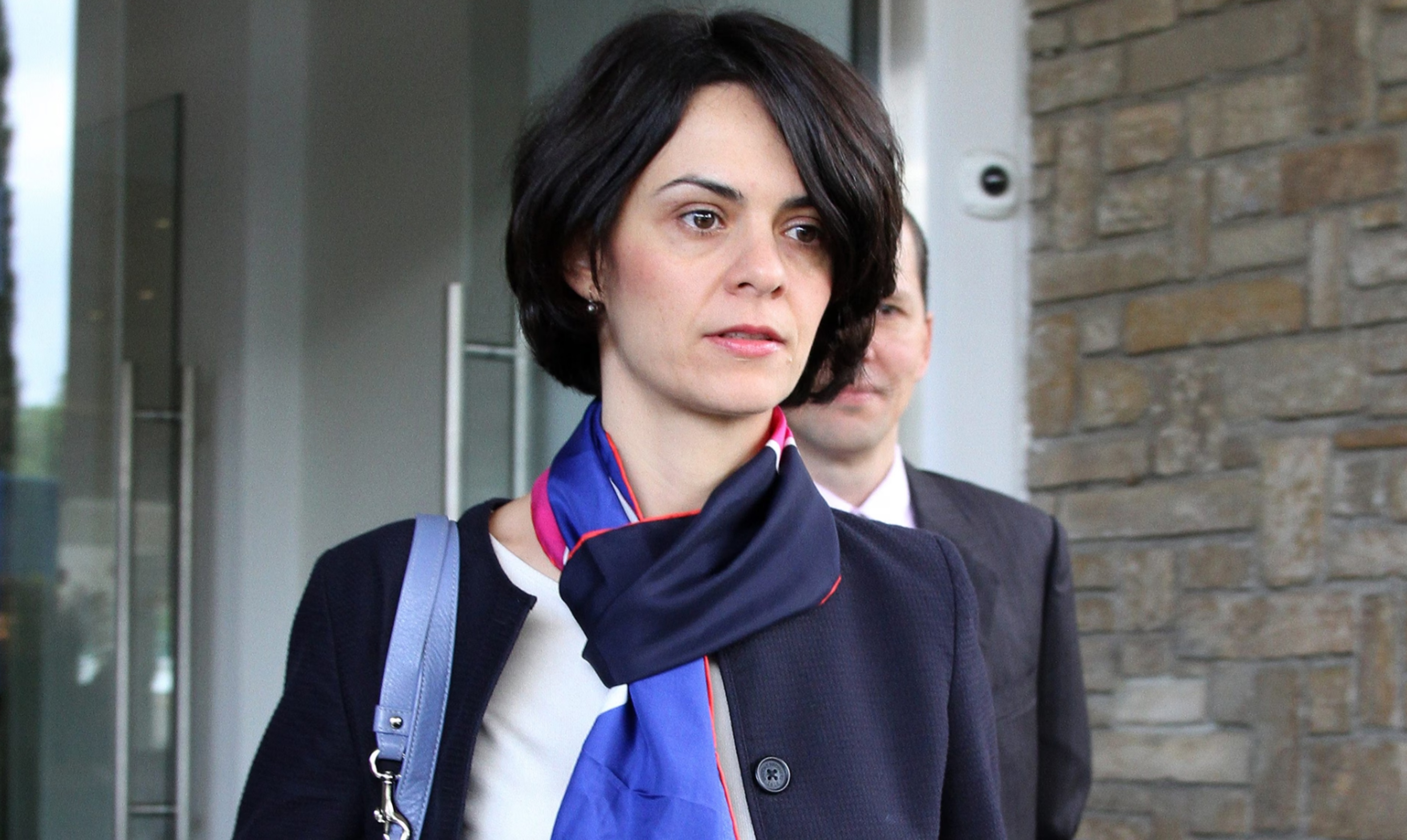
Among the names circulated for the position of technocrat prime minister is Delia Velculescu, former representative of the IMF in Greece. Cristian Pârvulescu believes that a profile of this type could send a signal of confidence to investors and international financial institutions.
“But, until one another, we are in a crisis and, in a crisis, we don’t have a lot of room for maneuver. That’s why we need someone who has a profile that can calm the markets. You know, not even like Mr. Cioloș. Mr. Cioloș had a profile as a former commissioner. So it must be someone who, after completing the mission here, will return to where he came from, possibly in a better position, after the experience of prime minister, but does not pay anything in Romania.
No, the only assurance we can see is someone like Mrs. Delia Velculescu coming. Or someone from the National Bank, because a director from the National Bank who worked with the IMF was also circulated. That is, it must be someone who understands economic issues.
But to ensure the markets, the profile of the Prime Minister, I would prefer her to be a Prime Minister. Contrary to what anti-feminists in Romania say, she would be a person who, on the one hand, would be categorical, but, on the other hand, would be empathetic. So it’s not the way the Romanian press creates the image of him, as a person who imposed unacceptable things in Greece, because it wasn’t like that. And Greece, let’s talk between us, finally came out of the crisis that was going to become the bankruptcy of the state thanks to those policies”concludes Cristian Pârvulescu.
