
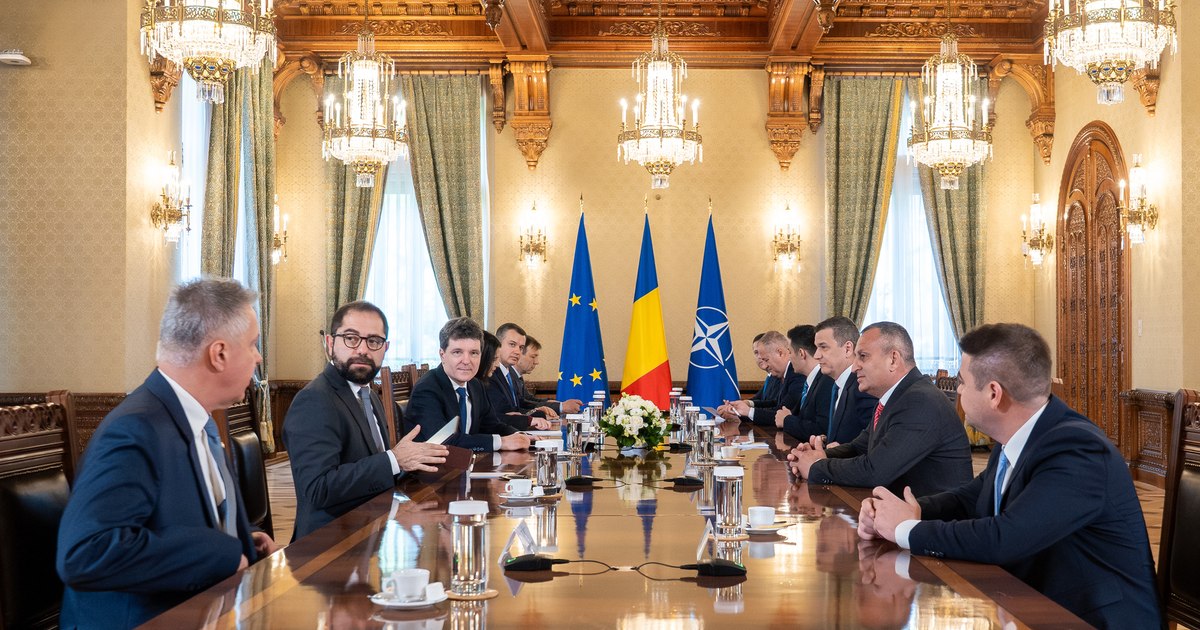
Almost two months have passed since the dismissal of the government led by Ilie Bolojan through a no-confidence motion, and Romania is still without an executive with full powers. Two attempts to form a new government have failed, negotiations between the parties have repeatedly stalled, and the decision on the future prime minister is now in the hands of President Nicușor Dan. In an analysis for “Adevărul”, political consultant Radu Turcescu explains why the crisis has been prolonged, why the head of state seems to be betting on a solution around the PSD and who would have the most to gain if Sorin Grindeanu is appointed to form the new government.
In Radu Turcescu’s opinion, the impasse was not caused by major ideological differences, but by the political leaders’ refusal to give up their own calculations and make the first compromise. The consultant says that for nearly two months, each camp preferred to maintain its position rather than bear the cost of a deal.
“If this crisis has persisted for so long, the reason is an extremely simple and cynical one: for eight weeks, no one wanted to give a millimeter. Each camp barricaded itself in its own claims, preferring to keep the country in place, rather than risk a loss of image in front of its own electorate. We witnessed an absurd war of attrition, in which the hubris of the leaders was put above any administrative logic.” says Radu Turcescu.
The consultant believes that the negotiations have reached a point where the parties no longer have many options, and the pressure accumulated in recent weeks forces them to find a solution.
“At this moment, I think we are quite close to the outcome, but not because the politicians have suddenly become responsible, but because they have exhausted all other options for blackmailing each other. It has reached the bottom of the bag of arguments. The way out of the crisis will not come from an ideological reconciliation, but from a cold math of parliamentary survival. If the big parties clap their hands on the division of key ministries in the next few days, we could have a functioning government in two weeks at most. If the negotiations get bogged down in technical details or the distribution of money for the territory, we risk that this toxic interim will be extended and freeze the economy”warns Turcescu.
Why does Nicușor Dan seem willing to collaborate with PSD
The possibility of President Nicușor Dan appointing Sorin Grindeanu for the position of prime minister caused dissatisfaction among a part of the right-wing electorate. Radu Turcescu says, however, that the decision must be analyzed through the lens of the balance of power in the Parliament and not exclusively from a political or ideological perspective.
“To understand the movement of President Nicușor Dan, we must look beyond the momentary emotion of the street and remember a golden rule: politics is, par excellence, the art of compromise and dialogue. A head of state cannot afford the luxury of governing only with sympathies or ideological affinities; he must work with numbers and with cold parliamentary realities. Beyond personal preferences, the ultimate duty of his office is to ensure the functioning of the state, even and when that involves extremely difficult decisions. In times of total gridlock, a genuine leader must have the courage to do what’s right for the country, not what’s good in the polls.”explains Radu Turcescu.
The consultant admits that such a decision may have an electoral cost for the president, but believes that the alternative would have been to maintain political instability with economic effects that are increasingly difficult to manage.
“The president chose responsible pragmatism over fleeting popularity. He is perfectly aware that part of his electorate is deeply disappointed and feels this move as a concession difficult to accept. However, from Cotroceni’s perspective, the alternative would have been prolonged chaos. A fragile right-wing coalition would have been a minority government hounded at every bill, deprived of political oxygen. The PSD offers the only thing that matters now to stop the economic drift: numerical stability. Through this constructive dialogue, Nicușor Dan demonstrates political maturity; he preferred to settle a short-term image cost in order to guarantee a solid majority, capable of passing vital laws and providing long-term predictability”. says Turcescu.
The decisive week for ending the political crisis. Will Nicușor Dan nominate Sorin Grindeanu? The stakes behind the appointment of the prime minister
Who benefits if Sorin Grindeanu becomes prime minister
In the opinion of Radu Turcescu, the main beneficiary of a possible appointment of Sorin Grindeanu would be the PSD, which would return to the leadership of the Government and strengthen its position in the administration. At the same time, for the current leader of the Social Democrats, it would also mean a personal revenge.
“The main winner would undoubtedly be the Social Democratic Party, followed immediately by Sorin Grindeanu on a personal level. For PSD, returning to the leadership of the government means recognizing the status of an indispensable political force. The party officially re-enters the control of large budgets, investment programs and appointments to key positions in the administration, which will feed and satisfy the structures in the territory. For Sorin Grindeanu, this nomination represents a huge historical repair and Let’s not forget that he held this position in an extremely turbulent context, being dismissed by his own party through a no-confidence motion. A return to the Victoria Palace would be his ultimate victory over the past, transforming him from a former prime minister into a long-term leader capable of great constructive compromises.appreciates Radu Turcescu.
Who loses in this scenario
If PSD and Sorin Grindeanu were to win, the consultant says that there are also camps that would emerge weakened from this configuration. It is about the leaders who blocked the negotiations, as well as about those who bet on the continuation of the reforms started by the former Bolojan cabinet.
“First of all, those who constantly change their minds, set unshakable conditions and leave the public impression that they are more concerned with what they want to gain from politics than solving the crisis, lose massively. This attitude of deadlock and inflexibility has cost them dearly at the negotiating table. While they have remained stuck in hubris and unrealistic demands, the rest of the political actors have moved forward, finding solutions. Through this hesitant behavior, these leaders have not only lost the train government, but they also lost the trust of the public, who charged them for putting personal stakes above the stability of the country”says the political consultant.
At the same time, Turcescu appreciates that a possible government led by Sorin Grindeanu would also change the direction of the administrative reforms started in recent months.
“From the point of view of public policies, the big losers are the followers of radical reforms and the political camp represented by former Prime Minister Bolojan. This nomination practically draws the curtain on a way of doing politics based on gross administrative cuts and rapid restructuring. All projects to make the budget apparatus more efficient will most likely be sweetened or slowed down, as the new configuration will seek social peace with the unions and the state apparatus. On a symbolic level, it loses the reformist electorate, who feels this alliance as a block to modernization”concludes Radu Turcescu.
PSD announces that it will not vote for Siegfried Muresan as prime minister “under any circumstances”: “He became a member of the European Parliament at the behest of the turner Băsescu”
Why early elections remain unlikely
The scenario of early elections was repeatedly invoked during the negotiations between the parties. However, Radu Turcescu believes that it worked more as a pressure tool than as a real option, given that very few parliamentarians are willing to risk their mandate.
“If I were to advance a figure, the probability of early elections is below 10%. In Romanian politics, early elections are like nuclear weapons: everyone talks about them to scare their opponents, but nobody really wants to press the button, because the destruction would be mutual. Organizing early elections involves huge costs, a period of at least three to four months of electoral chaos and, most importantly, a major risk for the current parliamentarians. No deputy or senator, regardless of the party, is willing to jeopardize his secure four-year mandate for the sake of an electoral affair with an uncertain result. Therefore, this scenario was only a scarecrow used at the negotiating table. Now, when a clear version of government has been formed around the name of Sorin Grindeanu, the idea of anticipations will, most likely, be completely abandoned and buried.”concludes Radu Turcescu.
