
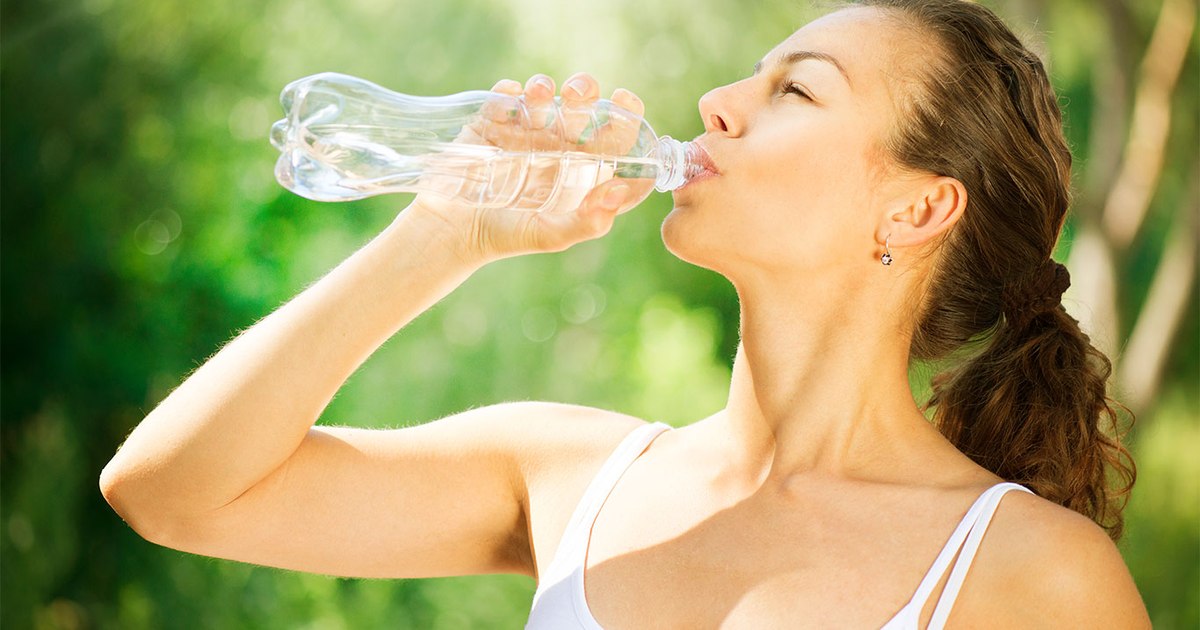
We are bombarded with messages telling us to drink two liters of water a day, including on TV, but no scientific study or official EU regulations say we should drink that much water, the BBC reports.
The amount of water needed for hydration – Photo Archive
We are advised to drink more water if we want to lose weight, be healthier, have more energy or even to avoid cancer. The '8×8' rule, which says to drink eight glasses of 240ml of water a day, that's a little up to two litres, is what fuels the appetite for water, but it has no scientific backing and neither do the EU guidelines say you should we drink so much water, according to the BBC.
How much water does our body need in a day?
Eight glasses of water a day, or two liters, could be more than our bodies need to be properly hydrated, new scientific studies claim. The optimal amount would be between 1.5 and 1.8 liters of water per day, researchers say.
They also advise us to adapt water consumption according to temperature and activity level. Athletes and pregnant or breastfeeding women should drink more water than others, experts add.
But we shouldn't underestimate the importance of water, considering that about two-thirds of our body is water, which transports nutrients and waste products in our body, regulates our temperature, acts as a lubricant and shock absorber in joints and plays a role in most of the chemical reactions that take place inside us.
Besides, we lose water through sweating, urinating and breathing, so to avoid dehydration we need to ensure a balance.
“Hydration control is one of the most sophisticated things we've evolved since our ancestors crawled out of the sea onto land. We have a very large number of sophisticated techniques that we use to maintain proper hydration“says Irwin Rosenburg, principal investigator at the Laboratory of Neuroscience and Aging at Tufts University in Massachusetts.
“If you listen to your body, it will tell you when it is thirsty. The myth that it's too late when you're thirsty is based on the assumption that thirst is an imperfect marker of fluid deficiency, but why should everything else in the body be perfect and thirst imperfect? It has worked very well for thousands of years of human evolution.adds Courtney Kipps, Consultant Sports Physician and Senior Clinical Lecturer at the Faculty of Sports, Exercise and Health Medicine and UCL, as well as Medical Director of the Blenheim and London Triathlons.
Water is the healthiest option to hydrate us, because it has no calories. However, other drinks can also hydrate, even coffee or tea.
The benefits of proper hydration
A 2023 study found that proper hydration can also slow aging and help avoid chronic conditions such as heart and lung disease.
Other research suggests it helps with weight management. Some studies conducted at Virginia Polytechnic Institute and State University by Brenda Davy, professor of nutrition, diet and exercise, have shown that proper hydration can have effects on weight loss.
For example, in one study, Brenda Davy randomly assigned subjects to two groups. Both groups were asked to follow a healthy diet for three months, but only one of them was told to drink a 500ml glass of water half an hour before each meal. The group that drank water lost more weight than the other group. What's more, the subjects were told to try to take 10,000 steps a day, and those who drank the glasses of water complied better.
But Barbara Rolls, professor of intensive care medicine at University College London, says any weight loss associated with drinking water is more likely to be caused by water being used as a substitute for sugary drinks.
“The idea that filling up on water before a meal will melt away the pounds is not well established, and water consumed as such empties very quickly from the stomach. But if you get more water through the foods you eat, such as soup, this can help fill you up because water is bound to food and stays in your stomach longershe says.
Too much water
The symptoms of dehydration are easy to recognize, and the most common sign is the feeling of thirst, moreover, dry lips and eyes, feeling dizzy or tired, can be indications that we are dehydrated.
However, drinking too much fluid is difficult to determine and can cause problems when it causes a dilution of sodium in the blood. This creates swelling in the brain and lungs as fluid moves in to try to balance the sodium levels in the blood.
And British journalists give the example of 15 athletes who died from overhydration during sports events in the last decade.
“The maximum a person in the middle of the desert, in the hottest possible heat, could sweat is two liters in an hour, but this is very difficult“says Hugh Montgomery, director of research at the Institute for Sport, Exercise and Health in London.
The UK's National Health Service officially recommends that people drink between 6 and 8 glasses of fluids a day, including skimmed milk, sugar-free drinks including tea or coffee.
Experts also say that as the body ages, thirst mechanisms lose their sensitivity. Specifically, after 60, we tend to overlook the signs of dehydration.
“As we age, our natural thirst mechanism becomes less sensitive and we become more prone to dehydration than younger people. As we age, we may need to be more careful about our fluid intake habits to stay hydrated” says Davy.
Between 1.5 and 1.8 liters of water is enough for a day, a 2022 study showed. Scientists from the University of Aberdeen collaborated with researchers from 23 different countries to measure the amount of water needed to keep people hydrated. They found that those who live in hot and humid environments and at high altitudes, as well as athletes and pregnant and lactating women need to drink more water than others. In other words, a one-size-fits-all approach is not the answer.
