
Interweaving the past and the present, “The Wind Knows My Name” is, first of all, the story of two unforgettable characters, both in search of family and a home. Also a testimony of the sacrifices made by parents and a love letter for children who, despite some dangers hard to imagine, do not stop dreaming.
In the USA, the book was chosen by National Public Radio Best Book of the Year 2023. “A tribute to parents, who can make incredibly difficult decisions for the good of their little ones, and children, who have the strength to survive terrible trials”, the Associated Press wrote.
The latest novel by the Chilean writer Isabel Allende, published by the Humanitas Publishing House, can be found in bookstores throughout the country, but also online at libhumanitas.ro
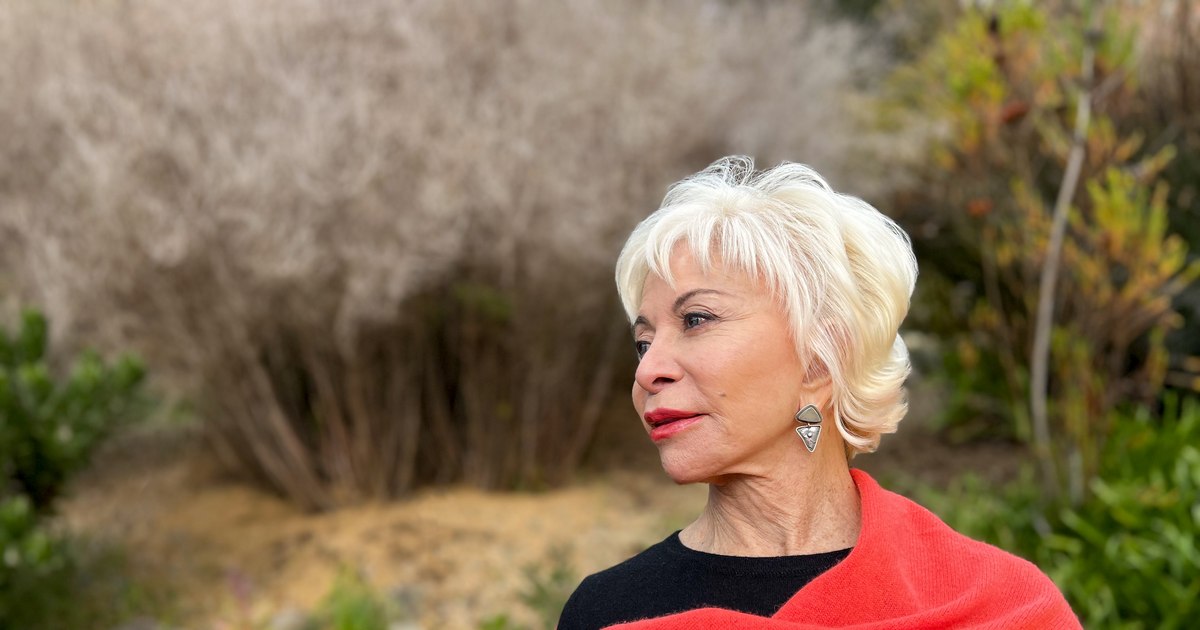
Isabel Allende, one of the most famous writers from South America PHOTO Lari Barra
Vienna, 1938. Samuel Adler is five years old when his father disappears during Kristallnacht. With his life in danger, his mother finds him a place on a train transporting children from Nazi-occupied Austria to England. The little boy leaves with nothing but some clothes that are too big and the violin, in the case of which he has hidden a precious talisman.
Arizona, 2019. Eight decades later, Anita Díaz and her mother will take another train, leaving behind the danger looming in El Salvador and seeking refuge in the United States. But their arrival coincides with the implementation of the new family separation policy, and seven-year-old Anita finds herself alone in a camp in Nogales. To escape from the troubled reality, Anita travels to Azabahar, a magical world of imagination, where she can meet the many beings and dear things lost in her few years of life.
Selena asked Lambert if he could present a Power Point, it wouldn't take more than a few minutes. An assistant pressed a button in the wall, the blinds came down inaudibly; someone put a projector connected to a screen on the table, in less than a minute she connected it to her laptop. He was good at it and knew that he had to keep the audience's attention. The images followed each other quickly: families from Central America caught in the dangerous pilgrimage from their villages to the border; hundreds of people on freight wagons, others walking through the desert or swimming across the river; border patrols and armed civilians who claimed the right to enforce the law with bullets; the detention cells, the so-called “ice houses” where people from warm climates were kept at very low temperatures; the heartbreaking moments when the agents took crying children away, while the parents begged them in despair. Selena pointed out that the practice was still in effect, but in an insidious way: now they did it at night.

No one was moving. There was a dense silence in the hall. Many were impressed, two women were wiping their tears.
– How can we help? one of them asked.
— We need volunteers to defend minors and stop this form of torture once and for all.
– I don't know anything about the immigration law…
– It's simple, you will be trained.
– Then you can count on me.
– What is your name?
—Rose Simmons. But, you know, I don't speak Spanish.
– We have interpreters. Many thanks, Rose.
— From the side of the company, you will have a flexible schedule and the same salary, Mrs. Simmons, but work obligations must not be neglected, you must manage your time, Lambert intervened.
– Of course, sir.
“You won't regret it, Rose, I assure you,” added Selena.
Frank blushed: it seemed to him that Selena Durán was looking straight into his eyes, that she was choosing him and judging him.
“It's a job without money or glory, which is why we're almost all women.” As in the children's centers, social and psychological assistance, explained Selena.
Driven by an irrepressible impulse, Frank raised his hand and said he was participating. A collective exclamation followed his gesture: no one expected such a thing from Favorit, the most ambitious guy in the team. Lambert waved him out into the corridor and closed the door behind them.
– What's wrong with you, Angileri? You must devote yourself entirely to the Alperstein case.
– I'll do it in my spare time.
“But you don't have free time.” And no vacation.
— For Christmas I'm going to my family in Brooklyn, I have two days off, I'm taking the Alperstein file with me. But know that we cannot do miracles, the jurors will be against it. One of his victims, drugged and raped, was only fourteen years old.
– Do what you can to prevent it from going to trial, Angileri. If you make a wrong step, it means your career.
– Do not worry.
Selena Durán closed her laptop, gathered her notes, took the contact information of Rose Simmons and Frank Angileri and explained to them what they were going to do with the Magnolia Project. First a short online course to brush up on the legal aspects, after which they will be given a case or two as training. They will get to know the minors, spread through several detention centers, prepare the defense and accompany them before the judge. This could last, the courts were overwhelmed by thousands of delayed cases.
– I warn you that once you enter this story you will never get out, she winked at them.
“I mean you've got your claws on us, Miss Durán,” Frank said.
– Call me Selena.
“Selena.” We invite you to dine with us.
“I can't,” said Rose, “my in-laws from Missouri are coming to spend Christmas here.”
“And I'm leaving in the afternoon for Los Angeles,” Selena said.
– Do you live there?
“No, in Arizona, but my folks live in Los Angeles.” I spend Christmas with them and the next day I go back to work.
Glad that Rose was leaving them alone, Frank convinced her that she had plenty of time before the plane and took her to the Boulevard, an expensive restaurant where his bosses lunched with Dom Pérignon champagne. With her well-worn boots, second-hand coat and baggy jeans, Selena was the opposite of the sophisticated women Frank appeared in public with. He wanted to impress her by speaking familiarly to the maître, whom he addressed by his first name, but Selena was speaking on the phone in Spanish and lost her phase. They were given a table by the window, the waiter with a good memory for generous tipping customers brought them each a glass of prosecco before bringing them the menu.
“It's a sparkling wine from the Veneto region in northern Italy,” Frank felt obliged to explain.
“Not bad,” Selena said, tipping the glass over her head.
Frank realized that the girl wouldn't have been able to tell the difference between a quality wine like Quintessa and a cooking wine. It had been a mistake to volunteer without having enough information to invite her to dinner. He had made decisions driven by sexual attraction, first to prove to her that he had good principles and feelings, second to prepare the ground for a more intimate meeting when he returned from Brooklyn. “I'm a beast,” he said. But after a few minutes of conversation his doubts dissipated and he looked at everything as an unusual adventure and, certainly, different from his so secure life.
They drank the bottle of Quintessa while also talking about life – or rather, Frank talked together, and Selena listened to him rather amused. She was surprised that he only talked about work problems, about his experience at the courthouse (he had mentioned in passing that he was a Yale graduate), and didn't ask anything about what he would have to do in the project. But there was time, she didn't want to see this smoky man, and she said amused.
Selena ordered the filet mignon with fries. Frank was about to say something about calories and cholesterol, but stopped himself in time. He asked for steamed turbot; take care of the figure. His conquests were usually vegetarian and barely nibbled; none asked for bread and dessert, like Selena Durán, who devoured everything and poured dressing over the salad.
Lunch got longer, Frank decided to skip the company party and take Selena to the airport, so he could spend half an hour with her, even if he had to make his way back to his own flight.
Selena devoured the chocolate profiteroles with the gusto of someone who hadn't eaten in hours while he told her about the Christmas he was going to have in Brooklyn, where his family had lived since his grandparents had emigrated from Sicily. It was the only occasion when everyone gathered: the parents, two grandfathers, brothers with sisters-in-law and children, several cousins, a single neighbor who was an opera singer and uncle Luca the crazy:
— He walks around with a pistol from the time of Garibaldi and boasts that he fought in the international brigades in the Spanish Civil War; if it were true, he would be a hundred and three years old, but he only looks ninety.
“Tell me more about your family,” she asked, so they could eat in peace.
“My parents have the best Italian rotisserie in Brooklyn.” I don't think dad ever read a book in his life, but he forced us all to study. Mother is a force of nature, always cheerful, but when she gets upset it's better to run away. He beat us with a wooden spoon. Once he hit me in the head with the lid of the spaghetti pot. It didn't hurt, but I still avoid going into the kitchen when she's cooking. He never spoke to us in English, at home we argue and reconcile in Italian.
– In my family we do it in Spanish. Italian will help you, it's a bit like Spanish.
— I learned some Spanish in high school and in college, but I'll have to work on it.
— The children who will be your customers understand a smile and a kind tone, Frank, they don't need too many words. My Spanish is not perfect either, but it has improved thanks to work.
– But at least you speak it.
— Thanks to my great-grandmother, who only spoke to me in Spanish.
– Not many can boast of a great-grandmother!
– In my family there are several generations of immortal women. Men come and go or die, it doesn't matter much, that's why we all use the surname Durán, that of the great-grandmother. She was born in Mexico, as was my grandmother, who is clairvoyant, but my mother, myself, my sister and her two children were born here.
– Clairvoyant?
– Yes, a kind of visionary. It's a gift from birth. He can come into contact with the dead, sometimes he even sees them.
– You're kidding!
“She's famous, haven't you heard of Dora Durán?” Several reports were made with her. He participated in a paranormal research program at Chapman University. People from everywhere come to see her, even the police.
– Give me an example.
“Well, a recent case was that of a nine-year-old child who went missing.” The grandmother discovered that she was in a well.
“And did they find the killer?” Frank asked, trying not to laugh.
– He was not killed, he fell.
– And how did your grandmother find out?
— Sometimes it's a dream, sometimes a strong sensation or a premonition. It was like that with the child. She had gone to pick up her children from school, she was waiting on a park bench and the boy appeared next to her. Grandma froze all over and her heart was pounding in her chest. The child said where he was and disappeared.
“It must be terrible growing up surrounded by the dead,” he said wryly.
– Oh, but I don't see them and I don't hear them, they never bothered me, she swept away the last remaining chocolate sauce with a finger.
They were the last to leave the restaurant. They went to the car and left for the airport. He stayed to see him after the holidays in Arizona, in the meantime she would send him the course he was supposed to take. He explained that the judges had no time for paperwork, everything had to be simplified and done quickly, the legal argument was fundamental, but it was more important to produce emotion. Everything depended on the judge, some were understanding, others were damned. Almost all of the young people were cursed.
Frank watched her until she passed security. He hoped that the woman would turn to him and wave at him, at least after he had devoted so many hours to her, but he was disappointed.
