
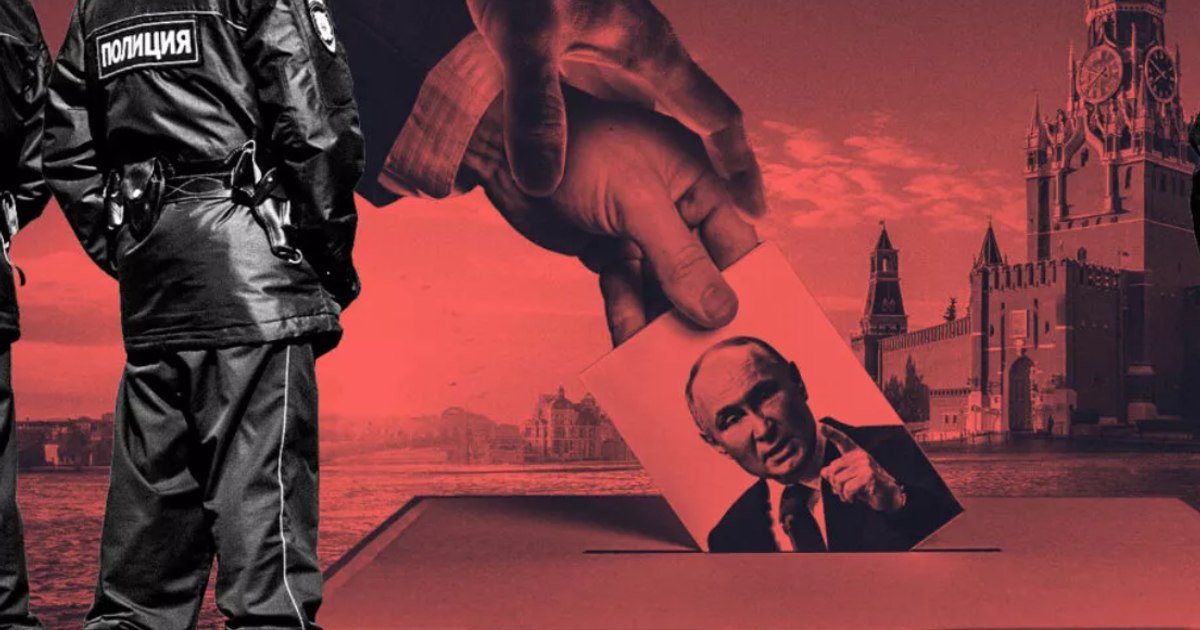
Fear is the crucial factor that leads citizens to obey, according to an analysis of the European Commission portal EU vs Disinfo. European disinformation experts analyze the fears that have allowed Putin to dominate Russia.
The re-election of Vladimir Putin is based on a long disinformation campaign. PHOTO: EU vs Disinfo
The European portal EU vs Disinfo – which fights against pro-Kremlin disinformation – published today an analysis about the Russian elections.
“Even literate societies with all their art, literature, theater, faith and religion can be subdued. Fear is the crucial factor in getting citizens to obey. Fear for your life, harassment, torture, imprisonment or loss of status. Evoking fear of an external force can serve to distract from the fear of internal repression“, claim European analysts.
The cited source analyzes the main themes through which Russian propaganda propagated fear in society.
USA, the bad wolf
In the run-up to the elections, new variants of the classic statement that “the West is encircling Russia” appeared.
Recent examples include: the West allegedly rigging elections through cyber attacks to reduce voter turnout; labeling some NGOs and independent media institutions as “foreign agents”; The US is the main enemy, while the EU and Ukraine have lost their sovereignty to Washington.
A negative attitude towards the US prevails in Russia, as the Levada Center reveals: 68% of respondents expressed their disapproval of America.
The attitude towards the EU is similar. From a high approval level of around 80% in the mid-2010s, today the picture is almost reversed. The latest survey shows that 64% of respondents have a negative attitude towards the EU.
One of the principles of disinformation is: If you lie, do it consistently, and be aware that the more incredible the lie, the greater the chance it will be believed.
Thus, when Russia launched its full-scale invasion of Ukraine in 2022, propaganda chose two keywords: “Nazi” and “genocide,” which ended up being repeated endlessly in the disinformation ecosystem.
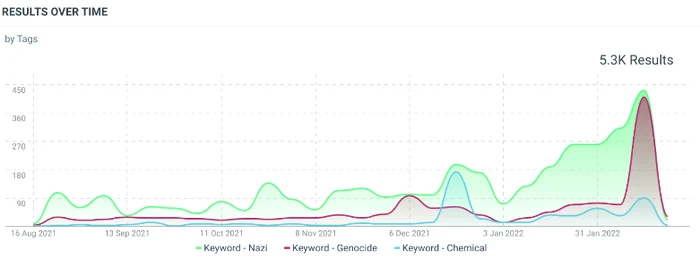
The volume of mentions in the Russian state media of the words Nazi and genocide. PHOTO: EU vs Disinfo
NATO invasion
Similarly, as the EU vs Disinfo database shows, claims that the West will invade Russia via Kaliningrad, attack via Belarus or attack the country under the pretext of a military exercise have increased significantly.
EU vs Disinfo experts ask rhetorically: How many NATO or EU leaders actually support nuclear strikes or a Russian invasion? “not even one”it is shown in the cited analysis.
In recent weeks, Kremlin handlers have continued to distort talk of a possible deployment of troops from NATO countries, presenting it as the start of a NATO invasion. This narrative revived a classic Kremlin theory: that the West is supposedly encircling Russia.
Security cordon against Ukrainian bombing
Another theory with which the Kremlin scares its citizens is the danger of bombings from Ukraine. Thus, on March 18, Putin's press secretary, Dmitry Peskov, promoted the Russian leader's recent remarks about establishing a buffer zone that would include the Ukrainian city of Kharkiv. Peskov argued that Russia needs a cordon sanitaire on the border with Ukraine to ensure the security of Russian territory against Ukrainian bombing.
“This seemingly legitimate logic is misleading given that it claims that the more Ukraine defends itself against Russian attacks, the larger or deeper this buffer zone must be. But the best way to ensure the safety of Russian regions is to end the war and withdraw the invading Russian forces”, shows EU vs Disinfo.
The cited source also draws attention to Moscow's dubious pseudo-peace proposals. “We have detected, tracked and debunked them many times”concludes the analysis.
