
For those who want to try something other than the classic Greece-Bulgaria-Turkey trio this year, the Romanian Travel Press Club has compiled a list of 10 destinations from our country, which the president of FIJET Romania, Ștefan Baciu, says can satisfy all tastes.
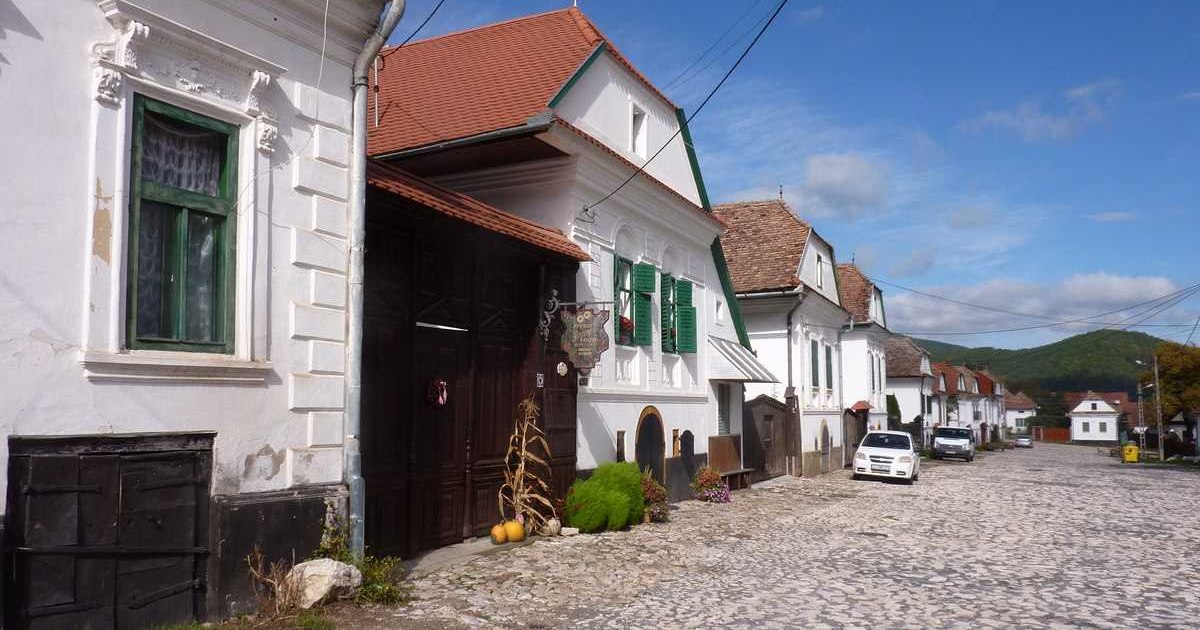
Rimetea, in the Top FIJET Destinations. PHOTO: FIJET
The Tourism Press Club – FIJET Romania has drawn up, for the second consecutive year, a ranking of ten special destinations in Romania, with the aim of making them even better known in the country, but also abroad. Through this project, we want to draw attention to some places in the country that stand out from a tourist point of view in particular, places where things are done well and people deserve to be encouraged for their efforts.
Ștefan Baciu, the president of FIJET Romania, explained, for “Weekend Adevărul”, how the Romanian tourist should use this top: “Beyond this ranking, which caused dissatisfaction for some because they came out a little lower, I would like to emphasize the fact that this top that we proposed actually represents 10 destinations that the members of the Romanian Tourism Press Group recommend to consumers of tourist products not necessarily in the order in which they ranked. That is, Timișoara and Târgu Mureș, which were at the bottom of the list, are destinations that are worth visiting at any time during a city-break”. Regarding the small towns at the top of the list, the journalist claims that “there are places that really deserve to be visited at least once in a lifetime, as they say. They are small towns that have a unique appearance that impressed us, the members of the club, so that they gathered more votes than other destinations in Romania that we see in the top”.
Journalists who proposed a particular destination visited that place in the last three years and came up with arguments in favor of it. Then, all the destinations were voted by the journalists and thus the ranking was drawn up. “Communities, villages, cities, balneo-climatic resorts were included in the top, so we did not proceed as in the last edition in which we proposed regions, historical provinces. We limited ourselves only to localities, destinations, either small or somewhat larger, if we're talking about cities”, said the president of FIJET.
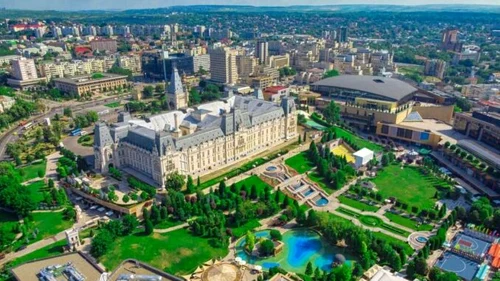
Image 1/11:
Iasi photo Archive FIJET jpg
Authentic, every step of the way
Baciu also gave us some details about these destinations so that tourists know what to expect: “If we think about the big cities, suddenly the offer is extremely diversified, starting with the cultural part, we have an incredible museum offer, I am thinking of Târgu Mureș, Iași, Timișoara. At the same time, we have opera, theater performances… Obviously, in all these destinations that I have mentioned, there is also this component of entertainment, nightlife, etc.“.
The other top destinations are quiet, where we won't have a lot of night entertainment: “Maybe we can find an organized party, but otherwise we can't say that we have to expect clubs. There are places where we go to admire nature, to see the landscapes, to understand traditions, to get to know the gastronomy of the area, and here I could list, for example, Jurilovca, Rimetea, Vânători-Neamț, Grădiștea de Munte, Sulina. They are interesting places, each with its own particularities, and it is worth spending at least one night there”.
He also says that these destinations should not be visited at high speed: “Some are destinations that can be visited both in winter and in summer, also for the particularities of that destination, as is the case, for example, of the resort and town of Vatra Dornei or Borsec , which also offers this alternative of winter sports, but, at the same time, also offers the prospect of hiking, mountain trails, spa treatments and an active vacation”.
Infrastructure for all tastes
Ștefan Baciu also pointed out the part of developing the infrastructure to ensure tourists long-term, but exciting vacations: “In many of the destinations recommended by us, you can have various activities and not get bored. You can go hiking, walking or cycling, you can enter households and watch how a certain traditional activity is carried out. You can, for example, do photo-hunting if you go to Vânători-Neamț, but that is not the only place where you can do something like that – the area of Borsecui, Vatra Dornei are ideal candidates; I'm not talking about Sulina and Jurilovca, where, if you walk along the canals, you can be surprised to see not only birds, but also a herd of wild boars, for example”.
The Danube Delta has an extremely rich offer: “kayak trips, you can see how the fish is smoked, you can go with the fishermen, see how they gather their nets, you can admire a special sunrise or sunset, a both sides of a lake”. You can also explore old areas, ancient fortresses, not only in the Sarmizegetusa area, but also in Dobrogea. “Near Jurilovca there is a fortress that is buried, only 2% of it is visible. If some digging were done, maybe we would bring to light some completely and totally extraordinary things”, he adds. “Absolutely all these destinations lend themselves to combined programs, diverse activities, including gastronomic ones, including those related to daily activities in a traditional household.”
Romania vs the trio of Greece, Turkey, Bulgaria
In February, the Romanian Tourism Fair took place in Bucharest, an event where Ștefan Baciu took the pulse of local tourists' interest: “It depends on everyone's tastes. There are Romanians who prefer to spend their holidays abroad because that is what they are used to. I mean, that means, mainly, Turkey, Greece, Bulgaria, because they are more accessible, closer destinations. Others, for reasons related to convenience, prefer to go to the Romanian coast, no matter how much it costs. You can reach Mamaia, a destination known for its nightlife, from Bucharest in about 2.5 hours, being much more accessible than a resort in Greece or Bulgaria from this point of view”.
For those who prefer the mountains, Romania maintains its interesting offer. “There have also been programs related to wine trails, combined with exclusively backpacking trips – for example, in the northern part of Dobrogea. There are also combined programs, where you go by bike, arrive at a guesthouse where there is a wine tasting or a brunch is served, a program that combines the active part with the gastronomic part. This happens, for example, in the Prahova area and in the Apuseni area. So there you go, there are different programs. It all boils down to pleasing the consumers of tourist services”.
As far as event tourism is concerned, Baciu claims that this summer it would be difficult for anyone to tick off all the interesting offers: “It would be very difficult for me to make a schedule so that I get to everything that is being prepared for music lovers, because there are so many festivals in the mountains, and in the big cities, and on the seashore, that it is very, very hard to decide”. He listed some of these music festivals: Rockstadt Extreme Fest 2024 (31 July – 4 August 2024), Outdoorz Fest (25-28 July 2024) from Fundata, Neversea from Constanta (4-7 July), Untold from Cluj (August 8-11).
“It's very, very difficult to talk about a schedule for this summer. There are people who prefer to go, for example, sport fishing – this can happen not only on the ponds around Bucharest, but also as part of a multi-day program in the Danube Delta. And more recently in many other areas, such as in the Botoșani area, where we discovered a complex of very well-designed lakes with a good tourist infrastructure. We can also talk about the Danube Gorge, where again it is an interesting and underexplored area“, he added.
Rimetea, the village in the shadow of the Piatra Secuiului massif
Rimetea commune, in Alba county, was, long before Reșița or Hunedoara, the first medieval steel center of Transylvania and the main manufacturer of agricultural tools/equipment in the region, until the 19th century. In Rimetea there is the oldest still functioning water mill in Apuseni (1752), the oldest precisely datable house in the Carpathian area (1668) and, above all, a restoration and conservation project with strict rules.
The Transylvanian village where, in the summer, the sun rises twice (once through the ravine of the Piatra Secuiului massif, the second time after the ridge) received, in 1999, in recognition of its special aesthetics, the first and only Europa Nostra prize awarded to a locality Romanian rural areas by the European Commission for the conservation of cultural and architectural heritage. The architecture of the houses in Rimetea is uniform, excellently preserved over the years. The white houses with green shutters and flowers in the windows capitalize on the local cultural heritage – the oldest of them dates back to 1668.
That the people of Rimetea have started to live (well) from tourism is easily visible, after the souvenir shops, the multitude of rustic buffets with a few benches and chairs in front and the 20-30 guesthouses of two and three daisies. The commune is 24 kilometers away from Aiud and 28 kilometers from Turda.
TOP 10 destinations in Romania
1. Rhymes. In 1999, in recognition of its special aesthetics, it received the first and only Europa Nostra award given to a Romanian rural locality by the European Commission for the preservation of cultural and architectural heritage.
2. Dorna's hearth. It is known, first of all, as a spa resort, due to its mineral water springs and clean air. It is a destination for those who come for a spa treatment, but also for those who want an active holiday, regardless of the season.
3. Borsec. The oldest balneo-climatic resort in Romania with permanent operation since its inauguration. In 2023, the “Fontana Spa & Balneo”, an ultra-modern spa and wellness center with an area of more than 3,000 square meters, including a very large outdoor pool, was inaugurated here.
4. Jurilovka. This commune at the gates of the Danube Delta manages to attract tens of thousands of tourists to any event. In recent years, the settlement has been filled with guesthouses and hotels. 150,000 participants from all over the country gather at the traditional Lipoveni borscht Festival alone. And the Jurilovca tourist port, inaugurated last summer, surpasses many sea destinations in beauty and elegance.
5. Sulina. You can only get there by boat, dinghy or Navrom ships. The city is predominantly pedestrian; there is no asphalt, only pavers or stone. If you get to Sulina, you must see the beach – the only one in Romania that gets bigger every year -, the old lighthouse, the pirates' cemetery, but also enjoy the local gastronomy.
6. Iasi. Two of the many tourist attractions of Iasi are the Palas urban complex and the “Moldova” National Museum Complex.
7. Hunters-Neamt. The area is very generous with nature lovers, because in 1999 the Vânători-Neamț Natural Park was established. Since 1968, the main star has been the European bison, which can be found both in semi-freedom in the “Dragoș Vodă” Bison Reserve, and in freedom, in the Park area.
8. Mountain Kindergarten. On an area of 200 km², the Orăștiei Mountains house the richest complex of Dacian fortresses in Romania. The fortifications at Costești, Blidaru, Piatra Roșie were designed for a single purpose: to protect the great economic, political and religious-cultural center at Sarmizegetusa Regia, which can be seen in their construction unity.
9. Timisoara. To be visited for all the places, markets, spaces, monuments, buildings that have hosted exhibitions, concerts, events and memorable projects, on land, on water and in the air, during the Timisoara European Capital of Culture 2023 national program.
10. Târgu Mureș. From any point you can leave to discover this city. Do you want fortress? You have it right in the city center. Do you want theater? Are you bilingual? Do you want horse riding? You have a base for riding. Do you want music? You have the “Constantin Silvestri” Festival or the traditional folk music recitals, with unforgettable evenings at the Cetate.
