
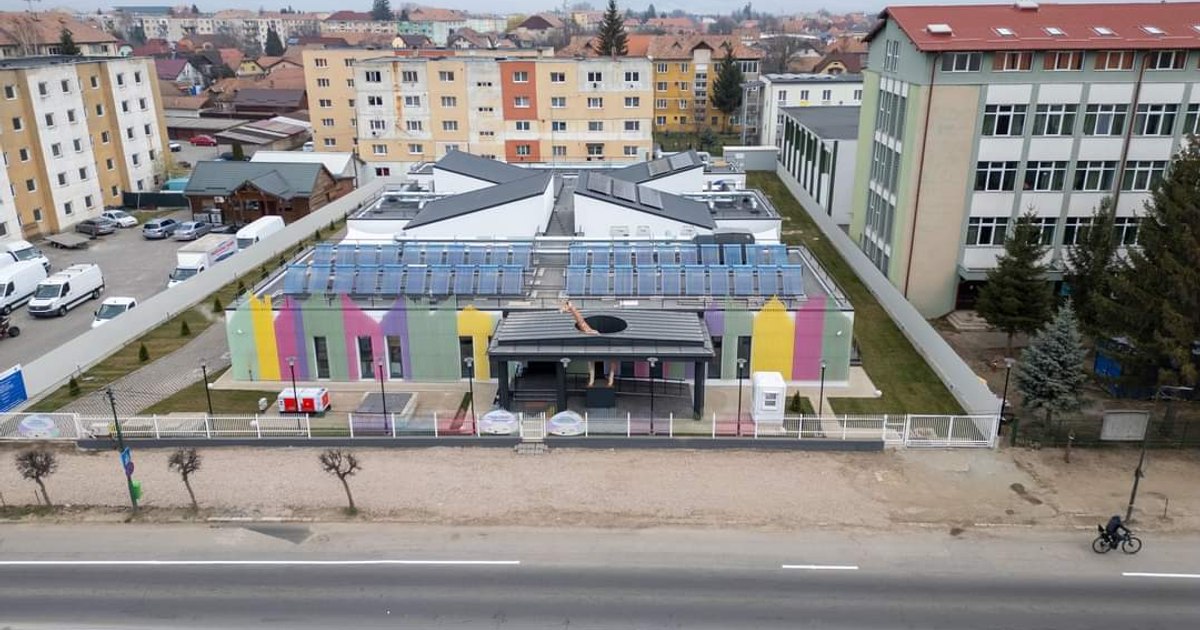
Despite the dramatic decline in the birth rate, parents of young children still have difficulty finding a place in a nursery. Those who succeed are considered lucky and envied in the community.
The “unfortunate” are left with the option of private nurseries, when the budget allows and only where they exist. The shortage of places for little ones in nurseries has unfortunately become as common as the budget deficit.
3 years ago, when Romania started an extensive program of building new nurseries, our country was in last place in the EU regarding the number of places available in nurseries for children under the age of three. While in Romania there were enough places for less than 4% of children, in Denmark this percentage rises to 70%. Also in 2021, in many places the town halls either could not afford such expenses, or had other priorities.
The National Investment Company supports quality early education
At this moment, through the National Investment Company, hundreds of projects for the construction of new nurseries are underway, and the first ones have already entered the everyday life of the place, parents can go to work knowing that their children are in good hands, in new buildings, safe and modern. The purchase, construction, equipping or operationalization of hundreds of nurseries throughout the country are currently in the works, in various phases. Many of these appeared in settlements where there had never been such a thing.
From pancotaat Agigea, Dream of Up, Dolhasca, Barlad, Băleşti, Alreadyat Satu Mare or Perieni – to name just a few localities – across the country, the implementation of new projects has begun nurseries in practice.
Thus, only through the National Program of Constructions of Public or Social Interest, there are now 153 nurseries in operation with approved funding. Of these, 36 projects worth 412 million lei are contracted, and are in various stages of implementation. Another 90, with an estimated value of over 1.4 billion lei, are in procurement procedures, and 27 are to be submitted for the start of the public procurement procedure, with an approved value of over 450 million lei.
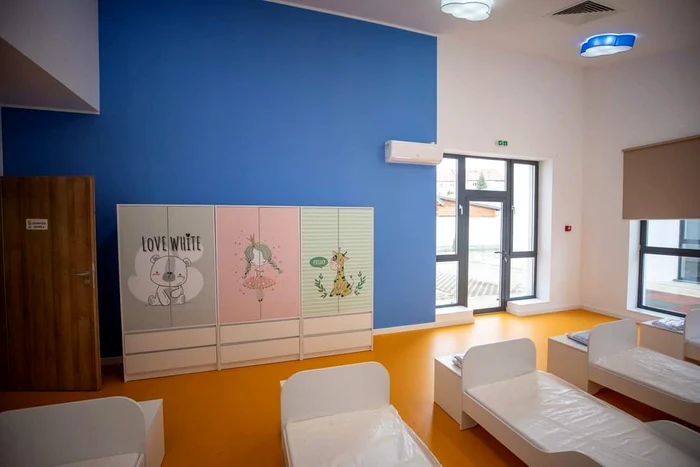
To these are added another 124 nurseries financed by the National Recovery and Resilience Program, component C15 – Education. They will receive approximate 7450 little ones. Almost a… “town” of children.
Among these nurseries, the one in Fălticeni was completed in just four months after the start of the works, in the summer of 2022, and the second, recently, in Târgu Secuiesc. Another 78 such projects, worth 1.05 billion lei, from PNRR funding, are in various stages of development. There are 24 nurseries, also with PNRR funding, whose projects are in various stages of acquisition, worth over 345 million lei. For another 15, the purchases are to begin, in the amount of 177.79 lei without VAT, and for 5 nurseries the financing contract has not yet been signed.
In total, 277 nurseries “come into the world” during these times. Although at first glance the list may seem overwhelming, in reality no one can say whether the number of projects is high or low, for the simple reason that you have nothing to compare it to. Never, in Romania, has such an extensive program been held throughout the territory.
At the same time, never in the history of the country has it happened that four successive governments of different colors continue a national program linearly, as in the case of this project.
Considering the implementation difficulties related to the culture of the region, to the local specifics, to the area (urban or rural), or to the relief, in the conditions where such a program requires a modern and unitary approach, the solution was reached to offer three separate projects. Mainly, the three models of nurseries differ in size or, if you like, capacity.
The national project with three types of nurseries
Difficulties in starting the program also arose because of old and outdated standards, which had to be brought up to date, at least because of some events in recent history. The normative precedents were approved by order of the minister in 1997, and in 24 years a lot has changed. Now, when the project began to come to life, for a clearer picture, only the number of places in such an institution is an insufficient criterion for the parents of the current generations, for whom the nursery represents something that could be assimilated to a…” baby storage”. Now, rather… hotels are being built for them.
New nurseries must offer at least 10 square meters of unbuilt land for each child, intended for play space, and the required green space must be at least 20%, on natural land. At the same time, the projects must be accompanied by notices of principle regarding the provision of utilities, including ISU.
In terms of size, the small nurseries are designed for 40 children, the medium ones for 70, and the large ones for 110. Each type represents a modern building, organized in 3 functional cores: the administrative area, the one intended for children and the area of technical and household spaces. They have 4, 7 or 10 bedrooms each, playrooms equipped with changing rooms and bathrooms, dining areas and medical offices. At the same time, they are equipped with laundries, irons, baby bottles and kitchens. And since we are talking about the generations of the third millennium, the projects are nZEB (near-Zero Energy Building).
That is, equipped with solar and photovoltaic panels, to ensure the necessary energy and hot water from renewable sources, and the building envelope is very well thermally insulated, with insulating doors and windows.
