
Established by the Directorate of Romanian Waters Dobrogea Litoral, the tax is addressed to all those who organize events on the beach, regardless of whether they are festivals with tens of thousands of people, sports competitions or gastronomic events.
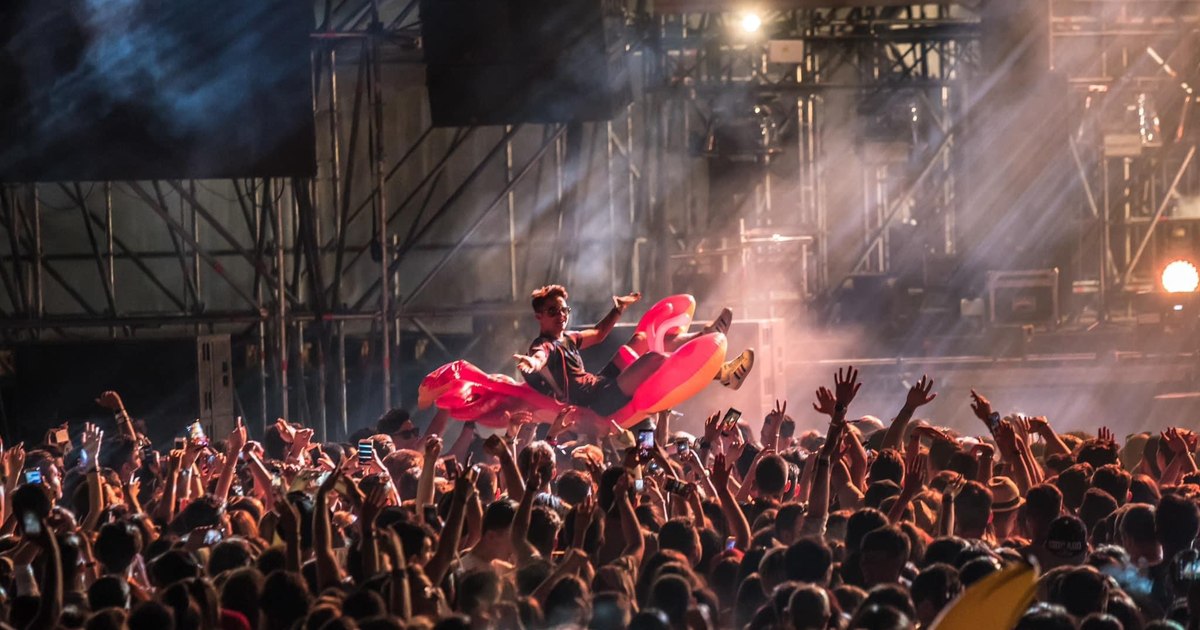
Event tax, blow to beach festival organizers PHOTO Neversea
Organizers of beach events say they only found out about the tax now, less than a month before the 2024 summer season opens, when they have already made plans for summer events. Now they will have to adjust their allocated budgets also for this new “bir”, which is a consistent one as it is billed per day and according to the area.
“The use of the public domain of waters for sports, cultural and leisure events is carried out on the basis of the payment of a tariff, the amount of which is established by the decision of the Governing Council of the National Administration “Romanian Waters”, according to the provisions of GEO no. 52/31.05.2023 for the amendment and completion of some normative acts in the field of water”said Marieta Iorga, DADL spokesperson.

Neversea Festival, from Constanța PHOTO Neversea
Thus, for an area of 1,000 square meters of beach a fee of 2,476 lei is paid per day, for an area of up to 5,000 square meters the fee is 4,800 lei per day, and for an area of 5,000 meters square meters, a fee of 9,624 lei per day is paid. There is also the option to pay this hourly fee for short-term events.
“The amount to be paid is determined according to the area occupied in the public domain of the state and the duration of the event, which cannot exceed ten days. The event cannot be repetitive. The legislation does not provide for exemptions from the payment of tariffs for the use of the public domain of waters for sports, cultural and leisure events”Marieta Iorga also declared.
The tax, the representatives of the institution claim, existed even before this summer season, but it was 500 lei per day, and now it has only been changed.
“It comes in an unfavorable context for the events industry”
The tax equally affects the organizers of small, non-admission events, but also those of large events that bring in tens of thousands of participants per day. The first of this magnitude is “Suwaves”, on the beach in Mamaia, followed by “Neversea”, on the beach in Constanța. Last year, for example, the one on the beach in Constanța was organized on an area of 110,000 square meters.
“In our case, it is a double charge because we organize the festival on a beach sector that is subcontracted by us, because there are several beaches that operate throughout the summer and we have part of the festival that takes place on our beach, so, again, it's a double tax as long as in the summer season there is a tax in the public sector, and then we have to pay a tax for four days as long as the festival is going on. And, of course, this tax comes in an unfavorable context for the events industry. Let's not forget that, this year, VAT was increased for tickets to concerts and festivals”said Edi Chereji, co-founder of “Neversea”.

According to Chereji, over 15,000 tickets have already been bought for Neversea this summer.
“It will be a beautiful edition, even if we are not at all excited and satisfied with this news that we received today. We will analyze and redo the festival budget. This year we have to take things as they are”says Chereji, noting that this double taxation does not help investors in the industry, which attracts tourists to the seaside and is not a support for anyone.
“Unfortunately, the ones who will feel all these increased taxes are the participants of the events, because the organizers will have to raise the price of the tickets. This decision does not encourage entrepreneurs, private organizers, or participants”also declared the co-founder of Neversea.
Wave of negative reactions
Last year, “Neversea” took place on 110,000 square meters of beach, so at a rough calculation, two million euros should reach the accounts of the Directorate of Romanian Waters Dobrogea Litoral for this event alone.
“It's a tax that will be reflected in the pocket of the tourists and, moreover, it doesn't explain, in fact, how Romanian Waters helps the event or what the money collected from this tax will be used for. An imposed tax justifies certain services that the state, through Romanian Waters, brings to the organizer, or, in the present case, the benefit is not seen. They rent the beach once and then they rent it again.”said Cristian Bărhălescu, vice president of ANAT South East.

According to Corina Martin, president of the RESTO patronage, only for a smaller festival this fee can be 20,000-30,000 euros.
“We can no longer talk about events with free participation, even for students or children, because any event held on the beach, here, is charged with extremely high amounts. When you haven't even factored this fee into your calculations, as an event organizer, you won't cover this cost. Basically, if we are talking about the events of May 1, the tickets are almost 90 percent sold, there is no way to increase their price now“, says Corina Martin.
Organizers of small events, such as a food festival, don't even think about holding them this year, because their profit was from the sale of the dishes and they can't impose an entrance fee on tourists in exchange for only offering access to a place to buy food.
“The money collected from this tax doesn't even stay here, locally, but goes to the center, where no one knows anything about it.” explained Anca Nedea, hotelier.
The representatives of Romanian Waters defend themselves and say that the beach is a place to relax, and not for organizing events. In addition, they claim that the money from this fee will ultimately be used to restore the beach after the respective events are over, although the investors are contractually obligated to have a company clean the beach for the duration and after the festivals are over.
