
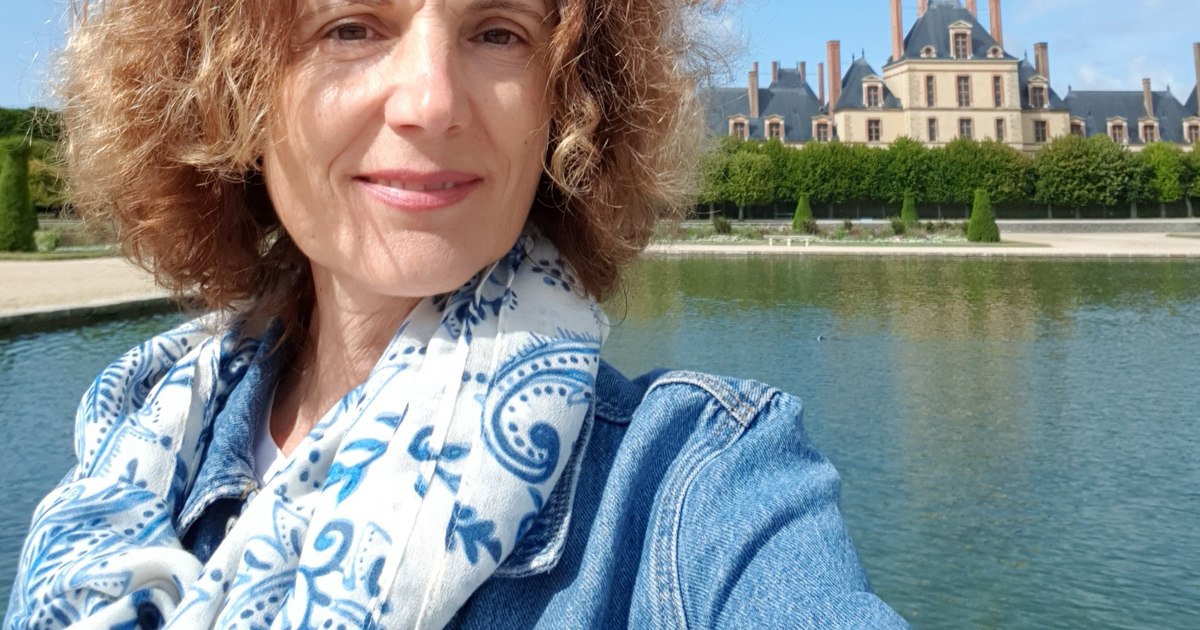
Tatiana Cristian, a teacher at a school in Vrancea, teaches her students to set goals and how to achieve them. It introduces them to the fascinating world of mathematics and shows them that they need mathematics for absolutely everything, from simple calculus to the study of gas laws.
Tatiana Cristian PHOTO personal archive
Tatiana Cristian, mathematics teacher at the Secondary School “Prof. General Gheorghe Gheorghiu”, from Gologanu commune, Vrancea county, won third place in the category “Leadership development among students” at the Teacher of the Year Gala in 2023 for his innovative teaching methods, but also because he develops his students' perseverance, patience, team spirit, communication and always challenging them to push their limits.
She has been in the department for 34 years and reveals that she inherited her passion for teaching from her mother, who is a teacher. “I liked it when she talked about school, about her connection with the children”the teacher declared for Weekend Adevărul.
Since she was a child, she played school and promised herself that when she grew up, she would become a teacher and be fair, so that no child would suffer. She is in love with mathematics and tells us that it was easier for her to understand equations when she was a student than to participate in sports class.
“This is what I pass on to my students. Where you love what you do, go there“, says Tatiana. For a year she has been seconded to a private school in Bucharest to be closer to her son, but also to experience teaching from this perspective as well.
Teaching in four steps
Since 2012, Tatiana Cristian has been involved in the eTwinning projects of the school in Vrancea and is also part of the AllGrow community, which uses what in the academic community is called “design thinking”, an innovative teaching method in four steps: feel, imagine, act and share.
The first step is for the students to write on three pieces of paper what they would change about themselves, their family and the school.
“After they thought about what they would like to be different at school, we asked them to find solutions and that's how they learned how to make a plan of action to be able to achieve their goals. For example, they understood that having a smart goal means to be specific, and the goal to be measurable, realistic, anchored in time and achievable”,
explained the teacher.
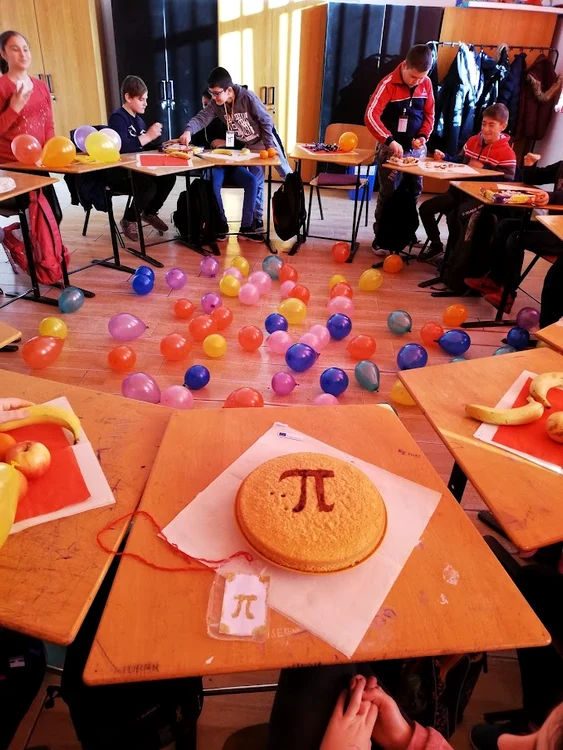
Tatiana uses innovative teaching methods PHOTO personal archive
His students chose health and wellness, and slowly learned to make a plan, put down on paper the resources they needed to achieve their goal and how much time they needed to complete it. The most important lesson was that they are responsible for the success or failure of their own projects, just like in everyday life.
“Learning from now that I am a force, I can change something in society as adults. The children are really captivated”, Tatiana describes the atmosphere in the classroom. In order to create cohesion between the students, he also plays small games with them, which builds their team spirit and communication.
Nature and mathematics, an unbeatable couple
The teacher used all these projects to spark her students' interest in mathematics, after she noticed that many children were not looking up from their phones and tablets in class. Once he captivated them, he introduced them to the world of educational platforms.
The one he uses most often is GeoGebra, and last year he and his students won the second prize at national level with one of the eTwinning projects. This year, children will learn how math is applied to art, technology and science.
“Mathematics is all around us. When I teach, I always make the connection with nature. For example, in the lesson about the hexagon, I talked about the honeycomb made by bees, which has the same shape. I explain to them that mathematicians took the forms from nature and studied them”, says the teacher.
He uses smart boards and various apps in the classroom to make math as accessible as possible for students, and his classes are interactive. For example, through these applications, children take math tests at home, and parents see exactly their level of preparation.
His math classes are a fusion of science, knowledge, emotions, communication and interdisciplinarity. He often calls on his classmates to teach certain concepts together in class.
For example, with a teacher they did experiments in physics, which she correlated with information from mathematics. This is what happened to his colleagues who teach chemistry and biology.
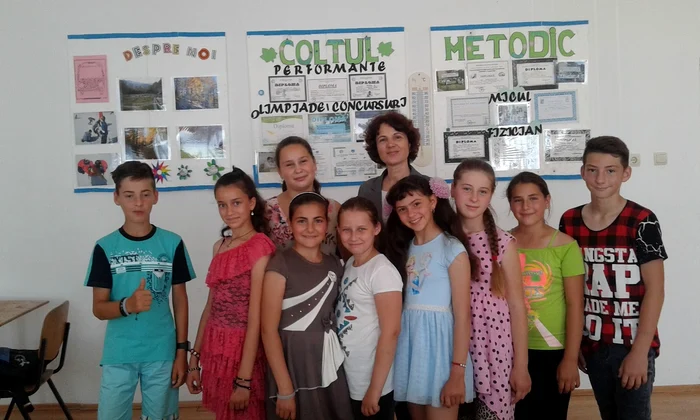
Tatiana's classes are interactive PHOTO personal archive
“I did the same homework, but approached from the point of view of mathematics, physics, chemistry and biology. A lot of kids tell me they learn something and they won't run into that notion again. But I explain to them that it is present everywhere, not only in mathematics”, Tatiana explained.
Thus, mathematics is needed in chemistry because there are many common notions such as ratio, proportion, simple rule of thirds and percentages. From these basic mathematical notions derive chemistry notions such as atomic mass, molecular mass, the law of conservation of mass of substances, percentage composition and concentration of solutions.
The teacher explains to them that what they learn about ratios, proportions and percentages is indispensable for the study of gas laws, relative density, for solving problems with mixtures of solid, liquid or gaseous alloys.
Their geometry is useful in graphical representations for the dependence of reaction speed on temperature, pH calculation using knowledge related to logarithms learned in mathematics.
The lesson of conscious breathing in class
Tatiana quickly understood that she would not be able to capture children's attention in math class unless she made it fascinating for them. Whenever he sees them agitated, he uses what he calls the conscious breathing technique: “I ask him to mentally scan his body, from the soles of his feet to the top of his head, and feel his entire organism. This brings their attention back to the present. They noticed the difference and now they themselves ask to do a body scan”.
His teaching methods involve not only mathematics but also how they can implement what they learn in their daily lives. Her former students regularly seek her out to thank her for what she has done for them and tell her that the lessons in the classroom meant a lot.
Image 1/5:
Tatiana Cristian 2 PHOTO personal archive (1) png
TATIANA CRISTIAN PHOTO GALLERY
“Through the projects they wrote, they discovered in which areas they have problems and they also found the solution to them. We are not only talking about mathematical problems, but also about problems in everyday life”, says the teacher.
For her part, Tatiana Cristian continued to specialize permanently, in order to improve her teaching methods. She is now enrolled in an integrative psychology course to better understand her students' needs, but also to provide them with emotional support whenever they need it.
“I want them to stay with the joy of coming to school, with the daily soul contentment of this journey. To realize how wow it is that every day they have learned something.
To remain in the soul with that curiosity of a small child, if possible until the end of life. To always remain curious, because, ultimately, life is a school”, concludes the teacher.
