
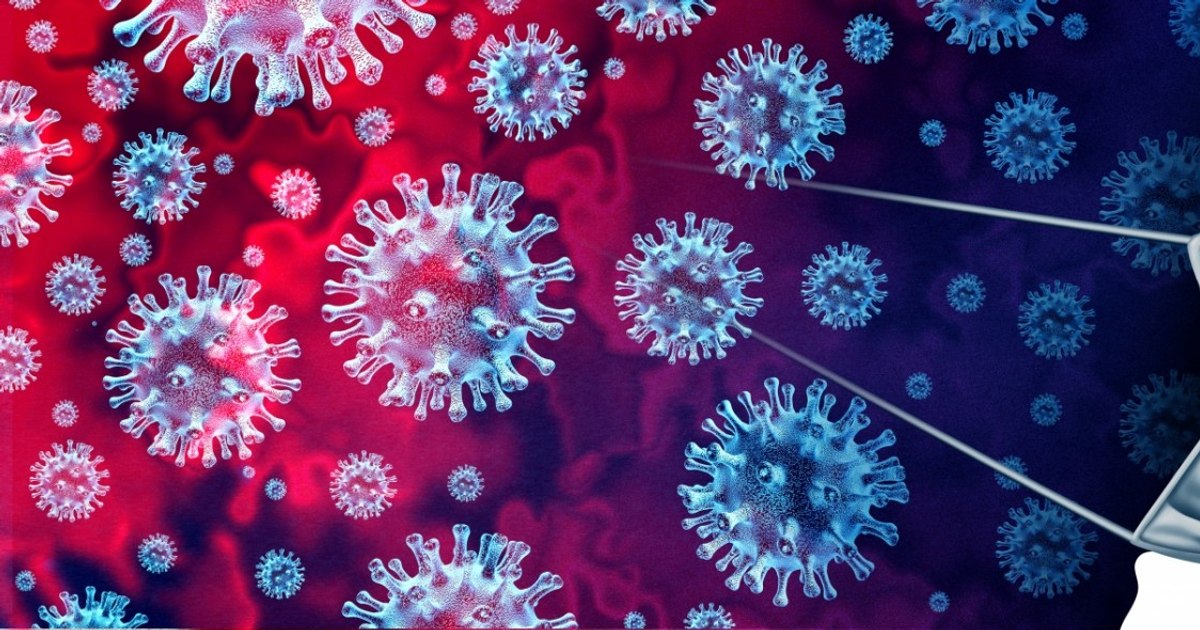
There is a very high chance that the flu virus will trigger a new pandemic in the near future, according to some leading researchers, The Guardian reports.
The emergence of H5N1 in cattle was a surprise. photo shutterstock (Archive)
An international poll, to be released late next week, will reveal that 57 percent of disease specialists believe a strain of the flu virus will be the cause of the next global epidemic of deadly infectious diseases.
According to Jon Salmanton-Garcia of the University of Cologne, who conducted the study, the belief that influenza is the world's greatest pandemic threat is based on long-term research showing that it is constantly evolving and mutating.
“Every winter there is flu“, he said. “You could describe these outbreaks as small pandemics. They are more or less under control because the various strains that cause them are not virulent enough – but it won't necessarily be that way forever“.
Details of the survey – which involved contributions from 187 senior scientists – will be revealed at the European Society for Clinical Microbiology and Infectious Diseases (ESCMID) congress in Barcelona at the end of next week.
“Main Threat”
The next likely cause of a pandemic, after the flu, is likely to be a virus — called disease X — that is still unknown to science, according to 21 percent of the experts who participated in the study. They believe that the next pandemic will be caused by an as yet unidentified microorganism, which will appear out of nowhere, just as was the case with the Sars-CoV-2 virus, the cause of Covid-19.
Indeed, some scientists still believe that Sars-CoV-2 continues to pose a threat, with 15% of researchers surveyed in the study considering it the most likely cause of a pandemic in the near future.
Other deadly microorganisms—such as the Lassa, Nipah, Ebola, and Zika viruses—were rated as serious global threats by only 1 percent to 2 percent of respondents.
“Influenza has remained – to a very large extent – the main threat in terms of its pandemic potential in the view of a large majority of the world's scientistsSalmanton-Garcia added.
Last week, the World Health Organization expressed fears about the alarming spread of the H5N1 virus, which has caused millions of cases of bird flu worldwide. This epidemic began in 2020 and has resulted in the death or killing of tens of millions of poultry and has also led to the disappearance of millions of wild birds.
Recently, the virus has spread to mammalian species, including cows, which are currently infected in 12 US states, further raising fears of risks to humans. The more species of mammals the virus infects, the more likely it is to evolve into a strain that is dangerous to humans, Daniel Goldhill, of the Royal Veterinary College in Hatfield, told the journal Nature last week.
“The mortality rate is extraordinarily high”
The appearance of the H5N1 virus in cattle was a surprise, added virologist Ed Hutchinson, of the University of Glasgow. “Pigs can get bird flu, but until recently cattle couldn't. They were infected with their own strains of the disease. So the emergence of the H5N1 virus in cows was a shock.
It means that the risks of the virus reaching more and more farm animals and then from farm animals to humans are getting higher. The more the virus spreads, the more likely it is to mutate so that it can spread to humans“.
To date, there has been no indication that H5N1 has been able to spread between humans. But in the hundreds of cases where humans have been infected through contact with animals over the past 20 years, the impact has been grim.
“The death rate is extraordinarily high because people have no natural immunity to this virus“said Jeremy Farrar, Chief Scientist of the World Health Organization.
The prospect of a flu pandemic is alarming, although scientists also point out that vaccines have already been developed against many strains, including H5N1. “If there were an avian flu pandemic, it would still be a huge logistical challenge to produce vaccines at the scale and speed that will be needed. However, we would be much more advanced than with Covid-19, when a vaccine had to be developed from scratch.”Hutchinson said.
