
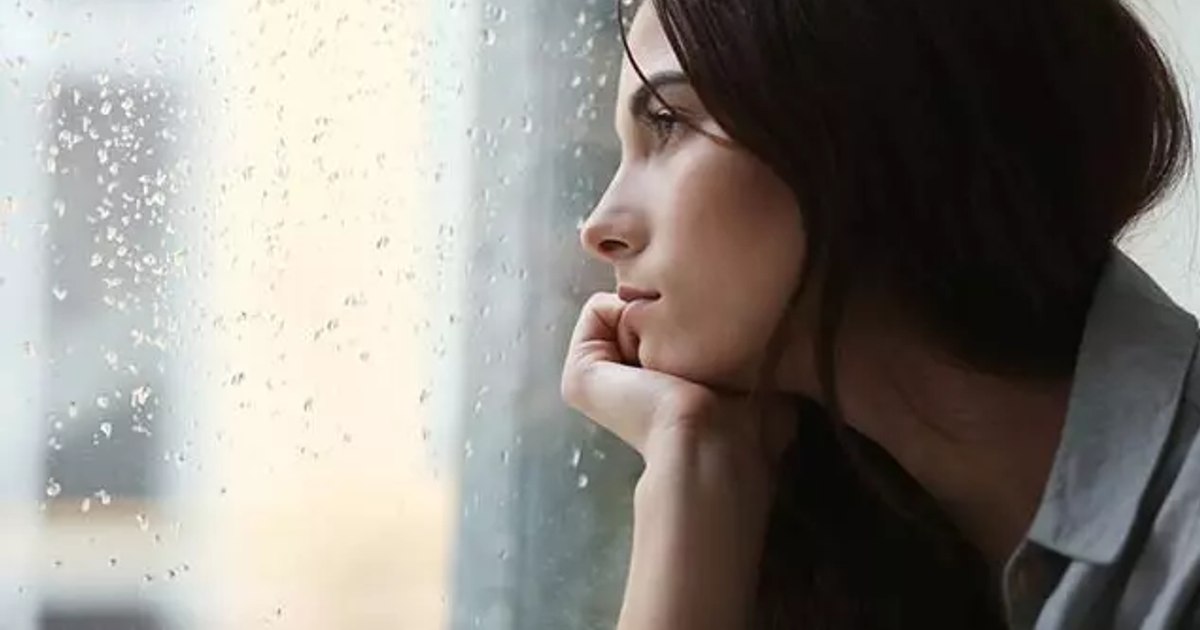
Depression is among the conditions that can “activate” during the holidays. What we can do is to pay attention to those around us, to support them, and to have real expectations of ourselves and be authentic, causing others to behave in the same way.
Women are more exposed to depressive episodes FOTo: archive
During the holidays, the number of cases of hospitalization or readmission of patients with mental health problems increases, experts say. Already during the COVID pandemic, the numbers have gone crazy, registering, in the first year after the pandemic, a 25 percent increase in diagnosed cases of depression. The feeling of loneliness becomes more overwhelming during the holidays, as does the pressure to do a lot and the fear of not living up to expectations.
Psychologist Andreea Dumitrescu explained why this happens.
“It happens because, in the case of these two holidays, great emphasis is placed on the family, on time spent with the family. There are even those commercials, we are bombarded with commercials where we are presented with ideal situations, where family comes first, we gather around a table and everything is idyllic. Well, in reality things are not quite like that, not everything is idyllic, we wake up that maybe we don't have money to buy those products for the Easter table, the family is not together during the holidays, there are a lot of relatives or even family members, close, go abroad or in the hospital, or certain things happen, so there is this discrepancy between reality and our expectations”, says the psychologist.
The pressure is greater on women, therefore in their case the risk of being affected increases.
“We see an increase in the pressure on the female side to clean, to do all the preparations, to be everything in order, to go to church, to confess and share the children, in addition to the job and daily tasks. That's why I mentioned gender among the factors. Women are more likely to be affected by the holidays because they have extra responsibilities and there's this stress that they won't be able to complete the tasks and if they don't then everyone else will be disappointed.” explains psychologist Andreea Dumitrescu.
There is, on the other hand, genetic inheritance in many cases, history of mental illness.
“I can make small gestures of love: a caress, a pat on the shoulder”
What we can do, for ourselves and for our loved ones, is to remember that Easter is a celebration of the soul, of closeness between people. Let's be careful with each other, let's make sure we're okay.
“The Easter holidays offer us, much more than other holidays, this possibility to be attentive to those around us, to be active in the community and to come together as a community. Due to the fact that there are many more services, and it is also Holy Week, that of Denii, people meet much more often. I can meet my neighbor, my neighbor, and realize, because this is what Holy Week teaches me, to pay attention to myself and to pay attention to others around me. And then, I can make small gestures of love. A simple caress, a tap on the shoulder – How do you feel? – we don't say – How are you? – because he can tell you – Cozonaci. – or anything else, of complacency. To ask: How are you feeling? How are you?”, advises the psychologist. When we notice that the person is really troubled, we can directly ask if they feel well, if they don't want to talk about what is bothering them.
For there to be true closeness, we must instead be authentic, says the psychologist. Let's give up the masks, the fluff, the perfection that is usually displayed on social networks or in everyday conversations.
“If we say – Oh, it's ok, my life is perfect, I meet all the family now, I managed to make all the dishes! – and no one knows with what sacrifice, because, ok, I managed to do all these things, but I sacrificed time with the child, maybe I took a vacation, I gave the last money, but I only say my success, not the effort or maybe the failure that we have transformed, we have styled it to look like a success, we will not help anyone. When we tell the truth, instead, we also invite others to be authentic and not try to hide, to mask the unpleasant things just so as not to be considered a failure of society. And this is about the main cause that leads to the appearance of depression, especially during the holidays”, completes the psychologist.
What have we lost in recent years, also emphasizes the psyche. Andreea Dumitrescu, is belonging to the community. We meet less and less, we live isolated.
When we think about the success of others, which we seem to witness when we see their posts on social networks or hear them speak, it would not hurt to take into account, advised the psychologist, the statistical data provided by the profile institutions .
Just these data show that in almost 90% of families in Romania there are lost jobs, unemployment rate, other problems. “If we all live like in advertisements, where are these alarming figures that place us in the last places in certain things, especially in the standard of living?! There is no (n. ed. – perfect life), there are people who have everyday problems. I'm not saying that they all live in poverty and in a continuous problem, but they should not be ignored, masked and coiffed. Advertisements are OK, they present an option, they make us buy a product, that's fine, but if our life becomes an advertisement, or we make it an advertisement, then once we run the risk of reaching oversaturation and falling into the trap of depression , or those around us, experiencing the feeling of incapacity, of social failure, seeing us, like this, in our mask, to reach depression. In both cases, things end with depression.” the psychologist draws attention.
“I start to fill a void by consuming or creating all kinds of habits”
We live in a consumer society and it is something we have to accept. At the same time, Easter should really be the celebration of renewal, the time when, after talking to ourselves, we have analyzed ourselves, to decide to change things if there are things to change. Let's think if we don't fill the table and the house with everything to cover other lacks that we either don't see or don't accept.
“We have come to be a consumer society and move towards this consumerism precisely because we lack things in ourselves. We lack that joy, let's limit ourselves to inner peace. The moment you lack something and you don't agree with something about you, then you feel the need to replace it, you feel the need to add, just like with cosmetic surgery. (…) We are looking for things to replace and distract us from what Easter really means in the end”, says the psychologist.
And if nothing seems to help when dark thoughts, despite reason, do not give us peace, we should think, says the psychologist, that “depression occurs where God is absent.”
“I would also say this: depression occurs when God is absent. Everything I said about the lack of family, about the lack of funds, is fulfilled by God, who after all lives and exists in each of us. When we feel lonely, and it's not about loneliness, it's about loneliness, let's think that we have God in us, by the simple fact that he breathed on the clay. We cannot be alone, we cannot not be enough, we cannot not be loved or feel loved as long as the breath of Divinity is in us. We are part of that breath. (…) Now, of course, I have presented from a Christian point of view, but everyone will transpose at the level of world perception. Depression occurs when God is absent, that God can be replaced by one's personal God, which for an atheist can be a certain theory or a certain object”concluded the specialist.
