
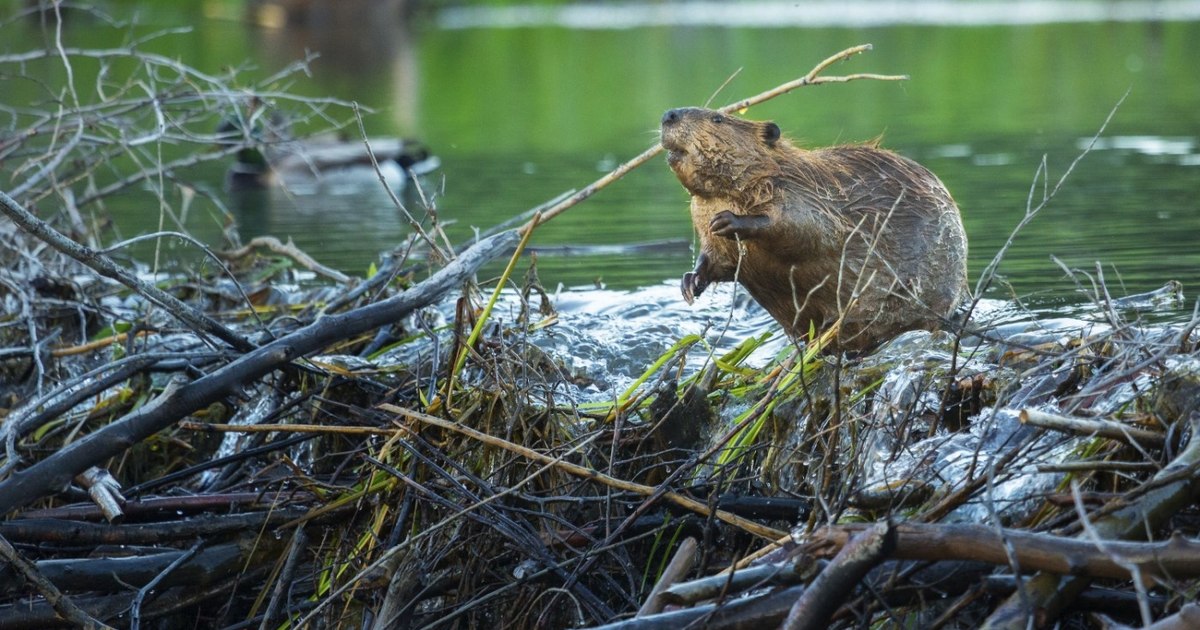
The Eurasian beaver, extinct in 1823, returned to Romania through a program to repopulate lakes and running waters started in 1998.
Beaver PHOTO: Shutterstock
Beavers are a key species in natural ecosystems, being called nature's engineers for the ingenuity with which they build a mosaic of habitats that retain water and expand wetlands.
Although their dams seem inconvenient at first glance, their presence is extremely important when dealing with storms, torrential rains or periods of drought.
According to an analysis carried out by InfoClima, a Romanian organization that mediates the impact of climate change, the situation of the Eurasian beaver in Romania was similar to populations in other regions of Europe and the world.
“The situation of the Eurasian beaver, the ram, in the area of our country, was similar to the populations in other regions of Europe and beyond. Due to excessive poaching, it disappeared from the territory of our country in the 19th century, leaving behind only a range of toponyms given by Romanians from different regions of the country, such as: breb, breboaia, brebeni, brebina, brebenei, bibor, biber, Bibor people. We believe that in the year 1823, the last sheep from the Romanian countries was killed, somewhere in the area of old Moldavia, where today we have Caraș-Severin county.
Through a collaborative project between the Forestry Research and Planning Institute (ICAS) and the German Ministry of the Environment, between 1998-2003 we reintroduced the Eurasian beaver to Romania – 182 individuals on the Olt, Mureș and Ialomița rivers. This reintroduction process was also very successful in our country – this species spread naturally along the rivers and their tributaries and occupied more and more new territories. In the following period, between 2009–2013, we estimated 1,500 individuals, and over 1,200 individuals present on the course of the Olt River and its tributaries. In 2011 we learned, for the first time, of the presence of the Eurasian beaver in the Danube Delta”according to InfoClima.
The presence of beaver in the country
In recent years, the beaver also penetrated into Moldova, from Harghita county, crossing the watershed, descended to Valea Uzului, continued its dispersion on Trotuș and reached and colonized Siret.
The beaver is nicknamed “ecosystem engineer” for the ingenuity with which it builds this mosaic of natural surfaces, where it retains water and expands the wetlands, so necessary in the current conditions of climate change and prolonged droughts.
Although dams and canals created by beavers may seem inconvenient at first glance, they increase the water storage capacity of ponds and produce a slower flow of water. The channels thus raise the water table and at the same time a resuscitation of the underground springs takes place. In the event of storms or heavy rain, the risk of flooding can be mitigated where it exists.
The population dynamics of the Eurasian beaver have brought many benefits to the entire ecosystem, dispersing over vast distances conquering new territories and readapting to areas where it once was its territory. The situation changes when the population grows uncontrollably and the anthropization of the natural environment leads to the limitation of the space used by beavers, so they are forced to follow other courses, reaching cities and villages.
“Getting so close to people creates conflicts between them, because it affects local interests. Among them, a series of losses are registered at the level of agricultural, forestry and fruit crops. Also, another aspect is the embankments or roads which, in the face of floods caused by beavers, attract a series of damages. All this generates financial costs and damages in various forms of losses: in agriculture, forestry and infrastructure”writes InfoClima.
What benefits does the beaver bring to the environment?
“The beaver, this true builder and landscaper, has the ability to build dikes and create water reserves, thereby changing the configuration and characteristics of the environment. It creates favorable environments for hydrophilic plants and contributes to the revitalization of some areas, being a beneficial mammal for biodiversity”, says Adrian Aldea, Conservation Carpathia wildlife manager.
In addition to its priceless natural value, the beaver is also a true tourist ambassador. Its presence in the area can attract thousands of visitors a year, lovers of nature and beauty, people who want to know this species and learn as much as possible about it.
