
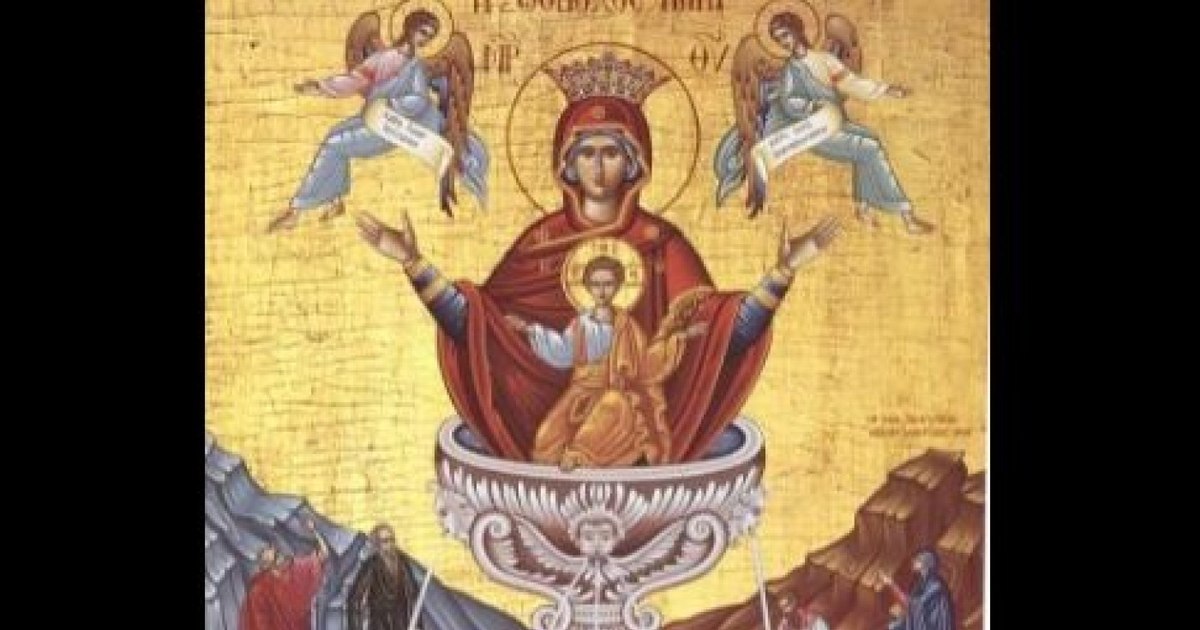
On an important day in the Orthodox Christian calendar, Romanians celebrate the Healing Spring on May 10, respecting ancient traditions and customs. The holiday, marked with a red cross in the calendar, commemorates one of the miracles attributed to the Mother of God, related to a spring located near Constantinople.
Icon “Fountain of Healing” PHOTO Archive
According to tradition, this miracle occurred when the future emperor of Byzantium, Leo the Great, was guided by a divine voice to bring healing to a blind beggar, using water from a hidden spring. Inspired by this event, Leo the Great later built a church near that spring.
Rituals and meanings of the holiday
On this feast day, worshipers participate in special water consecration services, known as the “small consecration”, which is then used to sprinkle household animals and rooms in the house, in the belief that it will ward off disease and bring blessing.
Crops are also sprinkled with holy water to protect them from hail, and sick people drink agheas in the morning on an empty stomach in the hope of improving their health.
Another custom specific to this holiday is represented by the ritual in which children gather in a part of the village to swear loyalty and friendship, followed by the exchange of objects or food.
Prohibitions and signs of the holiday
On the Healing Spring, on the first Friday after Easter, there are certain prohibitions regarding household activities: no washing, no ironing, no sewing or other household chores.
It is believed that the waters are sanctified on this day, being noisier and more turbulent, and those who bathe on this day can be cured of various ailments. It is also mentioned that the well dug on this day will never dry up.
Householders throw holy water over beasts of burden, for health and boost in agricultural work, and a traditional custom is to place a cup under a walnut or elder tree to find out how long you have to live.
In these ways, Romanians keep alive the tradition and belief in the Healing Spring, a celebration that marks their deep connection with ancestral values and traditions.
