
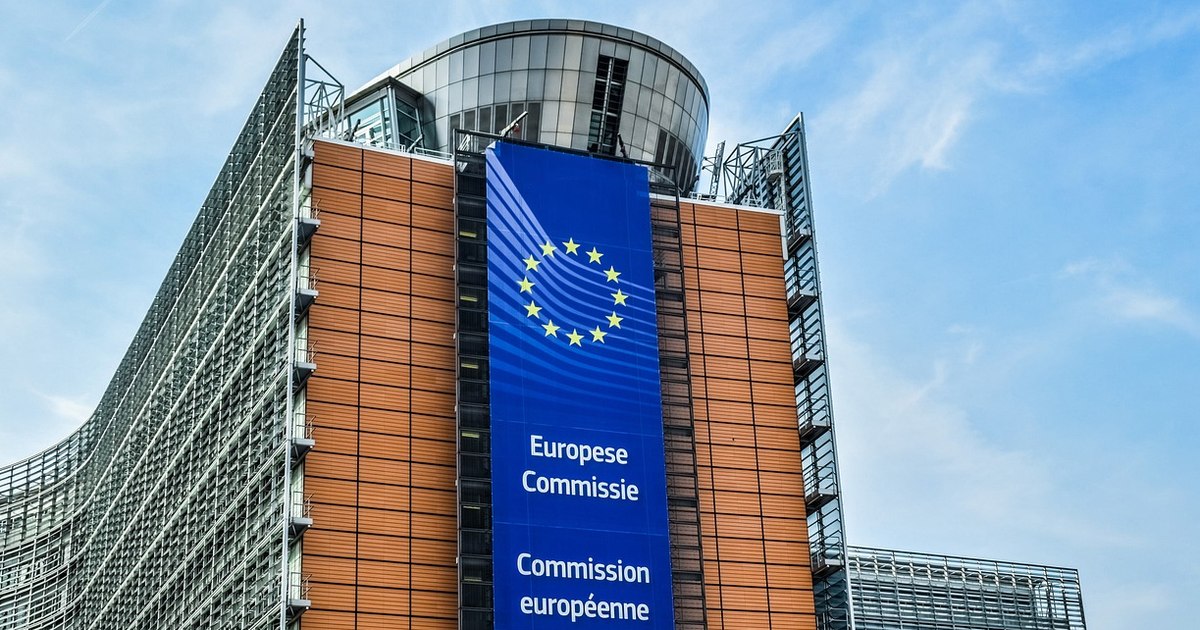
The European Commission has published a detailed country analysis on employment, skills and social inclusion for Romania, Bulgaria, Estonia, Spain, Italy, Lithuania and Hungary. And the conclusions do us no honor at all. On the contrary! Our country needs to recover in almost all chapters. And the fact that unemployment is still high and black work has become a national sport has to do with the lack of skills, which in turn has its roots deeply embedded in an outdated education system stuck in communist paradigms.
Country report on education, a big wake-up call. Photo source: archive
The European Commission's report analyzes a series of parameters regarding the risks, but also the obstacles faced by various categories of society in the member countries, from social inclusion and health services to education and the labor market. In the case of Romania, potential risks are identified for 11 key indicators. Of these, most are aimed at education. Looking at the numbers, the situation in our country is more than worrying. We could say that it is quite dramatic.
According to the document, in Romania there is an extremely low participation in early education: only 12.3% of children under the age of 3 were enrolled in daycare in 2022, compared to 35.7% at the level of the European Union. Ileana Ionescu, director of a state kindergarten in Bucharest, explains the phenomenon. “First of all, in order to enroll their child in daycare, both parents must work and have proof of income. From the start, unemployed people are excluded. The nursery has a social role, namely that of helping the parent to return to work. Then, let's not forget the fact that in Romania, unlike other countries, parental leave extends over a period of two years. So, somehow it is normal that in Romania we have fewer children who follow this form of early education“, she explained for “Adevărul”. “Not always the statistics and reports made even at this level of the Union are real. Somehow they should be customized according to the conditions in that country”, explain the teacher
Early school leaving is another problem highlighted in the European Commission report, and this situation is found especially in rural areas and marginalized communities: 15.6% in 2022, compared to 9.6% EU average.
The PISA 2022 results indicate that the labor market relevance, inclusiveness and quality of education and training can be improved. In the same context, the analysis shows that vocational education is not aligned with market needs, and the differences between students from advantaged and disadvantaged backgrounds are among the largest in Europe.
Another problem we face concerns the lack of skills necessary for the transition to the green and digital economy. This chapter strikes a very sensitive chord: less than a third of Romanians aged 16-74 had, in 2023, basic digital skills, the European average being 55.5%.
Romania's population is in last place in terms of the share of people who have basic digital skills, but also of those who use the Internet in learning activities, according to data published in December by Eurostat.
All these barriers persist even when, the report shows, there are public policies, planned or implemented, aimed at providing solutions.
Proposed measures
The experts propose the expansion of compulsory education, so that it also includes, in the preschool system, children aged 4 years. I also request an increase in spending for the development of preschool education, including PNRR funds. “Money is needed, indeed, if we want a school like the outside. Educational units should be modernized for the 21st century, equipped with modern furniture, laboratories. There is a need for new educational spaces, but also for the training of teaching staff in accordance with current educational requirements. Let's not forget that in the coming years a whole generation of teachers will retire, and there is hardly anyone to replace them. The reason? The quality of human resource training in universities has greatly decreased”Ileana Ionescu also declared.
More emphasis must be placed, say European officials, on the National School Dropout Reduction Program. The real support measures for the teaching career and for the increase of teachers' salaries are also demanded. The document also provides for a new legislative framework for professional/vocational education and higher education, with PNRR support. Last but not least, Romania should get more involved in skills development through lifelong learning programs. “We need specialists. We need qualified people“, economic analyst Adrian Negrescu explained the situation “You have to be qualified in a job required by the labor market. The National Employment Agency is an essential institution from this point of view. The state should organize more free courses for those who want to learn a trade or aspire to professional retraining. These should be the order of the day. We need workers in construction, workers in agriculture, in industry, in all kinds of fields, including services. Unfortunately, the state fails to provide this solution for those looking for a job,” concluded the specialist.
