
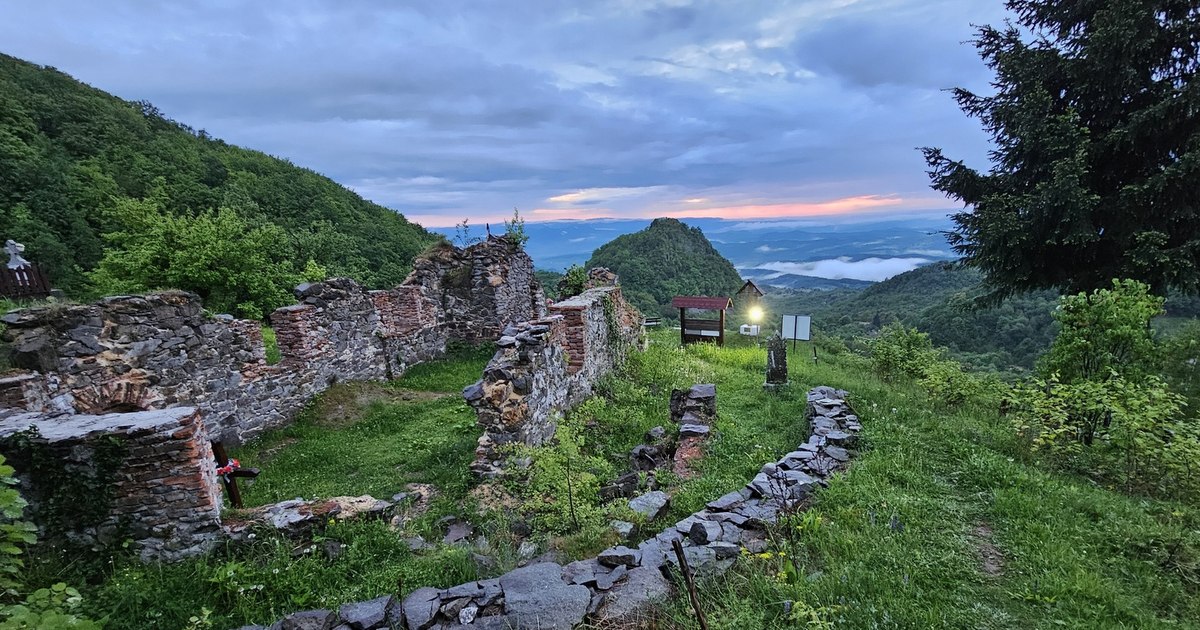
The place that presents one of the most spectacular panoramas in Romania is in the village of Săcărâmb in Hunedoara, a mining settlement in the Metaliferi Mountains famous in the past for its riches in precious metals.
The thundering church from Săcărâmb. Photo: Daniel Guță. TRUTH
Three churches built over two centuries ago adorn the village of Săcărâmb in Hunedoara, known in past centuries as the “El Dorado” of this region of Europe (video), for its great wealth in gold, silver and rare metals.
The Roman-Catholic, Orthodox and Greek-Catholic churches each occupy a hill of the village, surrounding from a distance the Calvaria Mare Hill, around which gravitate the terraced houses that seem to hang on the wooded slopes.
Impressive amounts of gold and silver, but also rare precious metals, such as tellurium and nagyat were taken out over time from the depths of the volcanic cone and the mountains surrounding the great Calvary.
From the middle of the 18th century, with the establishment of the gold mines in Săcărâmb, the settlement quickly turned into a prosperous mining town where Romanians, Germans, Hungarians, Slovaks and Italians lived and worked, as well as families from distant corners of Europe.
In the decades following the opening of the mines, the three churches for the Greek-Catholic, Roman-Catholic and Orthodox believers were erected in a short time.
The most imposing of them, the Roman Catholic and Franciscan church, dates from the middle of the 18th century and is dedicated to Saint Mary. It was built around 1777, on a hill, and stands on a hill to the left of the road that crosses the center of the village.
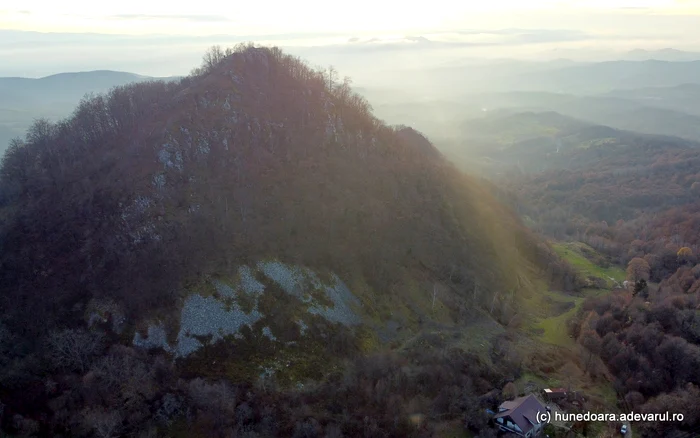
Calvaria Mare Hill. Photo: Daniel Guță. TRUTH
“The current Roman Catholic church was built in 1777, during the construction a lot of volcanic rock was used which was found in abundance in the area. The documents show that the works were completed in just seven months. The entire church was built with the financial contribution and labor contribution of the miners”said teacher Ecsy Brighid.
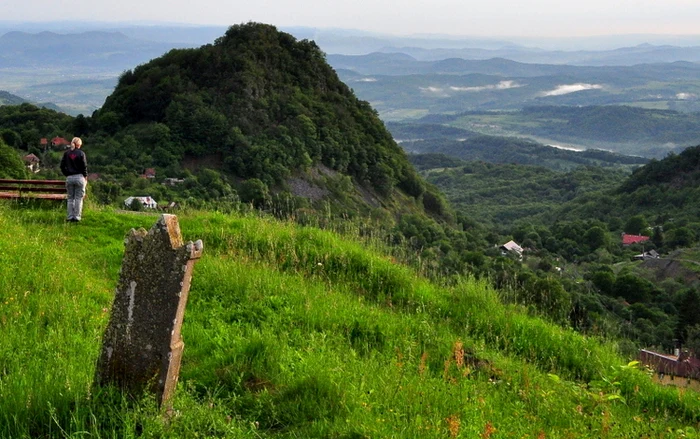
Great Calvary. Photo: Daniel Guță. TRUTH
During the peasant uprising led by Horea, Cloşca and Crişan, several nobles from the surroundings took refuge in the church, who were hidden by the priest in the church tower. After several decades in which it was neglected by the authorities, in 2016 the church underwent repairs.
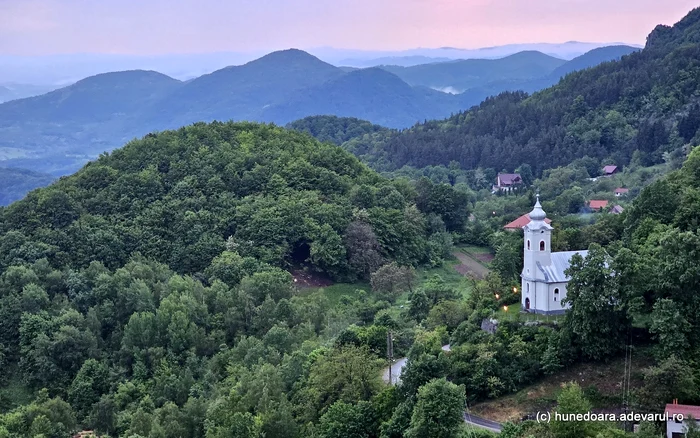
Roman Catholic Church. Photo: Daniel Guță. TRUTH
The road that passes at the foot of the hill then goes up to the old Orthodox church in Săcărâmb, also built with the help of the miners, in 1776.
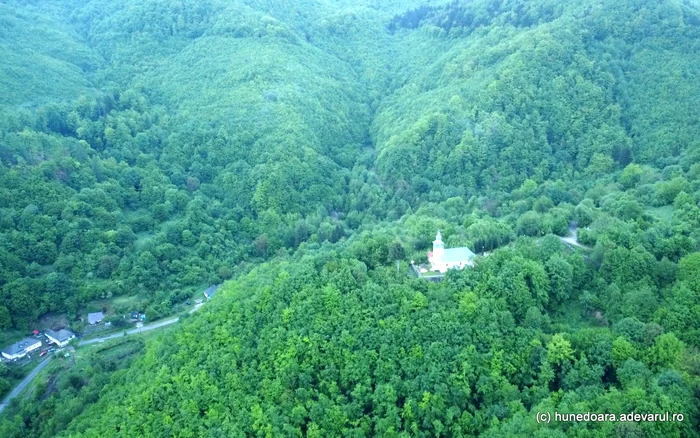
The Orthodox Church. Photo: Daniel Guță. TRUTH
It bears the patron saint of Saint Nicholas and watches over the village from another hill. Over time, it has been restored several times, after suffering from the weather, and today it impresses with its architecture and its neat appearance.
The ruined church in Săcărâmb has a disturbing story
Old for two almost three centuries, the third church in Săcărâmb has been ruined for half a century, but over time it became the main attraction of the settlement, being the place sought by tourists to admire, from here, the views of Săcărâmb, the hill of Calvaria mari and , in the distance, of the Mureș valley, Deva and the Poiana Ruscă Mountains.
The collapsed church in Săcărâmb, so named after it was devastated by the forces of nature, dates, according to some historians, from around 1733. It is the place where the priest Vasile Coloși, main author of the Lexicon of Buda, published in 1825, was buried. the first Romanian-Latin-German-Hungarian dictionary, a work on which Samuil Micu also worked together with Petru Maior.
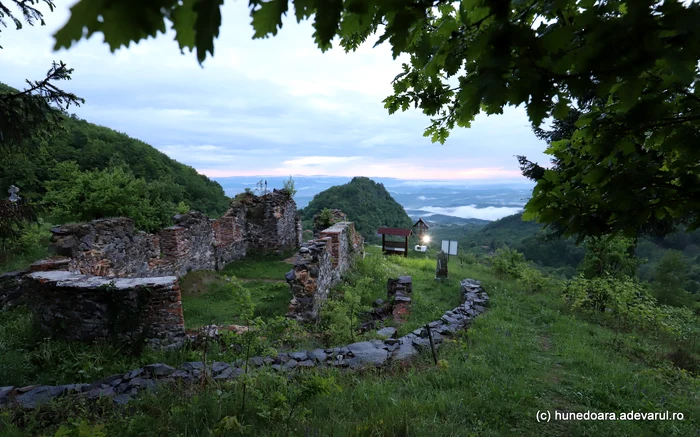
The ruins of the broken church. Photo by Daniel Guță. TRUTH
Vasile Coloşi was parish priest of the church in Săcărâmb between 1802-1814. He died in 1814, at the age of 35, and his eternal place was discovered several years ago in the floor of the Greek Catholic church.
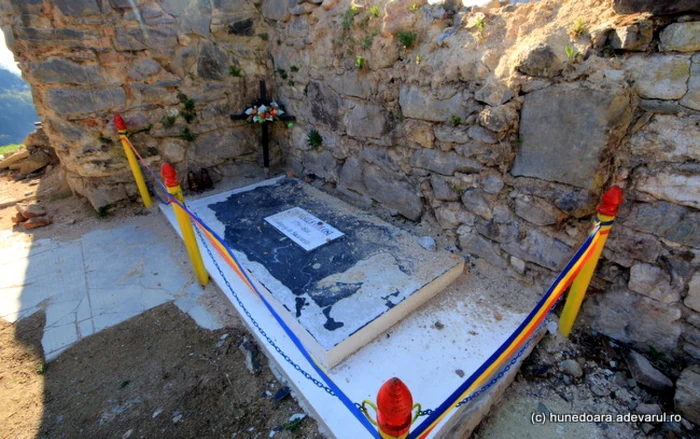
The tomb of Vasile Coloși. Photo: Daniel Guță.
Over time, the church was burned down three times, and in 1970, after being struck by lightning, which led to its burning, it was never repaired.
“In 1970, on the fateful night of September 13 to 14, during a storm, the towering church was struck by lightning. In 2017, the faithful from the town of Săcărâmb sent a letter to His Holiness Alexandru, requesting the blessing and, respectively, the approval to start the cleaning, sanitizing and conservation works of the ruins of the former Greek-Catholic church, in order to discover and value the the tomb of the Archpriest of Săcărâmb, Vasile Coloși. In 2018, based on archival documents, a team of historians discovered the tomb of Vasile Coloşi in the church premises, which was in an advanced state of ruin. Also then, a memorial complex dedicated to the scholar was set up”informs the Greek-Catholic Bishopric of Lugoj.
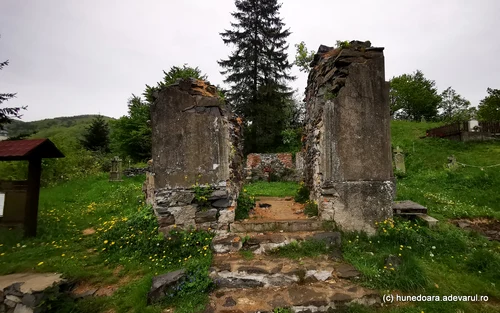
Image 1/25:
Sacaramb village from Hunedoara Photo Daniel Guță (80) jpg
Some locals want to rebuild the church on the ruins left from the monument. One of its walls and the remains of its tower collapsed in 2016.
