
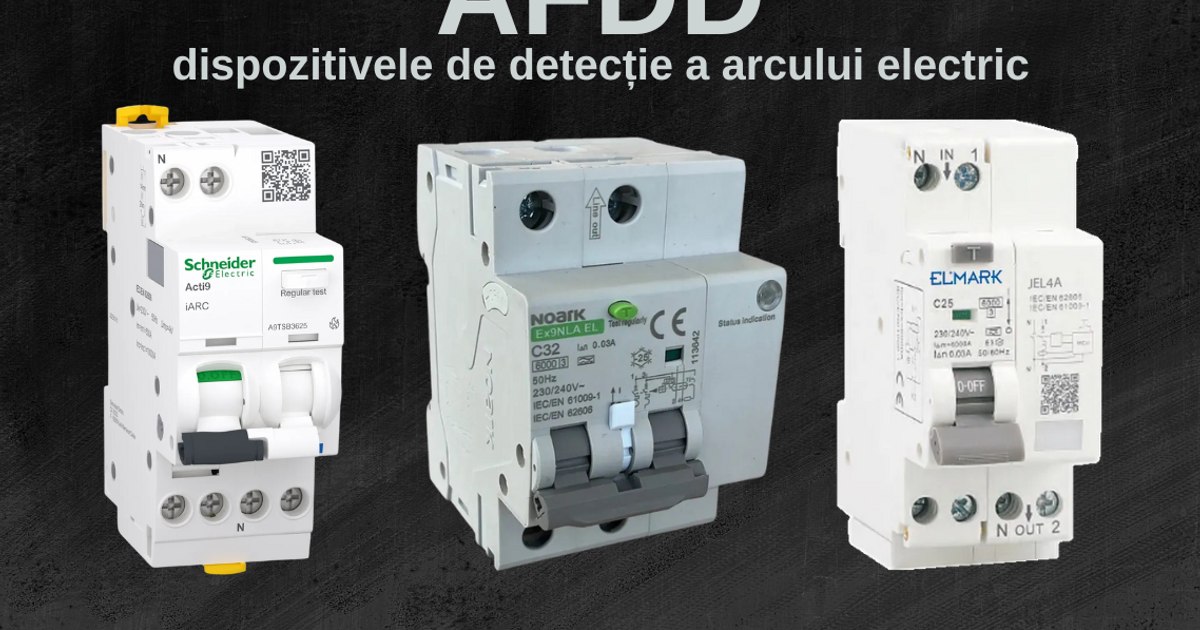
AFDD (Arc Fault Detection Devicein translation “electric arc fault detection device”) is the new generation of equipment electrical safety intended to prevent fires caused by hidden sparks in circuits.
These devices, known until recently more by electricians and mainly used in the industrial environment, are becoming more and more present in residential applications as well. The Romanian authorities introduced the obligation to use them in certain types of new constructions, in response to the worrying number of fires with electrical causes. This article explains what AFDDs are, how they work, and why they are critical to the safety of homes and industrial facilities alike.
What is an arc fault and why is it dangerous?
A electric arc fault occurs when sparks (electric arcs) occur in the circuit between conductors or loose connections. The phenomenon can be compared to a small lightning that flickers inside wiring or boxes and can last from seconds to days, often degenerating into fire if not interrupted. Electric arcs start from various causes – from damaged cables or loose connections, to faulty appliances or dangerous improvisations. The problem is serious: statistics show that almost a quarter (23%) of fires are caused by malfunctions or improvisations of electrical equipment, arc defects having an important weight in these cases. Being invisible to the human eye and undetected by conventional fuses, these dangerous sparks have been nicknamed “silent assassins” by specialists because they act without warning and can cause devastating damage.
How does an AFDD device work?
A AFDD
is an intelligent electronic device that constantly “listens” to the current passing through an electrical circuit. Using sensors and advanced electronics, he recognizes characteristic signature of a dangerous electric arc – high-frequency oscillations around 100 kHz, different from normal network fluctuations. Basically, the device distinguishes between harmless arcs (for example, those that appear when we turn on a switch or start the engine of an appliance) and those that indicate a serious malfunction. When it detects a dangerous arc, the AFDD disconnects power instantly on that circuit, cutting off the spark’s energy source before it ignites any flammable material. Everything happens automatically, in fractions of a second, without user intervention. Some models also include a status LED, which signals if an arc trip has occurred.
From a construction point of view, an AFDD looks similar to an automatic fuse in the electrical panel and is often integrated with other protections. For example, manufacturers offer combined modules AFDD+MCB (automatic fuse with overcurrent protection) or even AFDD+RCD (arc protection combined with current leakage differential) so that a single device provides a full protection against short circuits, overloads, electric shocks and fires caused by electric arcs. This versatility makes installing a AFDD fuses not require major changes in the existing switchboard – it is mounted at the origin of the protected circuit, like a regular fuse, and constantly monitors that circuit.
Benefits and applications of arc detectors
The main benefit of an AFDD is obvious: drastically reducing the risk of fire. By shutting off power before an electric arc produces effects (heat, fire), these devices can save lives and property. Their importance increases in the context in which, as shown by the data of the Department for Emergency Situations, on average 19 homes in Romania catch fire every day, many due to faulty electrical installations. An AFDD acts as a system of alarm and automatic intervention inside the electrical panel, eliminating the human error factor – you don’t have to “smell smoke” to turn off the power, because the device does it automatically, much sooner.
In addition to housing, industry and commercial buildings also benefit from these arc detectors. In factories and warehouses with combustible materials, AFDDs provide additional safety, especially where equipment runs around the clock and wiring is spread over large areas. In fact, in countries like the USA and Canada, such devices have been mandatory in most household circuits (especially in bedrooms, kitchens and living rooms) for years, precisely to prevent fires of an electrical nature. Europe has been slower to adopt this technology, initially using it in high-risk situations or on the recommendation of specialists, but the trend is towards increasing widespread use.
Fortunately, AFDD are already found on the Romanian market through various electrical equipment manufacturers. The range of available models includes modular variants that can be easily integrated into existing electrical panels, without substantial modifications. Installation must be carried out by a licensed electrician, but once installed, the device does not require complex maintenance – many AFDDs have periodic self-test functions to verify proper operation over time. Prices vary according to features and brand, but experts emphasize that the investment is justified by the level of protection offered, especially in valuable buildings or with vulnerable people.
A step forward for everyone’s safety
With the widespread implementation of AFDDs, electrical safety standards take an obvious step forward. These arc detectors they bring extra peace of mind for home owners, knowing that they have a device in their arsenal that permanently “supervises” the installation and intervenes automatically at the first sign of danger. Just as importantly, they give industry operators and building managers the ability to protect lives and property against fires caused by invisible faults. In conclusion, AFDD is not just a gadget or a fad imposed by regulations, but a long-term security investment that has proven its effectiveness in practice and will become as common as the old switchboard fuses – but incomparably better at preventing disaster.
