

As the world commemorated, on January 12, 2026, half a century since her death, Agatha Christie has never been more present. Trains are still stuck in the snow, ships cross the Nile, and from December 2025, detective Benoit Blanc (played by Daniel Craig in the “Knives Out” series) resumes the narrative thread she perfected: the almost perfect mystery. The author who sold billions of copies remains, 50 years later, the heart of the structure of the modern “whodunit”.
If you want to understand where it all started, you have to go back to a quiet house in Torquay, Devon, where a shy little girl, raised among books, gardens and homework, learned to negotiate with the world through imagination. Agatha Mary Clarissa Miller – the child of an American father and a charming and demanding English mother – grew up in a protected universe, but full of echoes of unexpected adventures. Her mother, Clara, had an unusual talent: she cultivated her dream. It was enough to tell her that she could write a story, and Agatha tried.
The First World War would change not only his life, but also his literary destiny. Newly married to aviator Archie Christie, the young woman starts working as a nurse in a hospital in Torquay. Here, between bandages and morphine, between wounded people and long moments of silence, her passion for chemistry and poisons is born. He would later say: “It’s a mistake to assume that everyone wants to tell the truth”. In the sterile smell of campaign salons, he realizes that the world always hides a second plan, a complicated truth. When she publishes “The Mysterious Affair at Styles” in 1920, she is just a young married mother who begins to squeal. And yet, from the pages of this novel a titan is born: Hercule Poirot.
The entry into the scene of an ordered mind
Poirot’s entrance into the scene is, in itself, a high point of her life. Europe was still licking its wounds from the Great War when this neat little Belgian appeared, with an impeccable mustache, precise lines and a logic that cuts reality into equal pieces. Poirot had his own way of ordering the world. “Crime is simple, Inspector! People are complicated.”
A few years later, Agatha Christie feels that the world needs another look – a gentle, feminine, seemingly insignificant one. Thus is born Miss Jane Marple, the voice of rural wisdom, the infallible observer of human nature. Miss Marple deciphers people, not tracks. He was silent, watched and knew.
Agatha Christie’s detectives are extensions of the way she interprets the universe: with discipline, irony, subtle psychology and a sense of order that life has not always offered her.
The mystery of his own disappearance
Peace, however, was exactly what life did not offer him. Her husband, Archie, confessed to her that he was in love with another woman, throwing Agatha into mute suffering. And in December 1926, Agatha Christie disappears. Simply. Her car is found abandoned near a pond, the headlights were on, the clothes were left inside, on the seats. For 11 days, England is breathing heavily. The newspapers become hysterical: “The writer of detective novels, the victim of a mysterious crime?”, “Is this her biggest mystery?”.
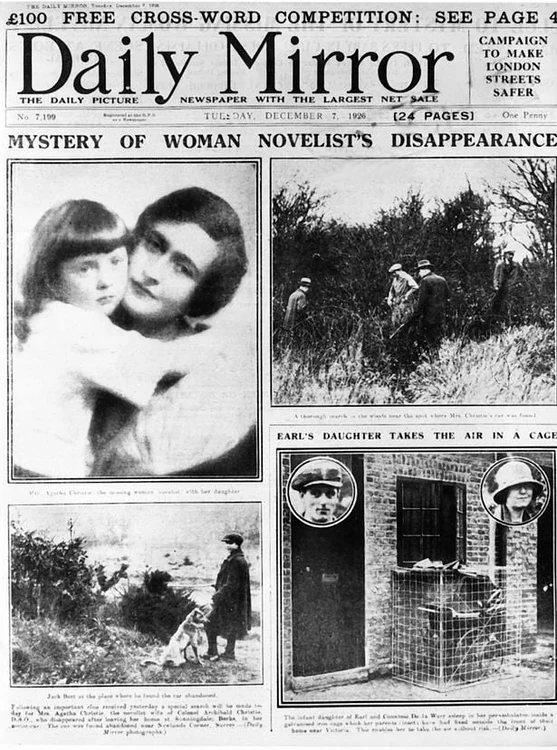
When she is found in a hotel in Harrogate, registered under the name of her husband’s mistress (sic!), the press explodes. Some talk about an episode of amnesia, others about a theatrical gesture or about a subtle punishment addressed to Archie. Agatha never gave a clear explanation. The mystery remained untouched – as did many of its endings.
A New Beginning: The Middle East
Life resumes its rhythm. The trips to the Middle East with the archaeologist Max Mallowan, her new husband, inspire some of the most spectacular novels: “Death on the Nile”, “Murder from the Orient Express”, “Murder from Mesopotamia”. Max is the one who gives her the stability she had never known. Archeology and literature go hand in hand – while he unearths ancient cities, she unearths hidden truths in characters.
By the end of his life, Christie becomes an institution. She is named Dame by Queen Elizabeth II. “The Mousetrap” becomes one of the longest running plays in the world. Her novels are sold in over a hundred languages.
From the pages, to the screens
The 70s bring him cinematic glory. “Murder on the Orient Express” (1974), with Albert Finney, becomes a huge success, and “Death on the Nile” (1978), with Peter Ustinov, turns the mystery into a visual gem. Poirot enters cinematography as a prince of deduction. Then comes television and offers him the ultimate embodiment: David Suchet. The refinement, the posture, the accent – as precise as a Swiss mechanism – fix Poirot’s face forever in the public consciousness.
Between 2017 and 2023, Kenneth Branagh reinterprets the character, bringing visual opulence and modern touches. And in December 2025, the film with Daniel Craig – built in the line of “Knives Out” – proves that the narrative structure created by Christie still pulsates with the rhythm of the present.
A legacy that does not close
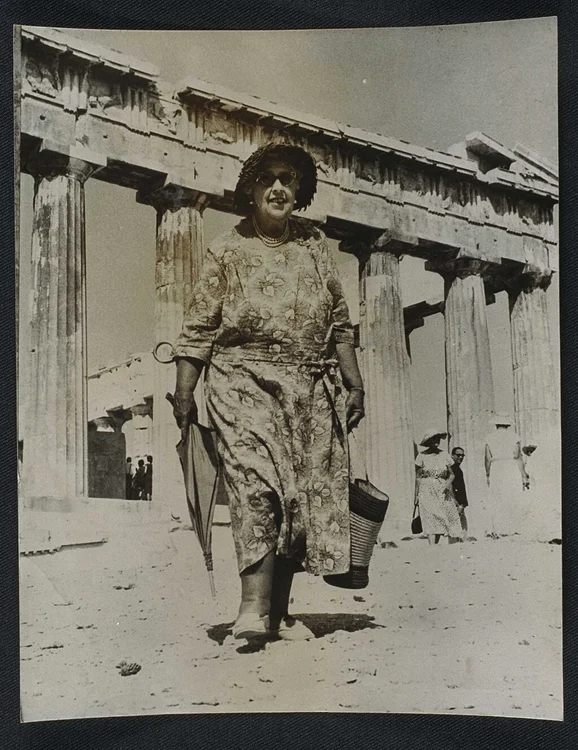
On January 12, 1976, Agatha Christie died quietly in her home in Oxfordshire. But her death closed nothing. On the contrary. Her books, sold in billions of copies, continue to open and close like doors to unexplored rooms. Theaters are still playing “The Mousetrap”. Cinemas use his methods. Every modern detective – from Benoit Blanc to contemporary reinterpretations – carries in his DNA the structure he perfected: multiple suspects, limited space, psychology, logic, unexpected ending.
“My real talent” Christie said, “it was always about making people ask questions”. And perhaps this is her ultimate legacy: not the crime stories, but the way she taught us to look at the world – like a puzzle where every detail counts.
Portrait of the Detective
In Agatha Christie’s universe, the detective is not just a character who solves crimes, it is a way of thinking, a discipline of the mind and a ritual of logic. Few authors have managed to create a narrative pattern so strong that it becomes, itself, a distinct genre. Christie did it: he built a territory of mystery where puzzle, psychology, irony and the theater of the mind intertwine in an experience that differs from the classic detective novels of the time. Her detective is not a policeman, nor an adventurer, nor a street tough. He is a magician of the mind.
The first silhouette that emerges in this universe is that of Hercule Poirot. Round, orderly, conceited, with an impossible-to-ignore mustache and a morgue that might seem ridiculous if it weren’t complemented by a sharp wit, Poirot turns the world into a map of human intent. For him, murder is not a barbaric act, but “an error in the moral structure”a crack he sees immediately. While the police search for clues, Poirot searches for the motive. “There are two stories in every crime,” he says in a novel, “the story that seems true and the true story”.
Christie treats Poirot like an actor in a theater of the mind: regular gestures, carefully calibrated lines, a permanent game between appearance and calculation. In her hands, Poirot becomes the archetype of the demiurge detective, the one who sees everything, understands everything and leaves nothing to chance. Every speck of dust becomes a clue, every silence becomes testimony.
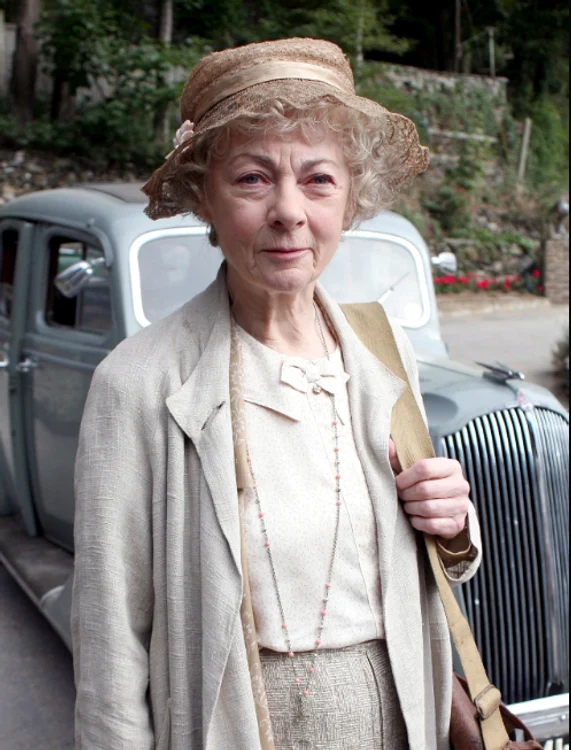
On the other side of the mirror is Miss Marple. If Poirot is sharp and theatrical, Marple is quiet and discreet. If he proclaims, she notices. And yet, their effectiveness comes from the same strength: the ability to read people before analyzing the situation. Miss Marple is not just a nice old lady, but an “archivist of human nature”. Her world is not divided into guilty and innocent, but into patterns. Every crime, no matter how sophisticated, reminds him of someone from St. Mary Mead. This affective memory, this atlas of small rural sins allows him to see what the police miss. Through Marple, Christie creates a detective who discovers the evil beneath the politeness, who understands that English society, apparently calm, hides strong tensions. She is a “civic moralist”, a character who dismantles with a smile the hypocrisy of an entire era.
Through these two detectives, Christie defined what critics would later call “the English mystery in the locked room”: literature of limited space, of minimal clues, of relentless logic. The enigma does not come from the spectacular, but from the control, from the way the characters move in a scenography where every gesture counts. The true power of the detective portrait in her work lies not in the eccentricities of Poirot or in the disarming politeness of Miss Marple, but in the fact that, through them, Christie has redefined what it means to seek the truth: with elegance, with a clear mind, without violence, without chaos, without unnecessary darkness.
Agatha Christie’s detective is a form of order in a disordered world. And even after 50 years since its disappearance, this invention remains one of the most beautiful and most used formulas used by both literature and cinematography.
David Suchet. The Definitive Face of Hercule Poirot
There are actors who give life to a character and there are actors who transform him into a landmark, “seal” him in the collective memory. David Suchet undoubtedly belongs to the second category. He was not content to play the role of Hercule Poirot – he assimilated him, studied him with almost obsessive thoroughness and wore him like a second skin.

For millions of viewers around the world, Suchet is the very embodiment of Poirot. Not metaphorically, but literally: the most nuanced, faithful and profound portrait of the famous detective ever created. He picked up every tic, the rhythm of the lines, the impeccable Belgian accent, the calculated walk, the gesture with which he arranges his cuffs or the careful look at a tiny detail. He managed to transform the literary subtlety of the character into a cinematic realism without diminishing the mystery. If Kenneth Branagh explores the romantic and melodramatic side of Poirot, David Suchet remains – par excellence – the canonical Poirot. The one who, without intending to, became the measure of all the others.
What does “Whodunit” mean?
“Whodunit” (short for Who has done it?) is the classic subgenre of detective fiction from the 1920s-1940s, with Agatha Christie as the central figure. What are the key features?
Central conundrum. It focuses exclusively on solving a crime, identifying the criminal from a narrow circle of suspects.
Pure logic. The detective (like Hercule Poirot or Miss Marple) uses observation, deduction and psychology, not force.
Clear rules. The reader receives the same clues as the detective, turning the story into a correct puzzle.
The crime scene is restricted. The action often takes place in a closed space (country house, ship, train, island), called in specialized literature the “mystery of the locked room”.
